Turpentine oil is the volatile liquid recovered when pine oleoresin is distilled. It is a mix of monoterpene hydrocarbons, mostly alpha-pinene, and it works as a solvent, a paint thinner and a feedstock for pine chemistry. The non volatile fraction left behind in the still is gum rosin.
That one sentence definition hides a lot of commercial detail. Buyers who treat all turpentine as one product routinely overpay, or receive a grade that does not suit their process. This guide covers the three production routes, the typical composition and the uses that drive demand.
Where does turpentine oil come from?
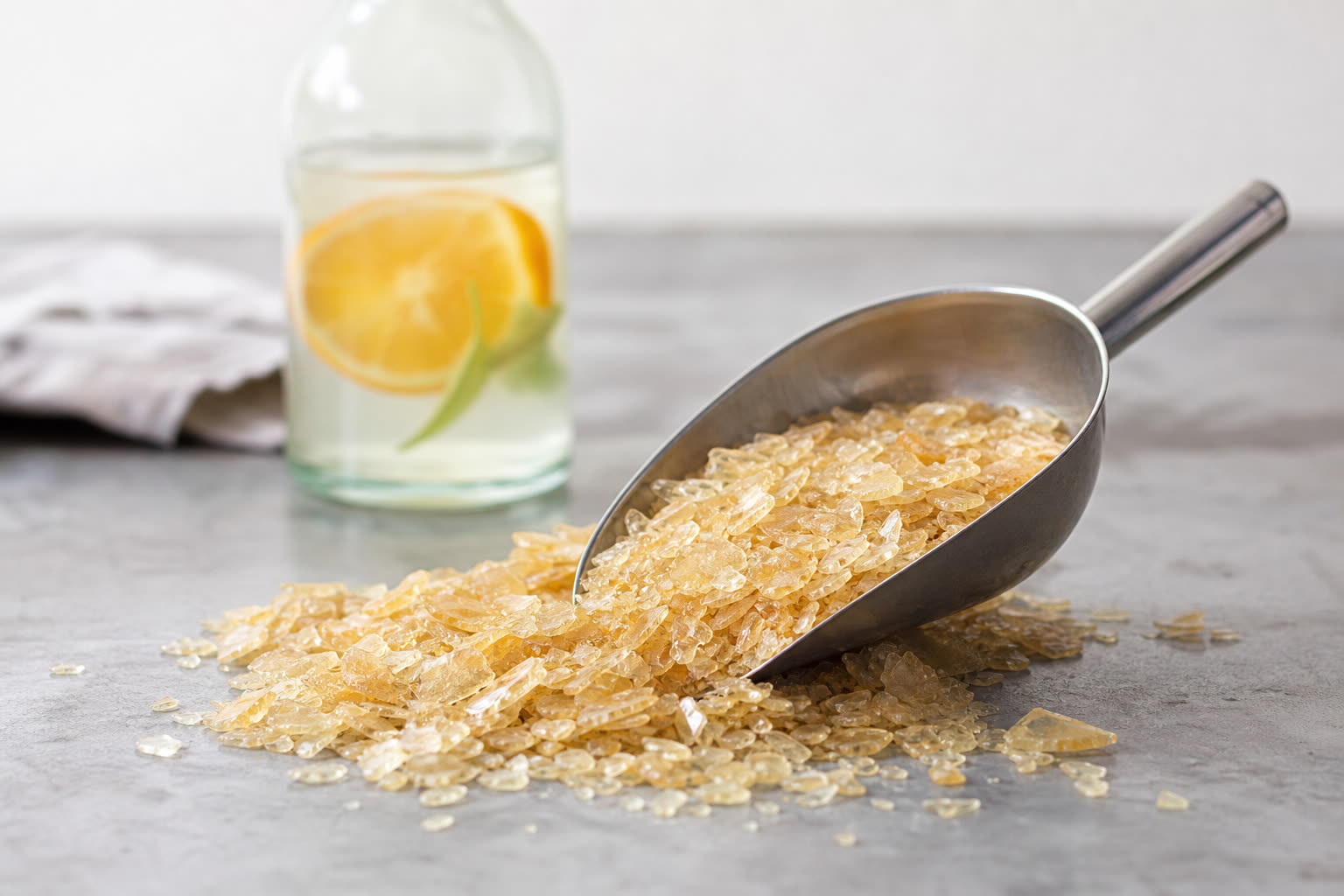
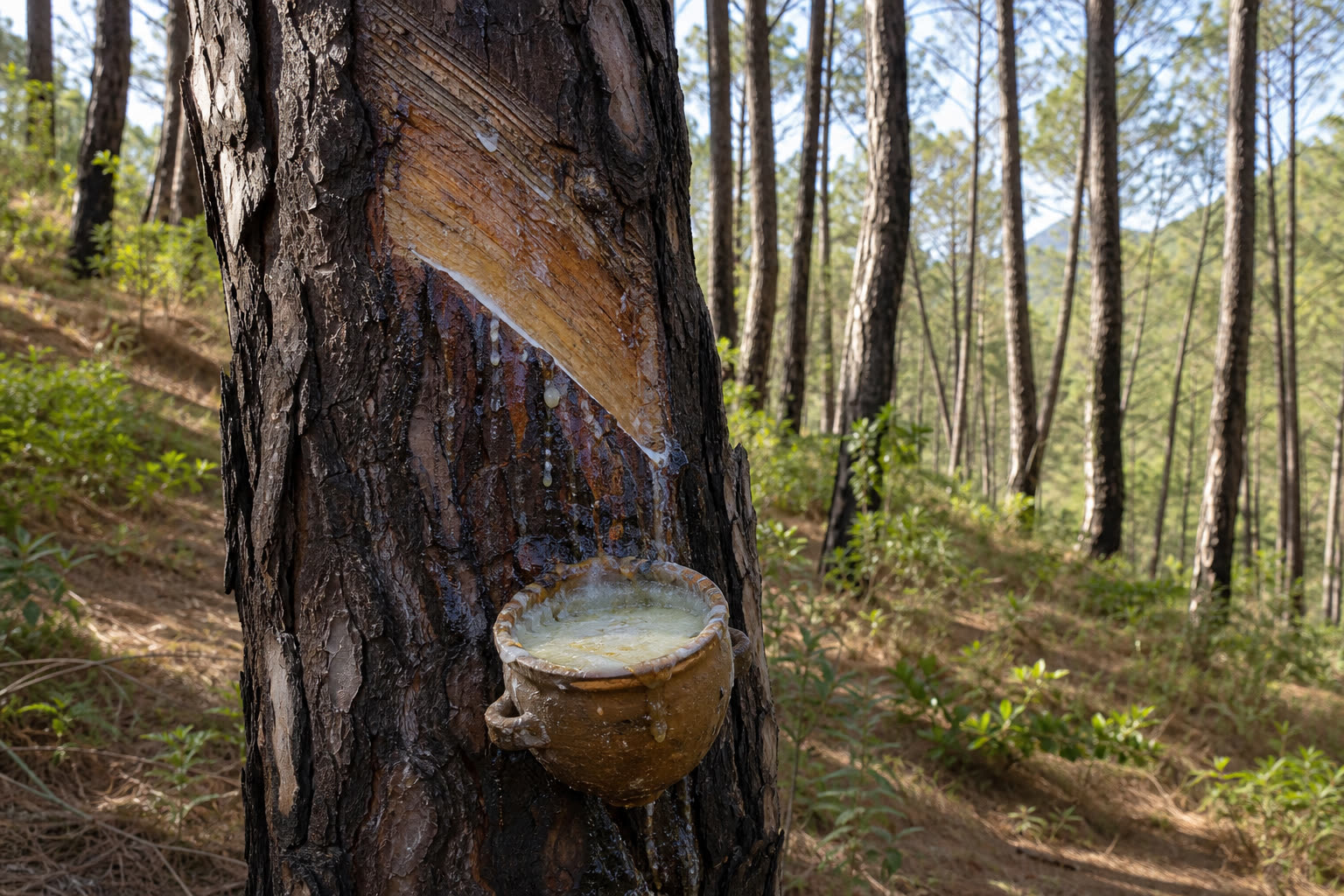
Every commercial turpentine starts with pine trees, but the route from tree to drum differs. Tappers cut narrow streaks in the bark of living pines and collect the oleoresin that bleeds from the wound. That resin is roughly one part volatile oil to three or four parts resin acids. Steam distillation drives off the volatile part as turpentine and leaves gum rosin in the pot.
India taps chir pine in the Himalayan belt, while China, Brazil, Indonesia and Vietnam tap their own species. Species matters, because the terpene profile of the oil follows the tree, not the process. We cover the full process in detail in our post on how turpentine is distilled.
What are the three types of turpentine?
Trade documents recognise three families, defined by feedstock and process rather than by end use.
| Type | Feedstock | Process | Typical character |
|---|---|---|---|
| Gum turpentine | Tapped pine oleoresin | Steam distillation | Cleanest odour, preferred for solvents, coatings and aroma work |
| Wood turpentine | Aged pine stumps and chips | Steam distillation or solvent extraction | Darker profile, more variable, limited supply today |
| Sulphate turpentine (CST) | Kraft pulp mill condensates | Recovered as a pulping by product | High volume, low cost, sulphur odour, needs refining |
Gum turpentine commands a premium because it carries no sulphur compounds and needs no desulphurisation before use. Crude sulphate turpentine is the cheapest stream and dominates fragrance industry feedstock after refining, but untreated CST is unusable in paints or pharma type applications because of its odour. Wood turpentine, once a large US industry, is now a minor source.
Note that mineral turpentine is not turpentine at all. It is a petroleum cut that borrowed the name. The differences matter for solvency and odour, and we compare them fully in turpentine vs mineral turpentine.
What is turpentine oil made of?
Turpentine is not a single molecule. A gas chromatography report on a good gum turpentine typically shows:
- Alpha-pinene, the dominant component. Our gum turpentine oil runs 60 to 70 percent, and the double distilled grade 70 to 80 percent.
- Beta-pinene, usually a few percent, valuable as a fragrance intermediate.
- Delta-3-carene, prominent in Indian and Scandinavian oils, minor in Chinese and Brazilian material.
- Camphene, limonene (dipentene) and terpinolene in smaller amounts.
Physical constants follow from that composition. A typical gum turpentine shows specific gravity of 0.855 to 0.870 and refractive index of 1.465 to 1.480. Buyers who need the individual terpenes rather than the whole oil can source fractions directly, for example alpha-pinene 95% or dipentene, which are cut from turpentine by fractional distillation.
What is turpentine oil used for?
Demand splits across four broad blocks.
Coatings and solvents
The classic use. Turpentine dissolves oils, resins and waxes, then evaporates cleanly from the film. Artist colours, wood finishes, polishes and speciality varnishes still specify it, and we go deeper in turpentine oil in paints.
Chemical feedstock
The largest volume today. Pinenes from turpentine are converted into synthetic pine oil, terpineol, camphor, terpene resins for adhesives, and aroma chemicals used across fragrance and flavour work.
Pharma and personal care
Rectified turpentine appears in liniments, balms, chest rubs and veterinary preparations as a counterirritant. Pharmacopoeias publish monographs for the rectified oil, which is why pharma buyers tend to specify redistilled material.
Other industrial uses
Rubber processing, printing ink blends, insecticide formulations, camphene production and cleaning products all pull steady volumes.
Which grade should a buyer specify?
Start from the alpha-pinene number and the odour requirement. General solvent and coatings work is well served by standard gum turpentine. Processes that convert pinene, or applications sensitive to colour and residue, justify the double distilled grade, where redistillation lifts alpha-pinene to 70 to 80 percent and strips heavy ends. The full trade off is set out in gum turpentine vs double distilled.
Whatever the grade, insist on three things from any supplier: a certificate of analysis with every consignment, a GC backed alpha-pinene figure rather than a verbal claim, and a pre shipment sample so your lab can confirm the material in your own process.
How does turpentine differ from other pine products?
Buyers new to pine chemistry meet a family of similar sounding products, and the boundaries matter commercially. Turpentine is the volatile monoterpene oil. Pine oil is a different material, dominated by oxygenated terpene alcohols such as terpineol, either recovered from wood or produced synthetically from pinene, and it serves as a disinfectant base and flotation agent rather than a thinner. Gum rosin is the solid resin acid fraction, the glue and paper chemical. Pine tar oil comes from destructive distillation of resinous wood and carries a smoky character used in veterinary and rubber work. Only turpentine behaves as a fast evaporating solvent.
A quick sanity check for procurement: if the application is thinning, dissolving or terpene feedstock, the enquiry is turpentine. If it is disinfectants or froth flotation, it is pine oil. If it is tackifiers, sizing or soldering flux, it is rosin. Sending the right enquiry saves a week of back and forth, and a supplier who works across the whole tree, as we do, can quote alternatives when the application sits on a boundary.
How is turpentine shipped and classified?
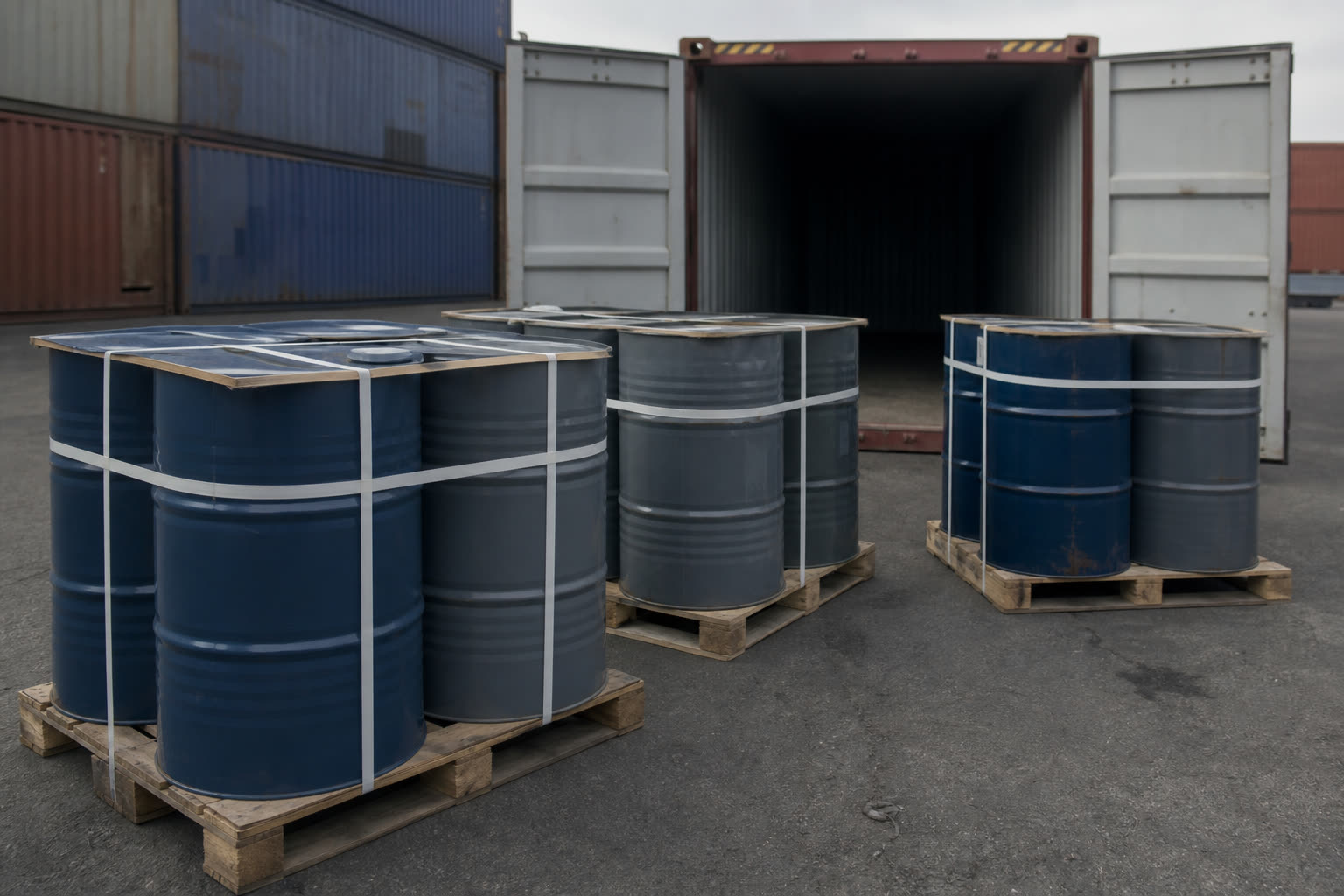
Turpentine oil travels under UN 1299, Class 3 flammable liquid, packing group III, with HS code 3805.10 for gum, wood and sulphate turpentine oils. Standard export packing is the 200 litre steel barrel, while large consumers move it in tankers. Shade & Shine Pine Chem has produced and shipped turpentine from Kanpur since 1980, in 200 litre barrels and in 12,000, 15,000 and 18,000 litre tankers, with exports to the United States, Thailand, Indonesia and China.
Ready to evaluate the material itself? Ask us for a sample of gum turpentine oil before you commit to bulk, then scale to 200 litre barrels or full tankers. Call +91 96965 09933 or write to info@shadeshinepine.com for a current quote with COA.