Turpentine oil ships internationally under HS code 3805.10, travels as UN 1299, Class 3 flammable liquid, Packing Group III, and moves cleanly through customs when the invoice, packing list, certificate of analysis, safety data sheet, dangerous goods declaration and certificate of origin all agree. This guide walks through each element from an exporter who has shipped it worldwide.
What is the correct HS code for turpentine oil?
Heading 3805 covers gum, wood and sulphate turpentine and other terpenic oils. Subheading 3805.10 is the specific code for the turpentine oils themselves, and it is what appears on our shipping bills for both gum turpentine oil and double distilled turpentine oil. National tariff lines extend this to eight digits, so confirm the final two digits with your customs broker in the destination country. Getting the code right matters twice: it fixes the duty rate and it determines whether a free trade agreement benefit is available.
Which related products carry different codes?
Isolated terpenes and downstream products classify elsewhere, so never copy the 3805.10 code across a mixed order. Gum rosin falls under heading 3806, pine oil has its own line within 3805, and separated chemicals such as alpha-pinene 95 or terpineol classify as organic chemicals in chapter 29 or as odoriferous mixtures in chapter 33 depending on form and use. A mismatched code invites reassessment, demurrage and penalties.
How is turpentine classified for transport?
Turpentine is UN 1299, proper shipping name TURPENTINE, hazard Class 3 flammable liquid, Packing Group III. In practice this means:
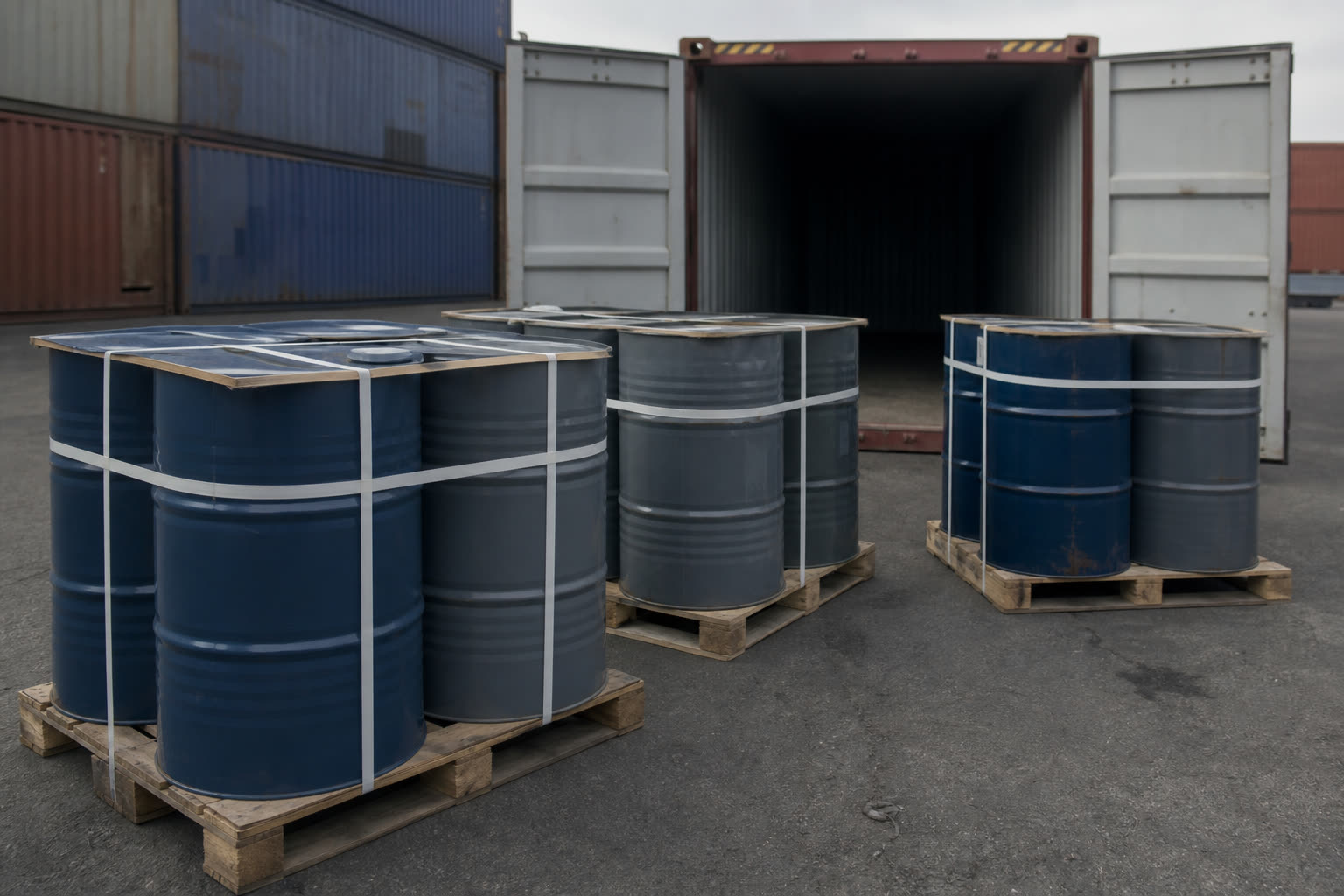
- UN certified packaging, which for us is new 200 litre mild steel barrels with sealed bungs
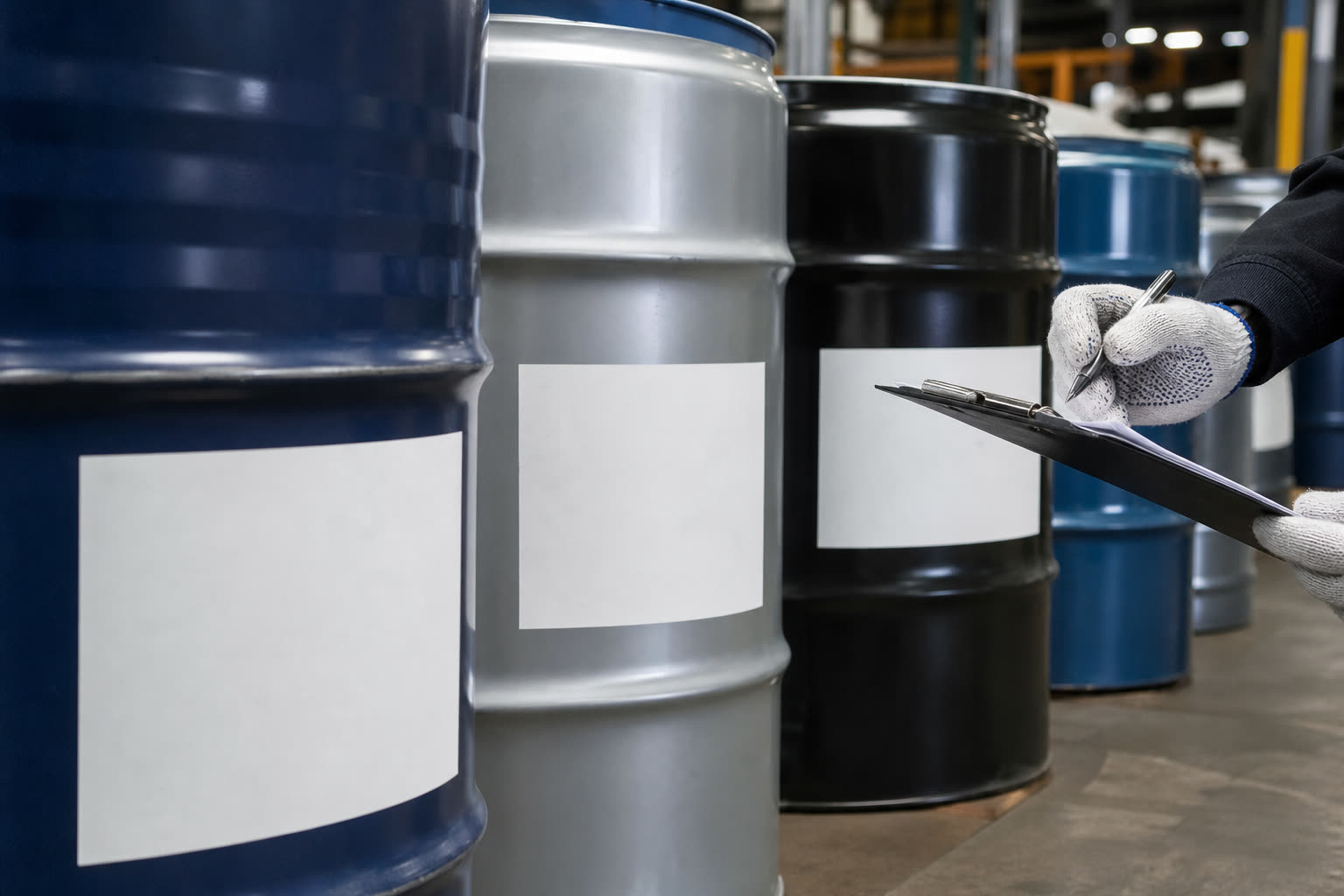
- Class 3 hazard labels and UN 1299 marks on each barrel and on the container
- A dangerous goods declaration signed by the shipper for sea freight under the IMDG Code
- Segregation rules on board, handled by the carrier when booking states the UN number correctly
Packing Group III is the lowest danger tier within Class 3, so surcharges and carrier acceptance are rarely a problem. The same flammability logic drives warehouse rules at destination, covered in turpentine storage and safety.
What documents travel with a turpentine shipment?
| Document | Purpose | Issued by |
|---|---|---|
| Commercial invoice | Value, Incoterm, HS 3805.10 | Exporter |
| Packing list | Barrel count, net and gross weight | Exporter |
| Certificate of analysis | Lot specific test results | Exporter lab |
| Safety data sheet | Hazard communication in transit and at destination | Exporter |
| DG declaration | UN 1299 Class 3 PG III details for the carrier | Exporter |
| Certificate of origin | Proof of Indian origin, FTA duty claims | Authorised agency |
| Bill of lading | Contract of carriage and title | Carrier |
We attach a certificate of analysis to every consignment without being asked, because destination regulators and your own QC both need it. What sits on that COA and how to verify it is covered in alpha-pinene content explained.
Why does the certificate of origin matter for duty?
India has trade agreements that can reduce or remove import duty on Indian origin goods, and the ASEAN India agreement is the one turpentine buyers in Thailand, Indonesia, Malaysia and Vietnam should check first. To claim a preferential rate the importer files the prescribed certificate of origin issued in India against that agreement. Since turpentine is wholly obtained from Indian pine resin, origin qualification is straightforward. The saving flows directly to your landed cost, which is why we flag it in turpentine oil price factors. Confirm the current tariff treatment with your broker before shipment, since rates and procedures are updated periodically.
What does the MSDS need to show?
The safety data sheet should identify the product as gum spirit of turpentine, CAS 8006-64-2, list the flammable liquid classification, flash point in the low thirties Celsius, handling and fire fighting measures, and the UN 1299 transport data. Many destination authorities also expect the sheet in a 16 section format aligned to the globally harmonised system. Ask your supplier for it at the sampling stage, not after booking.
What trips up first time importers?
- Booking cargo without declaring the UN number, which gets containers rolled at port
- Copying an old invoice HS code such as a chapter 29 line, triggering reassessment
- Missing the certificate of origin and paying full duty that an FTA would have removed
- Accepting material with no lot specific COA, leaving no basis for a quality claim
- Ignoring destination rules on drum condition and labelling language
How should the cargo be insured and inspected?
Marine insurance for Class 3 cargo is routine, but two clauses deserve attention. First, insure at invoice value plus freight plus a margin, so a total loss does not leave the duty and clearance costs stranded. Second, confirm the policy covers leakage and contamination, the two loss modes that actually happen with drummed liquids, rather than only total loss. Buyers who want independent eyes at loading can appoint a third party inspection agency to witness sampling, verify barrel count and seal numbers, and countersign the packing list. We support pre shipment inspection without hesitation, because a witnessed loading protects the seller from transit claims just as much as it protects the buyer.
What changes for bulk tanker exports versus barrels?
Most international movements go in barrels inside standard containers because the receiving side rarely has Class 3 bulk unloading. Where a buyer does have tank storage and pumping approved for flammables, ISO tank containers are an option, with the same UN 1299 declaration and a tank approved for Class 3 service. Within India the choice is simpler: 200 litre barrels for formulators, and 12,000, 15,000 or 18,000 litre road tankers under domestic hazardous transport rules for bulk consumers. The documentation set stays parallel, with the COA and safety data sheet following the product whichever way it moves.
How do we run exports at Shade Shine Pine?
From Kanpur we ship turpentine worldwide, with regular consignments to the United States, Thailand, Indonesia and China. The process is fixed: sample first, written approval, then loading of 200 litre barrels with the full document set including COA, SDS, DG declaration and certificate of origin where the buyer claims duty benefit. New to importing turpentine from India? The commercial side of supplier selection is covered in buy turpentine oil india.
Send us your destination port and monthly volume and we will return a full export quotation with documents listed line by line. Container loads of 200 litre barrels, samples ahead of every first order: +91 96965 09933 or info@shadeshinepine.com.