Buying turpentine oil in India comes down to verifying three things before money moves: that the supplier actually produces or reliably processes the oil, that every lot ships with a GC backed certificate of analysis, and that you can test a sample in your own process before committing to bulk. Get those right and packing, terms and logistics fall into place.
What does a credible turpentine supplier look like?
India has a long pine chemicals tradition built on Himalayan chir pine resin, alongside processors who work imported oleoresin and oil. Traders with no production base also crowd the market, and that is where quality problems concentrate. Signals worth weighting:
- Production history. A works that has run for decades has survived multiple price cycles on repeat business. Shade & Shine Pine Chem, for example, has produced pine chemicals in Kanpur since 1980.
- A full product ladder. A supplier offering gum turpentine oil, double distilled turpentine oil and downstream fractions such as alpha-pinene 95% and dipentene demonstrably runs stills, because fractions only exist where fractionation happens.
- Export track record. Shipping hazardous Class 3 cargo to markets like the United States, Thailand, Indonesia and China requires documentation discipline a box shifter cannot fake.
- Willingness to be tested. The right answer to "can we sample and independently test first" is always yes.
Which documents should you demand?
- Certificate of analysis, every consignment. Not a generic datasheet. The COA must carry the batch number on the barrels and state specific gravity, refractive index and alpha-pinene by GC. Typical honest values: SG 0.855 to 0.870, RI 1.465 to 1.480, alpha-pinene 60 to 70 percent for gum grade and 70 to 80 percent for DD.
- The GC chromatogram on request. The trace exposes petroleum dilution and heavy tails that a summary number hides. How to read it is covered in alpha-pinene content explained.
- Safety data sheet. Turpentine is UN 1299, Class 3, packing group III, and your stores and forwarder both need the SDS.
- Export paperwork. HS code 3805.10, dangerous goods declaration, and clean commercial documents. Sloppy DG paperwork strands containers.
Why insist on samples before bulk?
Because turpentine is bought on behaviour, not just numbers. A sample lets your lab confirm the COA independently, and lets production confirm the oil behaves in your actual formulation or reaction: odour in the finished polish, residue in the dried film, yield in the conversion. A supplier confident in their material treats sampling as normal commercial process. We ship documented samples before any first bulk order as standard practice. Match the sample to the grade decision too, the choice between standard and DD material is laid out in gum turpentine vs double distilled.
What tests should you run on arrival?
| Test | Time needed | What it catches |
|---|---|---|
| Specific gravity, 0.855 to 0.870 | Minutes | Kerosene or mineral spirit dilution |
| Refractive index, 1.465 to 1.480 | Minutes | Blending and gross adulteration |
| Odour and appearance | Minutes | Oxidised or contaminated stock, water haze |
| Evaporation residue | Under an hour | Heavy ends that leave tack on surfaces |
| GC assay, periodic or third party | Lab turnaround | Everything above, decisively |
Run the quick bench tests on every receipt and the GC audit periodically or on any anomaly. Reject against the COA, not against a verbal spec.
How is turpentine packed and shipped?
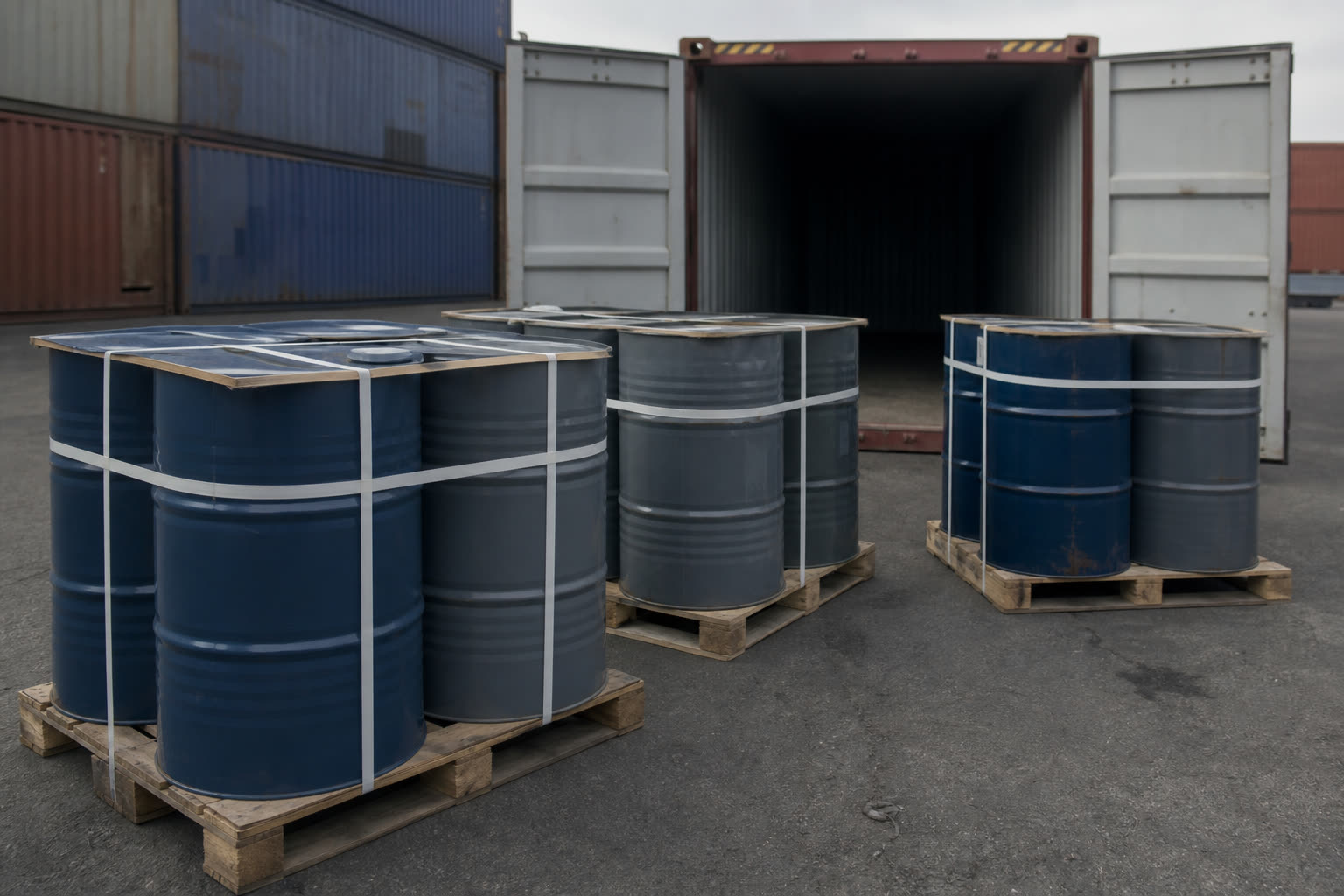
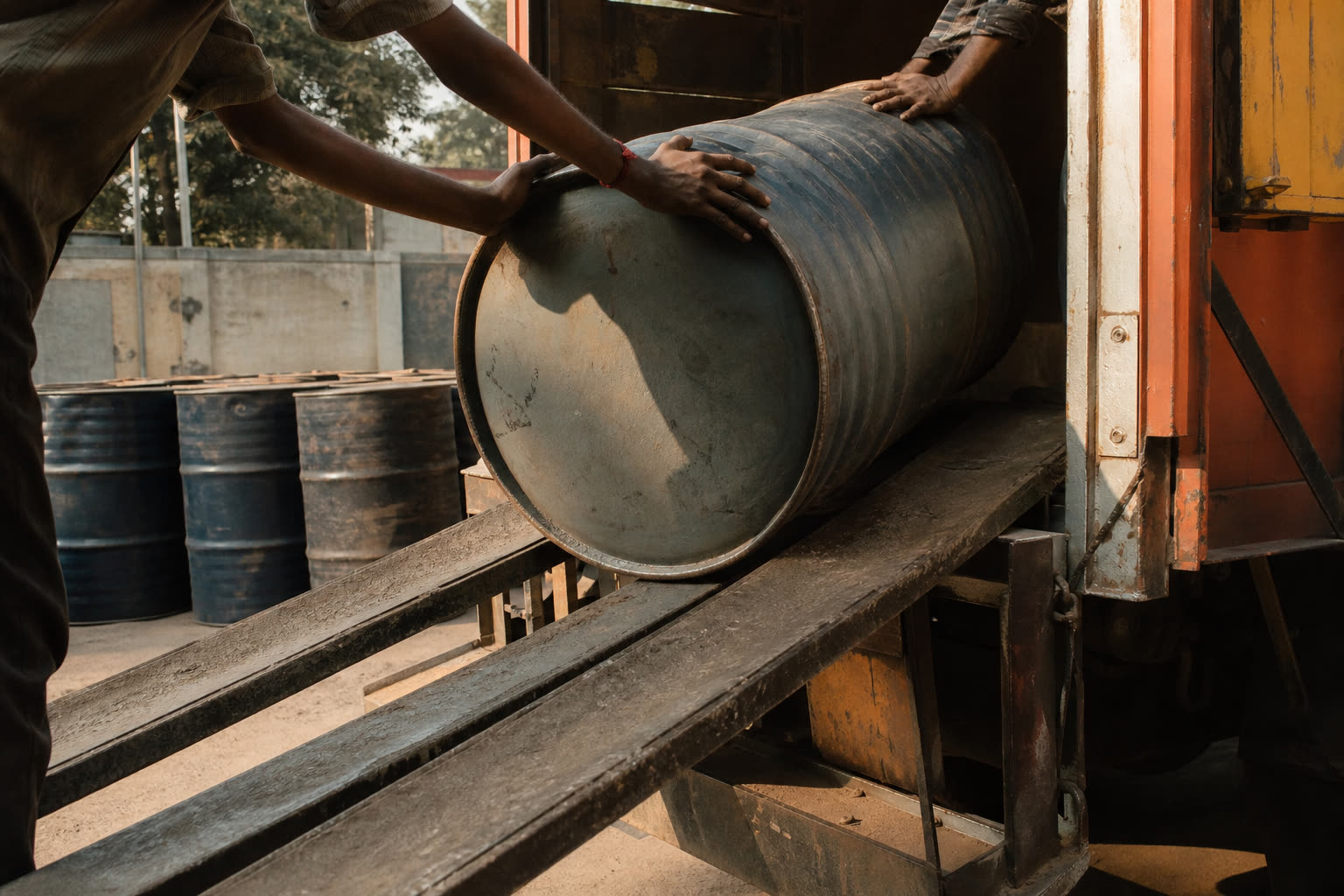
- 200 litre steel barrels. The standard unit for domestic and containerised export trade, UN certified for Class 3 PG III. Around 80 barrels fill a 20 foot container depending on stowage rules.
- Tankers. Consumers with tank storage take 12,000, 15,000 or 18,000 litre road tankers, cutting packaging cost and drum handling entirely.
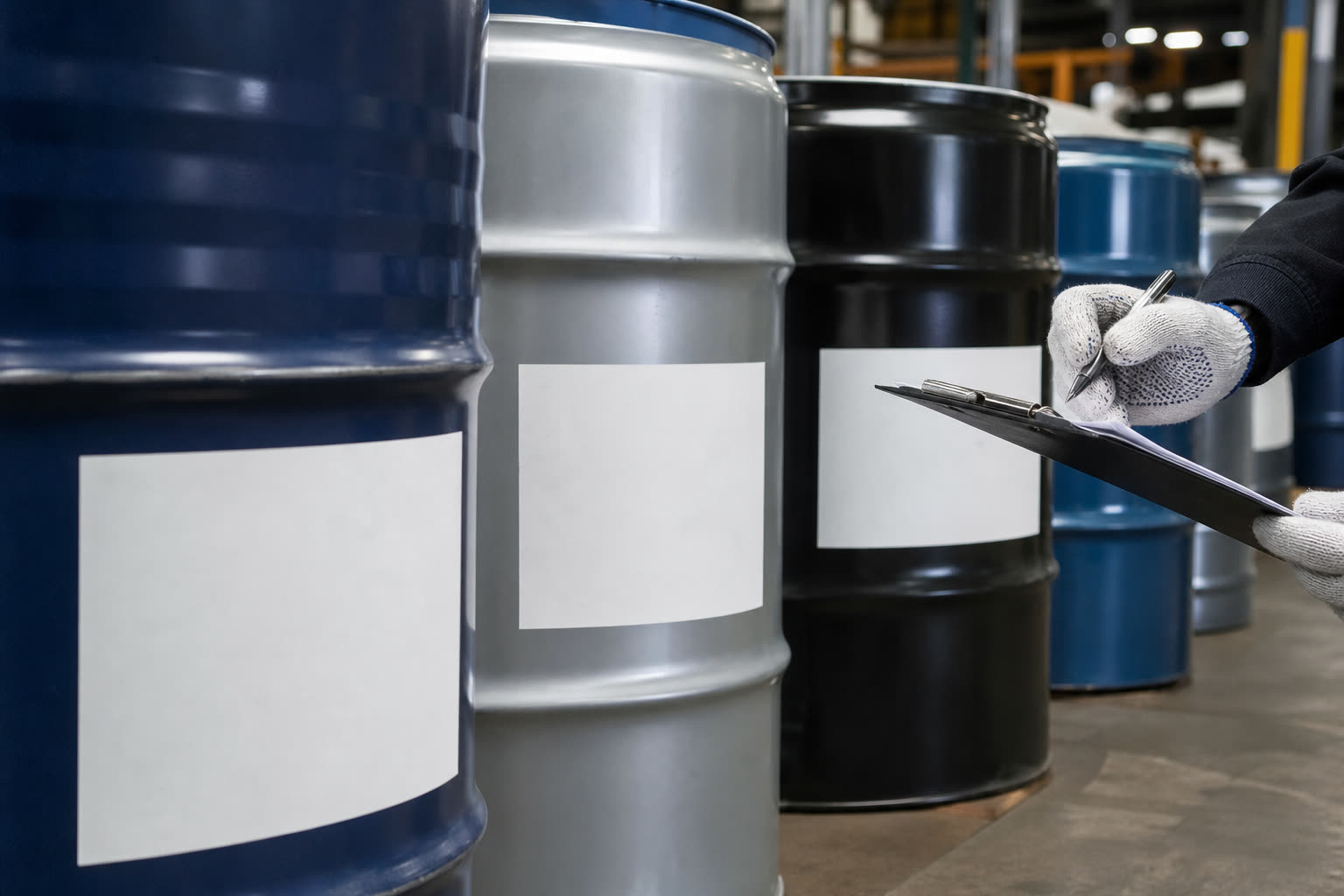
- Labelling. Each barrel should carry the product name, UN 1299 Class 3 marks, batch number and net content, matching the COA and DG declaration.
On commercial terms, domestic supply typically moves ex works or delivered, while exports run FOB Indian port or CIF destination. Because this is hazardous cargo, quote comparisons must be like for like: a CIF price includes DG surcharges that an FOB price leaves with you. Freight and seasonality both move quotes through the year, and the drivers are mapped in turpentine oil price factors.
What quantity should a first order be?
Smaller than most buyers think. The sensible ladder runs: documented sample for lab and formulation trials, then a pilot order of five to twenty barrels to prove logistics, receipt testing and behaviour at production scale, then contracted volume. Skipping the pilot step to capture a volume discount is false economy, because the pilot is where paperwork errors, transit damage patterns and QC disagreements surface cheaply, while the stakes are still a few barrels rather than a full container.
Match grade to the trial as well. If the application might justify the premium cut, sample true turpentine against the mineral substitute and standard against DD in the same trial round, so the commercial decision rests on one consistent data set. A supplier running both grades off the same resin stream can ship paired samples from current production, which makes the comparison honest.
What separates a good long term supply relationship?
- Consistency over cheapness. A lot that fails QC costs rework, line downtime and often the customer behind you. The lowest spot quote in this market is frequently the most expensive drum you will ever buy.
- Transparency on origin and grade. A supplier should tell you plainly what the oil is, what it is not, and which grade your application actually needs, including when the cheaper grade is the right answer.
- Responsiveness. Pricing in this market moves with resin seasons, so a supplier who answers the phone with a current number is worth holding.
Ready to start the evaluation?
Put us through this exact checklist. Shade & Shine Pine Chem has produced gum and double distilled turpentine in Kanpur since 1980, ships with COA on every consignment, samples before bulk, and exports worldwide including the United States, Thailand, Indonesia and China. Request a documented sample today, test it against everything above, then call +91 96965 09933 or email info@shadeshinepine.com to fix your first order in 200 litre barrels or tanker volume.