Turpentine oil is a flammable liquid classified as UN 1299, Class 3, packing group III. Its flash point sits in the mid 30s Celsius, so vapour can ignite at warm ambient temperatures. Safe handling rests on four controls: keep ignition sources away, bond and earth during transfer, ventilate storage and work areas, and keep containers closed to limit both vapour and oxidation.
What do the classification codes actually mean?
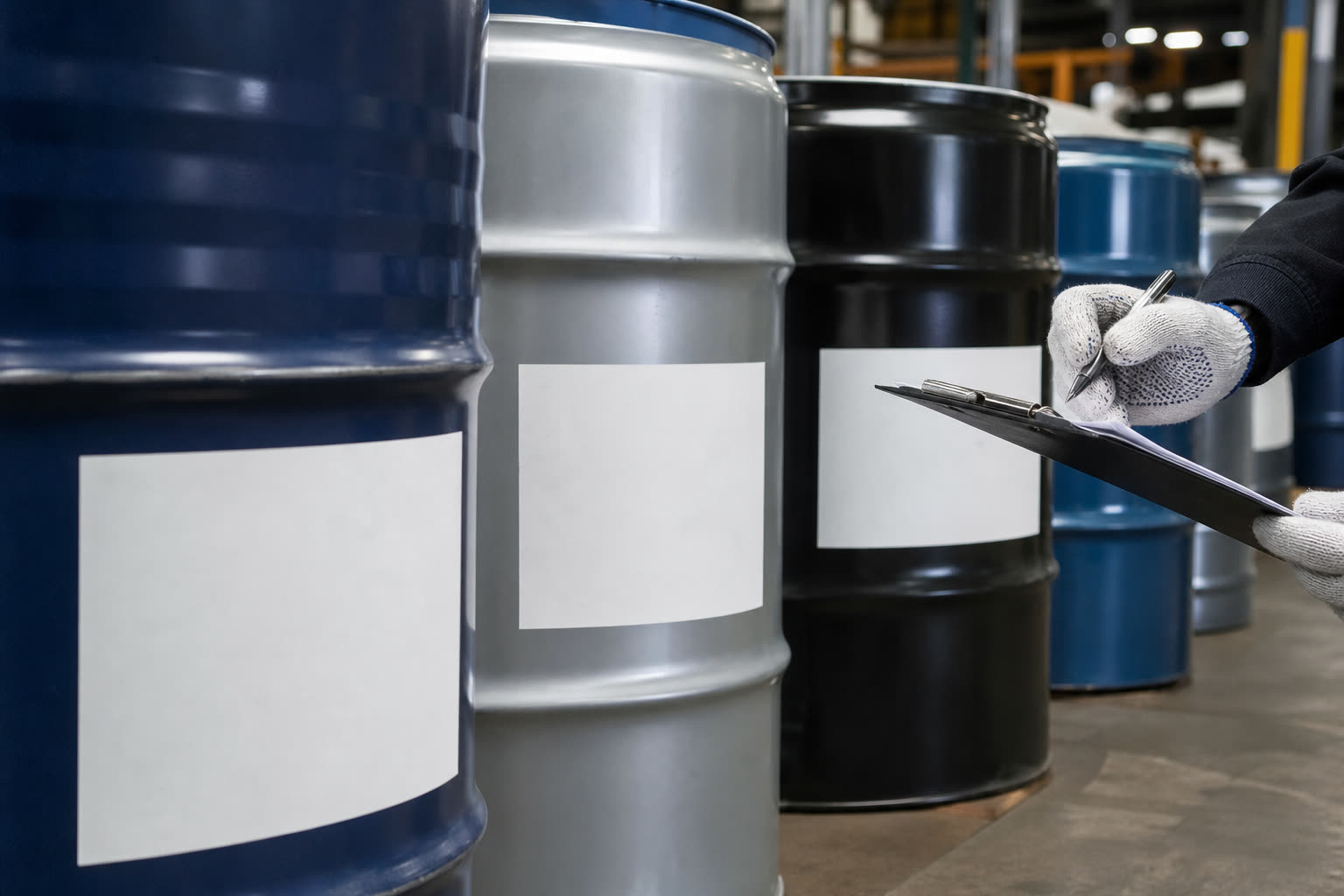
- UN 1299 is the United Nations number assigned to turpentine for transport. It appears on drum labels, tank placards and shipping documents, and it is the number an emergency responder looks up first.
- Class 3 means flammable liquid.
- Packing group III places turpentine in the lower danger band within Class 3, reflecting its flash point in the low to mid 30s Celsius range, above highly volatile solvents like acetone but well below safe handling temperatures in a hot warehouse.
- HS 3805.10 is the customs heading for gum, wood and sulphate turpentine oils, relevant for import clearance rather than safety, but worth confirming on export paperwork.
Every consignment should travel with a safety data sheet. Read sections 7 (handling and storage), 9 (physical properties, including flash point) and 5 (fire fighting) before the first drum arrives, and keep the SDS accessible at the store.
How should turpentine drums be stored?
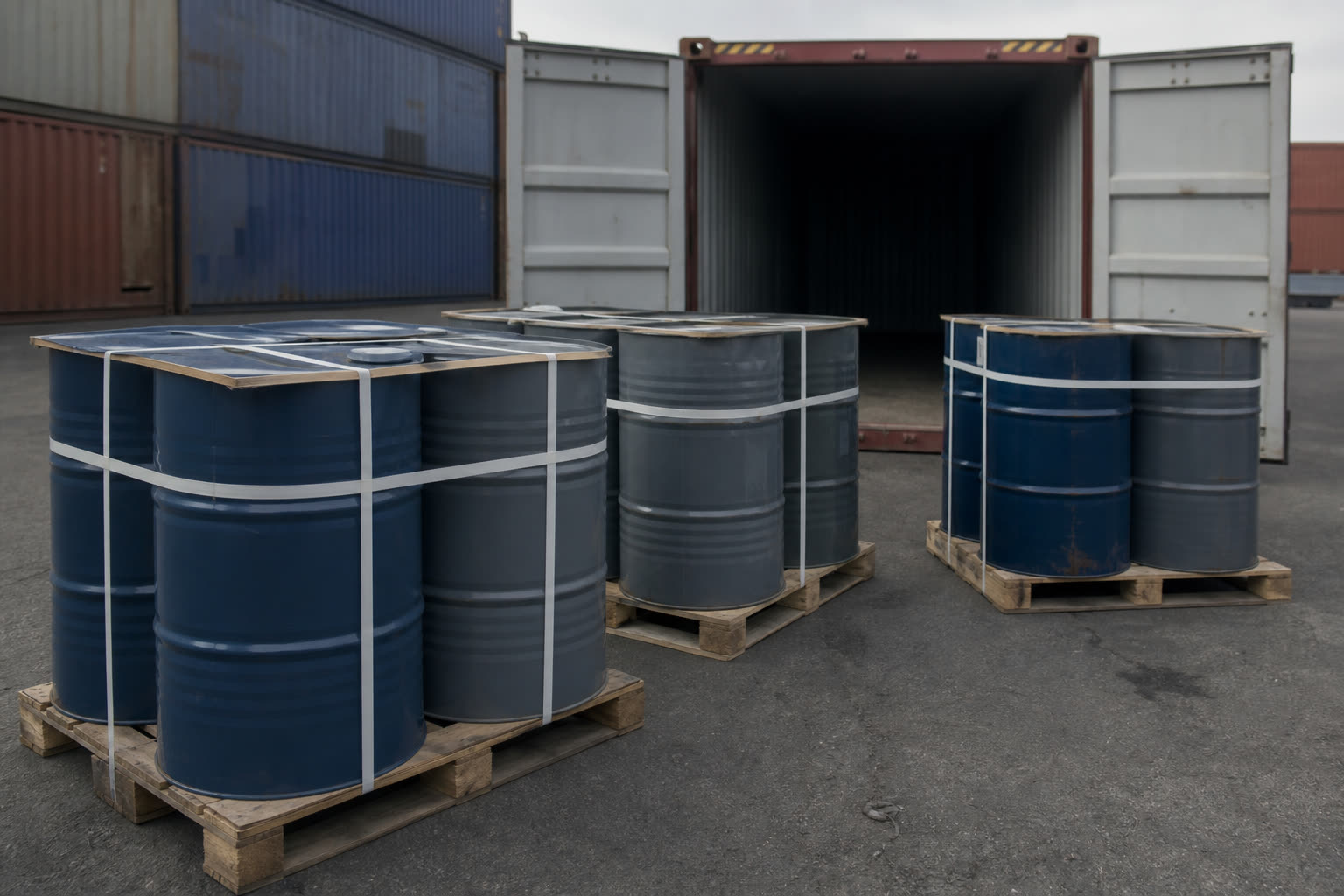
The standard trade package is the 200 litre steel barrel, and a well run drum store follows solvent practice:
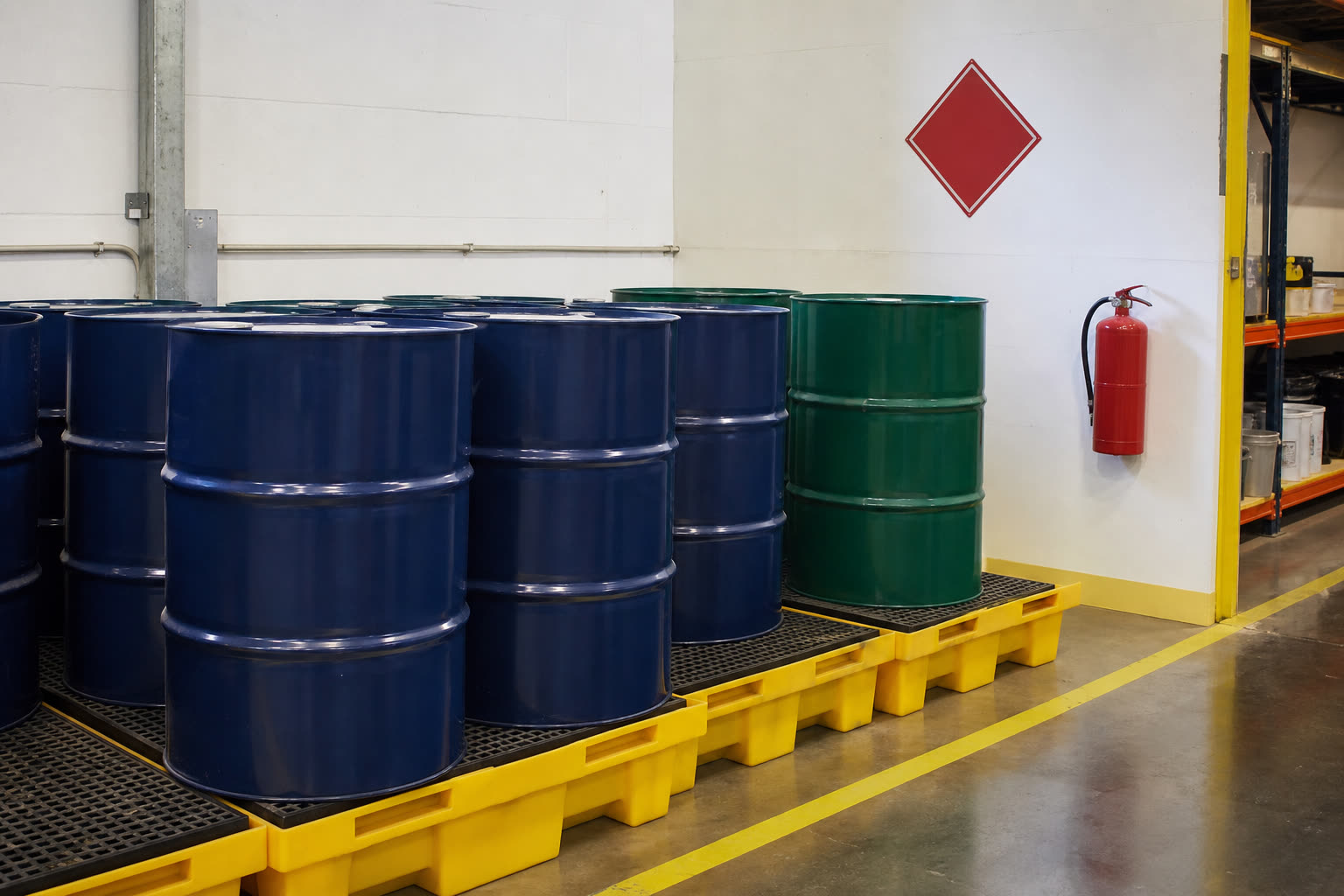
- Cool, shaded, ventilated. Store below direct sun. Heat raises vapour pressure, stresses seams and accelerates oxidation. Ground level ventilation matters because turpentine vapour is heavier than air and pools low.
- Away from ignition and oxidisers. No hot work, smoking, sparking equipment or strong oxidising chemicals in or near the store. Electrical fittings in dedicated solvent stores should be suitable for flammable atmospheres.
- Bunded floor. A containment bund or spill pallets sized to hold the largest credible spill keeps a leak from becoming a site problem.
- Bungs up and tight. Store drums upright, bungs closed. Partially emptied drums hold an air space where alpha-pinene oxidises, so decant into smaller sealed containers if a drum will stand part full for long.
- Stock rotation. First in, first out, with batch numbers matched to COAs so any query traces back cleanly.
Why is static electricity the hidden hazard?
Turpentine, like most hydrocarbon liquids, conducts electricity poorly. Liquid moving through hoses and falling into containers builds charge, and an unbonded metal container can accumulate enough to spark inside a flammable vapour space. The fix is standard and cheap:
- Bond the source container to the receiving container with a clip lead before opening either.
- Earth the fixed system, pumps, pipework, tanks, to a verified earthing point.
- Fill from the bottom or with a dip pipe rather than splash filling, and keep transfer velocities modest.
- Avoid free fall of liquid through air, which both builds charge and throws mist.
Cotton rags soaked in turpentine and drying oil mixtures deserve one specific warning: linseed oil residues on rags can self heat and ignite spontaneously. Keep used rags in a closed metal bin with water, or spread flat to dry outdoors, never piled.
Does turpentine degrade in storage?
Yes, by oxidation rather than by spoiling. Alpha-pinene reacts slowly with oxygen, forming peroxides and oxygenated terpenes. The signs are a sharpened, less pleasant odour, slight yellowing, rising density and, over long periods, a falling pinene assay. Consequences differ by use: a polish maker may never notice, a pinene converter or artist colour house will. Practical shelf life management:
- Buy in quantities matched to consumption, six to twelve months of stock is a sensible ceiling for quality sensitive users.
- Keep drums sealed, cool and full. Air space is the enemy.
- Retest old stock against the original COA, gravity and refractive index on the bench, GC if the material feeds chemistry. Interpretation of those numbers is covered in alpha-pinene content explained.
What should be on the spill and fire plan?
| Scenario | Response |
|---|---|
| Small spill | Eliminate ignition sources, ventilate, absorb with inert material, dispose as flammable waste |
| Large spill | Evacuate low areas, contain in the bund, prevent entry to drains, call trained responders |
| Fire | Foam, dry chemical or carbon dioxide. Water jets spread burning turpentine, water spray only to cool exposed drums |
| Skin and eye contact | Remove contaminated clothing, wash skin with soap and water, irrigate eyes and seek medical advice per the SDS |
Nitrile gloves, splash goggles and good general ventilation cover routine dispensing. Respiratory protection enters the picture only for poorly ventilated spaces or spill response.
What changes for tanker and bulk tank storage?
Consumers taking 12,000 to 18,000 litre tanker deliveries move from drum discipline to tank farm discipline. The additions are standard for Class 3 service:
- Fixed earthing and bonding points at the unloading bay, connected before hoses are coupled and verified on a schedule.
- Bottom loading or dip pipes on the receiving tank, so incoming oil never free falls through vapour space.
- Pressure vacuum venting sized for filling rates, venting to a safe elevation away from ignition sources.
- Bunding at 110 percent of the largest tank, with drain valves kept closed and locked.
- Nitrogen padding where quality justifies it. An inert headspace stops oxidation entirely, worth considering for high value DD stock held over long periods.
Receipt procedure matters as much as hardware: check the seals against the despatch note, draw a top, middle and bottom sample before unloading, and hold the tanker until gravity and refractive index match the COA.
Does grade choice change the safety picture?
Not materially. Gum turpentine oil and double distilled turpentine oil share the same UN 1299 classification and the same handling rules, as do related terpenes such as dipentene and pine oil with their own SDS specifics. What grade choice does change is oxidation sensitivity economics, since higher value material justifies stricter stock rotation.
Shade & Shine Pine Chem has packed and shipped turpentine from Kanpur since 1980, in UN compliant 200 litre barrels and 12,000 to 18,000 litre tankers, with COA and SDS documentation supporting every consignment to markets including the United States, Thailand, Indonesia and China. Start with a documented sample, satisfy your safety and QC teams, then call +91 96965 09933 or email info@shadeshinepine.com to schedule barrels.