The quality of a barrel of gum turpentine oil is decided at five points long before the bung is sealed: how the pine is tapped, how fast and clean the oleoresin travels, how the still is run, how the distillate is settled and filtered, and how the barrel itself is prepared. Follow the chain from forest to gum turpentine oil barrel and the quality story tells itself.
Where does the chain start?
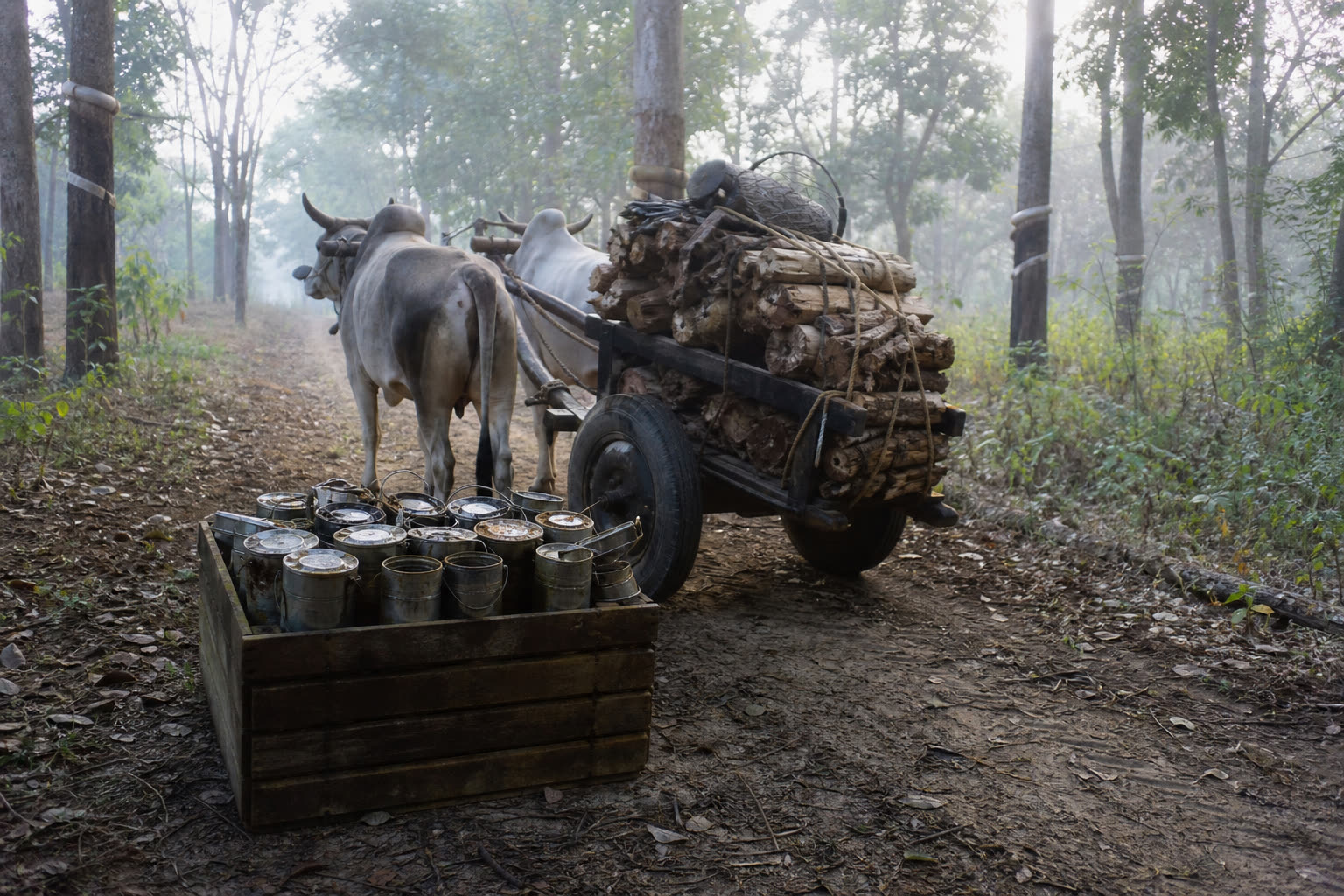
It starts in the chir pine belt of the Himalayan foothills, where tapping crews work Pinus roxburghii through the warm months. A cut or borehole in the bark opens the resin canals, and the tree exudes oleoresin, a sticky mixture that is roughly one fifth volatile turpentine and the rest rosin acids plus water and debris. Tapping is licensed and seasonal, which is why supply and price move with the calendar, a dynamic explained in turpentine oil price factors.
What can go wrong at the tree?
Plenty. Oleoresin left too long in open collection cups loses its lightest terpenes to evaporation and picks up dust, bark and insects. Rain water in the cup starts emulsification headaches later. Crews that clear cups frequently and keep them covered deliver oleoresin that is fresher, cleaner and richer in volatiles, and that difference survives all the way to your gas chromatograph.
How does oleoresin reach the distillery?
Collected oleoresin is weighed, graded and moved in sealed containers to the distillation unit. Two things matter in transit: speed, because volatiles keep escaping from warm resin, and honesty of grading, because oleoresin adulterated with stones, sand or water cheats the buyer twice, once on weight and again on yield. Established processors work with the same collection networks season after season precisely to control this stage. It is invisible on any certificate, yet it sets the ceiling on everything downstream.
What happens inside the still?
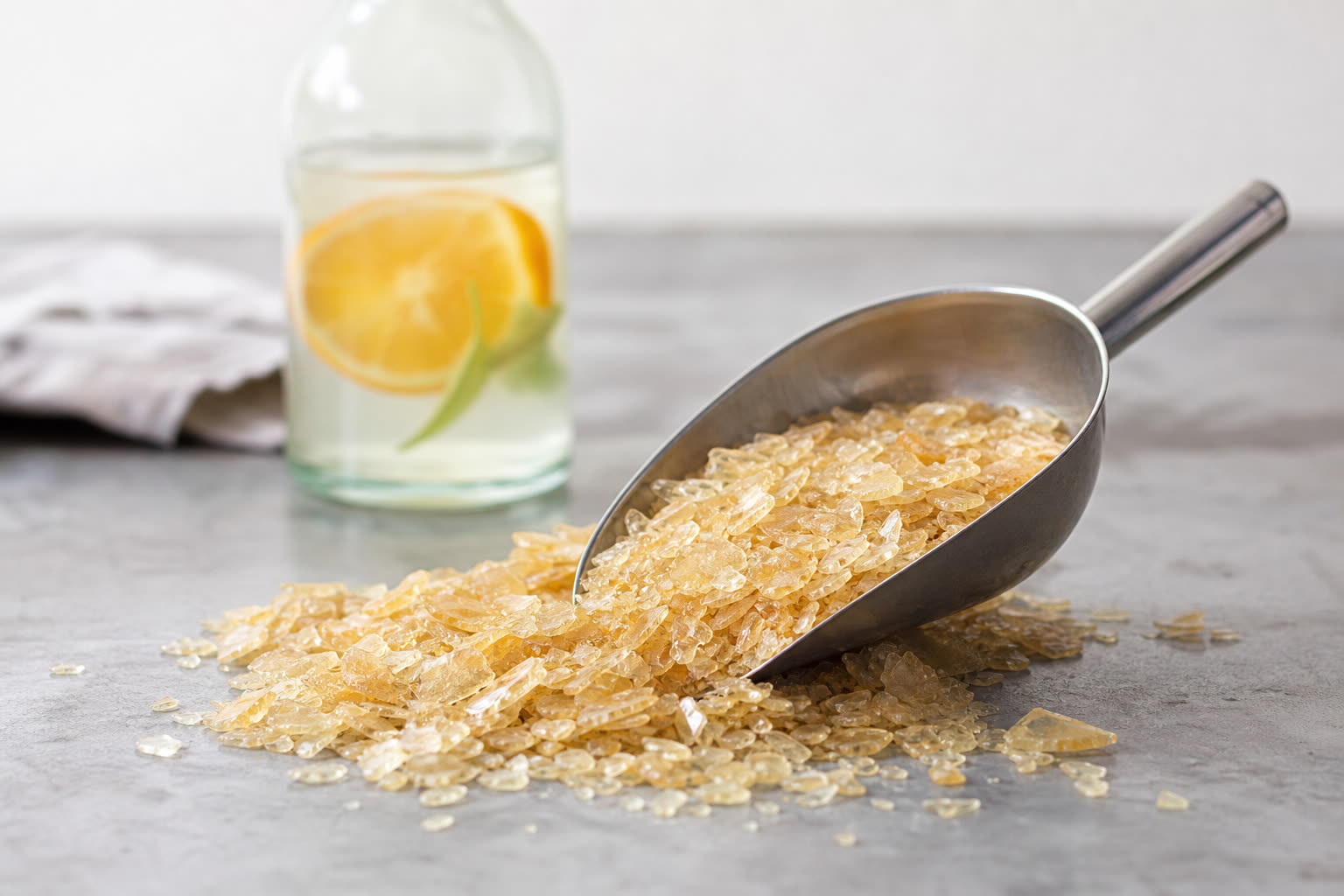
At the distillery the oleoresin is melted, washed and screened, then steam distilled. Steam carries the volatile terpenes overhead, the vapour is condensed, and the distillate separates in a Florentine flask, turpentine floating above water. The molten residue left behind is rosin, drained, cooled and sold as gum rosin. One tonne of oleoresin typically yields on the order of 150 to 200 kilograms of turpentine with the balance mostly rosin. The full unit operation, including how the second pass creates double distilled turpentine oil, is described in how turpentine is distilled.
Where is quality won or lost at the still?
- Temperature discipline. Overheating scorches the resin, darkens the rosin and drags heavy ends into the turpentine, raising evaporation residue.
- Clean steam and clean vessels. Rust and old residue tint the distillate.
- Sharp cut points. Taking the distillation too far chases yield at the cost of purity.
- Water separation. Sloppy decanting leaves haze and moisture that show up as cloudy drums months later.
What happens between still and barrel?
Fresh distillate is settled so the last traces of water drop out, then filtered bright. The lot is tanked, homogenised and sampled. Our lab runs the standard panel on every lot: gas chromatography for the terpene split, where our GTO runs 60 to 70 percent alpha-pinene, specific gravity against the 0.855 to 0.870 band, refractive index against 1.465 to 1.480, plus residue and colour checks. Those results become the certificate of analysis that travels with the consignment. What each number means to a buyer is unpacked in alpha-pinene content explained.
Why does the barrel itself matter?
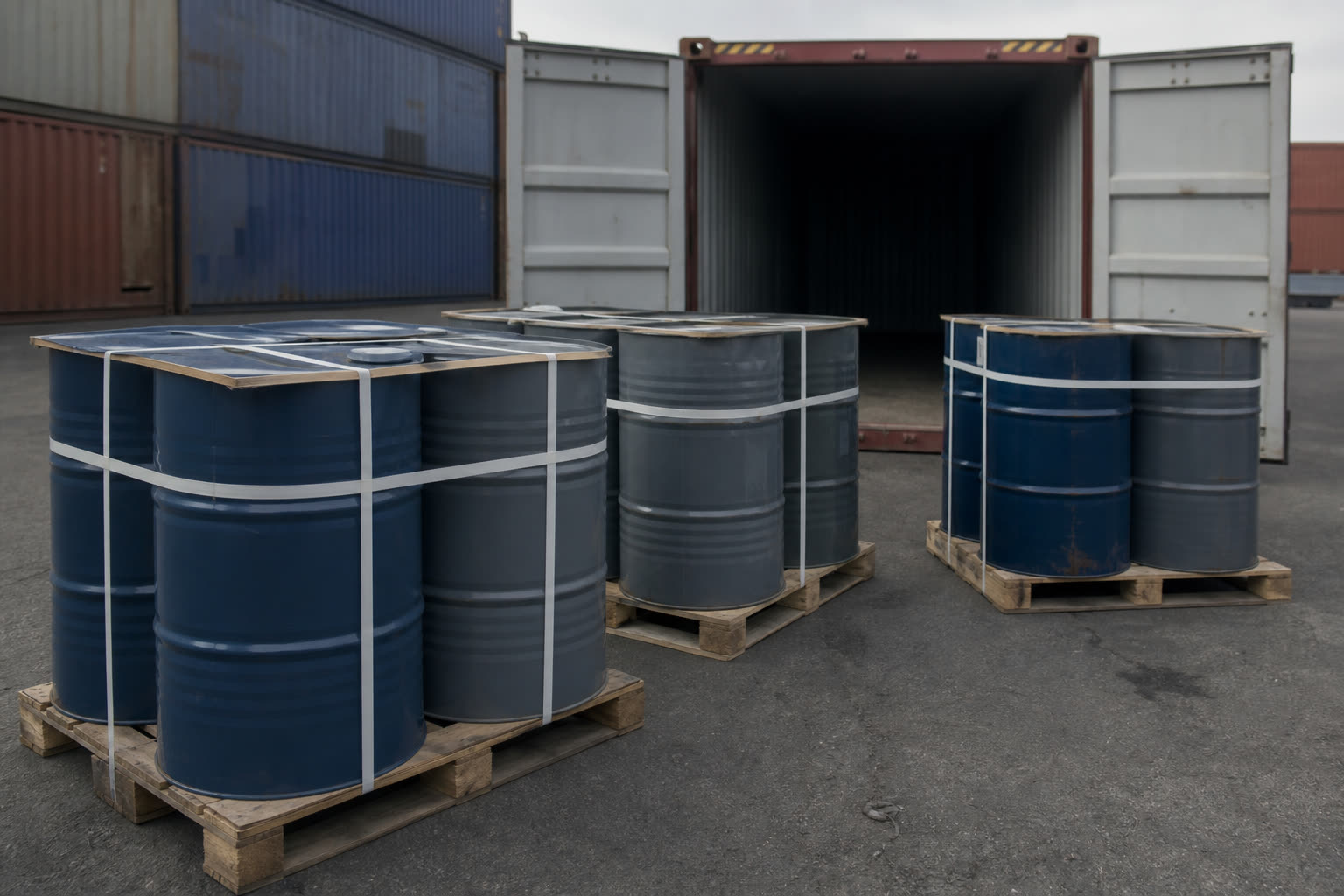
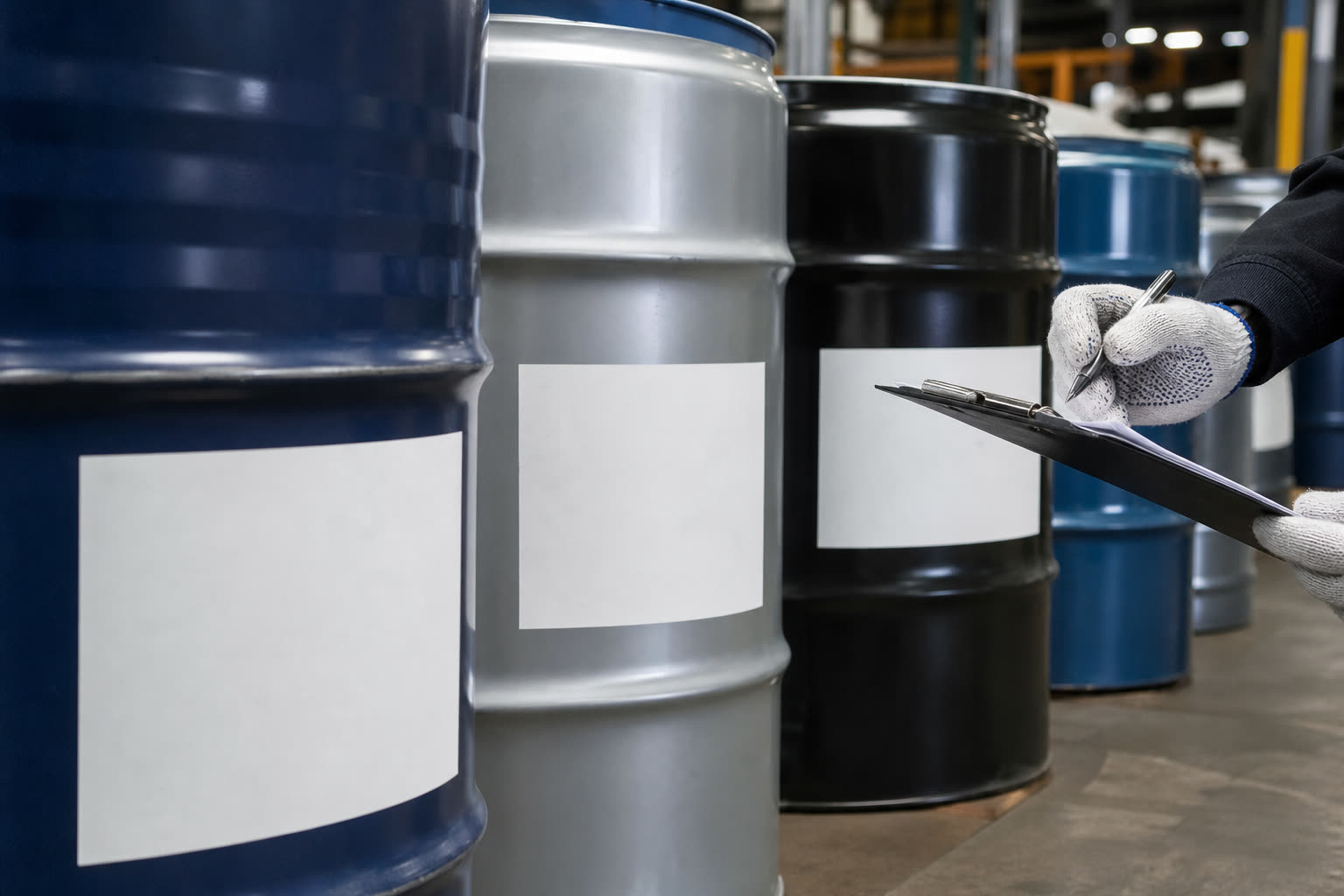
A perfect lot can be ruined by a bad drum. We fill new 200 litre mild steel barrels, checked dry and clean, filled with minimal headspace and closed with sealed bungs, then marked with UN 1299 Class 3 labels and the lot number that ties each barrel back to its COA. Reused drums with unknown history are a false economy: residues of the previous contents dissolve straight into a solvent as aggressive as turpentine. Once sealed, cool and shaded storage keeps the material in specification for years, as covered in turpentine storage and safety.
How does the product finally move?
From Kanpur the barrels go out three ways: single barrels and small lots to domestic formulators, 12,000 to 18,000 litre road tankers to bulk consumers, and container loads of 80 barrels to export buyers in the United States, Thailand, Indonesia, China and beyond. Every route follows the same rule we have kept since 1980: the buyer sees a sample and approves it before bulk ships, and every consignment carries its certificate of analysis.
How does the season shape the barrel you receive?
Tapping follows the weather, so the chain breathes with the calendar. The main flow of fresh oleoresin arrives through the warm months, which means distilleries run hardest from late spring into autumn and carry stock through winter. Three practical consequences reach the buyer. First, material bought soon after the peak season is the freshest of the year, distilled from resin that spent the least time in transit. Second, availability tightens and prices firm in the months before the new season opens, when everyone is drawing down the same inventories. Third, a supplier with proper storage bridges the gap invisibly, because sealed barrels kept cool and dark hold specification across the off season. Buyers with steady annual demand handle this by contracting volume across the year rather than chasing spot lots in the lean months, which also locks the same resin catchment into every delivery.
Why does traceability matter more than a brochure?
Every barrel we fill carries a lot number that connects it to a distillation date, a set of laboratory results and a resin intake record. When a buyer calls about a drum eight months after delivery, that number answers the question in minutes. Traceability is also the honest foundation of any quality claim process: without a lot number on the drum and a matching COA in the file, a dispute becomes an exchange of opinions. With them, it is a comparison of measurements.
What should a buyer take from all this?
| Stage | Quality risk | What protects you |
|---|---|---|
| Tapping and collection | Evaporation loss, dirt, water | Supplier with a stable resin network |
| Distillation | Heavy ends, colour, residue | Residue and colour limits on the COA |
| Settling and filtration | Haze, moisture | Clarity check on your sample |
| Packing | Contamination from drums | New barrels, lot traceability |
A supplier who controls the whole chain can answer questions at every row of that table. Put us to the test: ask how any lot was made, request the sample, then book your 200 litre barrels or a tanker on +91 96965 09933.