Double distilled turpentine is the preferred feedstock for aroma chemical synthesis because its 70 to 80 percent alpha-pinene content converts more efficiently into camphor, terpineol and downstream fragrance molecules than standard grade material. In pinene chemistry, feed purity is not a cosmetic specification. It sets reactor yield, catalyst life and the separation load on every step that follows.
What is actually being bought when a plant buys turpentine?
A synthesis plant is not buying a solvent. It is buying moles of pinene. Turpentine is the natural carrier of alpha-pinene and beta-pinene, and everything else in the drum, the carene, the limonene, the heavy ends, is either a co product to be recovered or ballast to be paid for, transported, heated and separated. That is the whole commercial logic of double distilled turpentine oil: the second fractionation concentrates the molecule the reactor wants. How the two grades differ physically is covered in gum turpentine vs double distilled.
Which products are made from pinene feedstock?
Camphor and its chain
The classic industrial route runs alpha-pinene through acid catalysed isomerisation to camphene, then esterification to isobornyl acetate, hydrolysis to isoborneol and dehydrogenation to camphor. Camphor feeds pharma, religious and personal care markets, and the intermediates isobornyl acetate and isoborneol sell in their own right as fragrance materials.
Terpineol and pine fragrance chemicals
Hydration of alpha-pinene under acid conditions gives terpin hydrate and onward dehydration gives terpineol, the lilac note that anchors pine type perfumery and disinfectant fragrance. Related processing also supports synthetic pine oil production for cleaners and flotation.
The beta-pinene branch
Beta-pinene pyrolyses to myrcene, the gateway to geraniol, nerol, citral, linalool and the whole rose and citrus family of aroma chemicals. Plants running this chemistry buy beta-pinene 95 as an isolated feed, since gum turpentine from most Indian and Chinese sources carries only a modest beta fraction.
Flavour and resin side streams
Limonene rich dipentene and delta-3-carene, both recovered during fractionation, feed solvent, resin and specific synthesis markets, so a well run terpene complex wastes almost nothing.
Why does feed purity change reactor yield?
Three mechanisms, all of them costed in real money.
- Stoichiometry. A reactor charged with 80 percent alpha-pinene feed simply contains more convertible material per tonne than one charged at 60 percent. The difference compounds across every batch of the year.
- Selectivity. Non pinene terpenes are not inert. Under the acid catalysts used for isomerisation and hydration they form their own by products, polymers and tars that consume catalyst, foul equipment and complicate distillation of the product.
- Separation load. Whatever does not react must be removed downstream. Every percent of ballast in the feed is a percent that the product stills must strip out, at the cost of energy, capacity and yield losses in the cuts.
This is why aroma buyers specify a minimum alpha-pinene assay and verify it by gas chromatography, a discipline explained in alpha-pinene content explained.
When is DD turpentine the right feed, and when is isolated pinene better?
| Situation | Better feed | Reasoning |
|---|---|---|
| Camphor plant with own fractionation | DD turpentine | Cheapest pinene per kilogram, plant recovers co products |
| Terpineol or pine oil production | DD turpentine | Route tolerates the minor terpene fraction |
| High specification fragrance synthesis | Alpha-pinene 95 | Tight impurity limits, no fractionation on site |
| Myrcene and citral chain | Beta-pinene 95 | Gum feed too lean in beta-pinene |
Plants without their own fractionation column usually step up to alpha-pinene 95 and pay for purity once instead of processing ballast forever. Integrated terpene complexes buy DD turpentine and monetise every fraction.
What else besides assay should a synthesis buyer specify?
- Moisture, since water deactivates acid catalysts and shifts hydration equilibria.
- Evaporation residue, because heavy ends foul preheaters and columns.
- Peroxide history, meaning fresh, properly stored material, as oxidised pinene brings radical by products into the reaction. Storage practice is covered in turpentine storage and safety.
- Lot consistency, because catalyst systems are tuned to a feed fingerprint. A stable supplier matters as much as a good specification.
How should a plant qualify a new DD feed lot?
Qualification is cheap compared with a fouled catalyst bed, so run it as a fixed protocol rather than a judgement call.
- Paper check: compare the supplier COA against your specification and against the last five accepted lots, looking for drift in minor peaks, not just the alpha-pinene headline.
- Bench check: rerun GC, specific gravity, refractive index, moisture and acidity on your own instruments from a sealed sample.
- Trial charge: run one reactor batch at standard conditions and compare conversion, selectivity and crude colour against your rolling baseline.
- Release: only then release the lot to bulk storage, and retain a sealed sample for the life of the campaign.
Plants that follow this sequence catch feed problems at the sample stage, where the cost is a phone call, instead of at the still, where the cost is a lost campaign.
What do the uses beyond synthesis mean for buyers?
The same DD grade that feeds reactors also serves pharma adjacent and premium solvent duties, summarised in double distilled turpentine uses and, for medicinal contexts, in turpentine oil pharma applications. For a synthesis buyer this breadth is good news: it means the grade is produced continuously at volume, not as a special run, so availability and consistency are structurally better than for a niche cut.
How does supply typically run for synthesis plants?
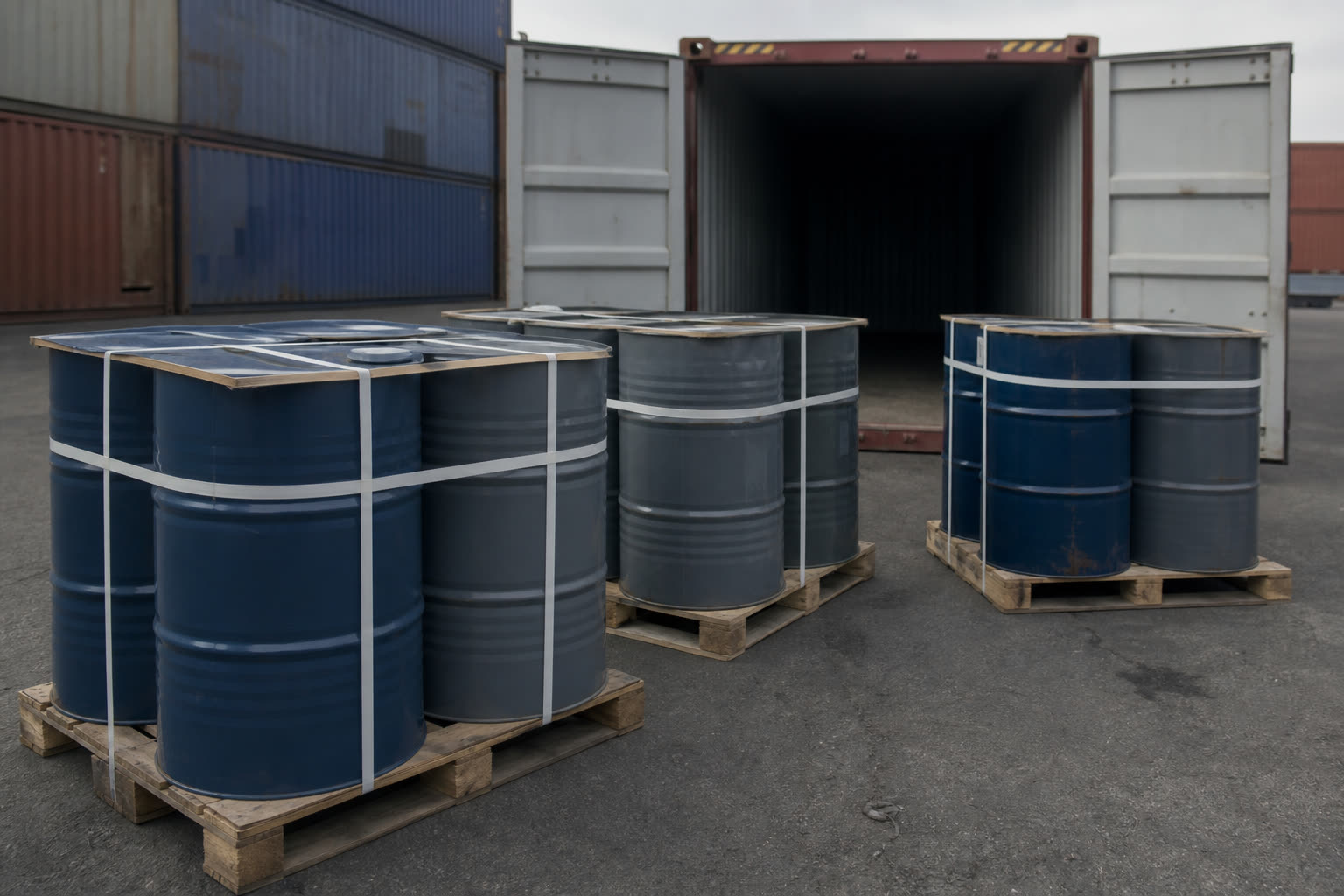
Synthesis demand is continuous, so these buyers contract volume rather than spot purchase. From Kanpur we supply DD turpentine in 200 litre barrels and in 12,000, 15,000 and 18,000 litre tankers for plants with bulk storage, with export container loads moving to buyers in China, Thailand, Indonesia and the United States. Every consignment carries a certificate of analysis stating the GC assay, specific gravity in the 0.855 to 0.870 band and refractive index between 1.465 and 1.480, and every new relationship starts with a sample for your laboratory and a trial charge in your reactor.
If you run camphor, terpineol or fragrance intermediate chemistry, send us your feed specification. We will match it against current DD lots, ship a sample, and quote continuous supply in 200 litre barrels or tankers on +91 96965 09933 or info@shadeshinepine.com.