Choosing between gum turpentine oil and double distilled grade comes down to six checklist steps: define the job the solvent does, set the assay and residue targets that job demands, match those targets to a grade, verify with a sample, cost the decision at scale, and lock the specification into your purchase contract. Work the steps in order and the decision usually makes itself.
Step 1: What does the turpentine actually do in your process?
Write one sentence describing the duty. Solvent that evaporates from a film, carrier that stays in a paste, reaction feedstock that gets consumed, or processing aid that swells a polymer. This single sentence drives everything, because a solvent duty cares about evaporation and residue, while a feedstock duty cares about moles of alpha-pinene per tonne. If the honest answer is feedstock, read gum turpentine vs double distilled alongside this checklist, because that decision leans DD early.
Step 2: Which numbers does that duty demand?
Translate the duty into measurable limits before talking to any supplier.
- Alpha-pinene assay: 60 to 70 percent is typical for gum turpentine oil, 70 to 80 percent for double distilled turpentine oil. Set a minimum, not a wish.
- Physical constants: specific gravity 0.855 to 0.870 and refractive index 1.465 to 1.480 confirm identity for both grades.
- Evaporation residue: tighten this for coatings, light coloured polish, stone care and any reaction feed.
- Colour: specify water white where the end product is pale or unscented.
If you cannot name a limit, the parameter probably does not matter to your process, and paying for it is waste. The meaning of each number is unpacked in alpha-pinene content explained.
Step 3: Which grade does the decision table point to?
| Application | Driving requirement | Grade |
|---|---|---|
| General paint thinning, brush cleaning | Solvency at lowest cost | GTO |
| Artist colours, fine varnish | Low residue, pale colour | DD |
| Dark shoe polish, general wax paste | Wax solvency, cost | GTO |
| Light polish, marble care | Minimal residue on surface | DD |
| Rubber cements, adhesives | Swelling power, open time | GTO, DD for premium lines |
| Camphor, terpineol, aroma synthesis | Maximum pinene per tonne | DD |
| Pharma and personal care inputs | Purity and documentation | DD |
| Cleaning, degreasing, dilution duties | Cost per litre | GTO |
Two boundary cases deserve a note. If your chemistry needs a specific isolated terpene rather than the whole oil, step past both grades to alpha-pinene 95, beta-pinene 95 or dipentene. And if odour is the requirement rather than solvency, compare against pine oil before finalising, since many cleaning formulations actually want terpineol character, not pinene.
Step 4: How do you verify before committing?
Never select a grade from a brochure. Request samples of both grades, run gas chromatography, specific gravity, refractive index, residue and colour, then trial the material in your real process: the actual churn, kettle or reactor, at production temperature, with your own raw materials. Solvency and odour decisions made in a beaker have a habit of reversing at plant scale. We send samples before every bulk order for exactly this reason, and every later consignment ships with a certificate of analysis you can check against the approved sample.
Step 5: What does the choice cost at annual volume?
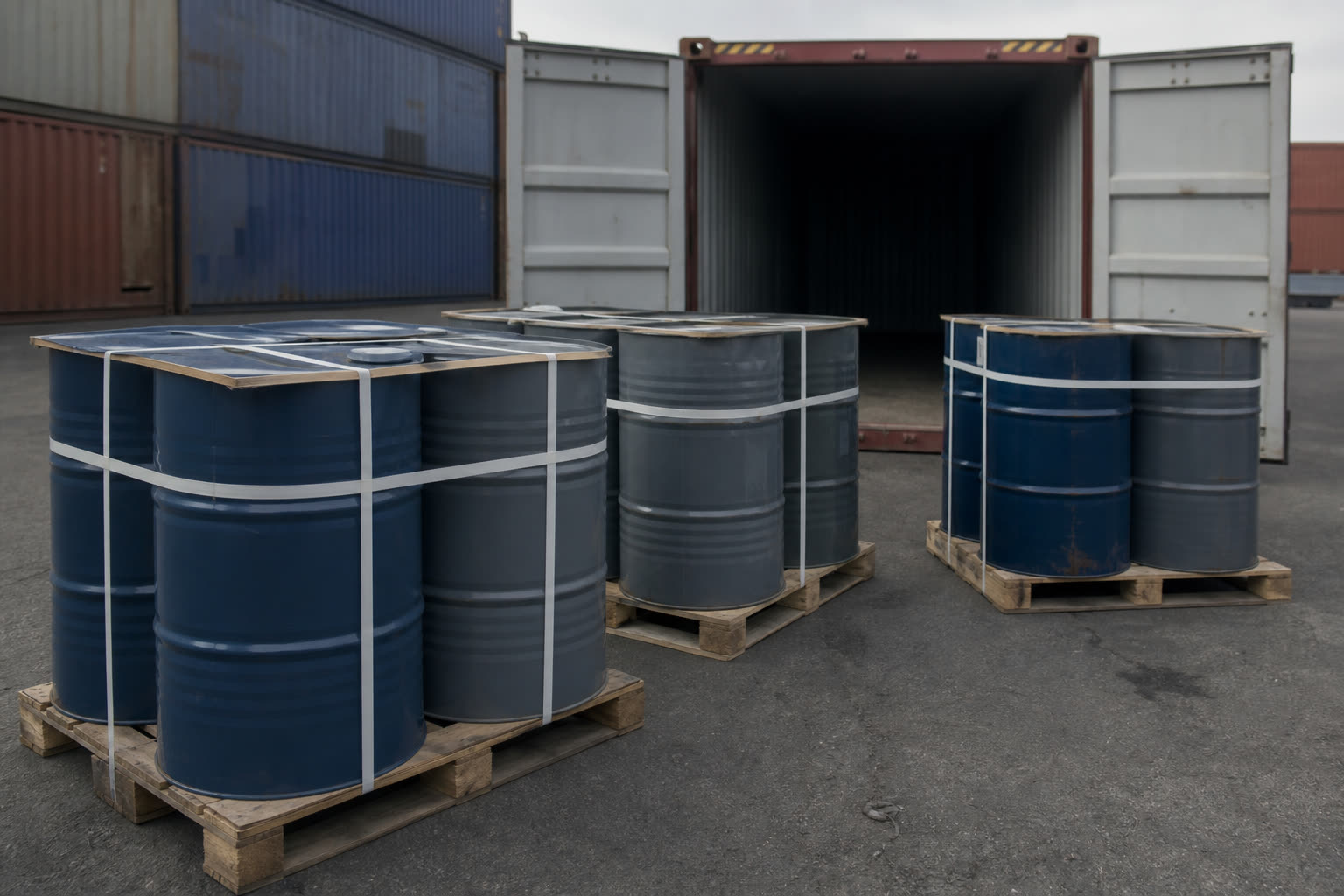
Price the decision per year, not per litre. DD grade carries a premium over GTO, so the question is what the premium buys: higher reactor yield, fewer rejected light coloured batches, less downstream cleaning. A synthesis plant recovering three extra percent yield pays for the DD premium many times over. A brush cleaning duty never will. Feed real volumes into the comparison, remember that 200 litre barrels suit trial and mid scale buying while 12,000 to 18,000 litre tankers cut the per litre cost for bulk users, and check the market drivers in turpentine oil price factors before fixing a long contract.
Step 6: What goes into the purchase specification?
- Grade name and the assay minimum from Step 2
- Specific gravity and refractive index bands
- Residue and colour limits where they matter
- Certificate of analysis required per lot, referencing your approved sample
- Packing: new 200 litre barrels, UN 1299 Class 3 marks, lot numbers on every drum
- Delivery mode and schedule, barrels or tanker
A supplier who accepts that specification in writing has nothing to hide. Guidance on vetting Indian suppliers, checking documentation and structuring first orders is collected in buy turpentine oil india.
Which selection mistakes appear most often?
Four errors account for most regretted grade decisions we see.
- Paying the DD premium for a duty that never touches the extra purity, typically general thinning or cleaning, where GTO performs identically at lower cost.
- Buying GTO for a light coloured or low residue duty to save money, then paying it all back in rejected batches and rework.
- Specifying a trade name instead of numbers, which leaves the buyer with no measurable basis for acceptance or claim when a lot underperforms.
- Approving a grade from a single sample without a plant trial, then discovering at full scale that the process was tuned to the old solvent.
How often should the decision be revisited?
Review the grade choice once a year and after any of three triggers: a change in your end product specification, a sustained shift in the price gap between grades, or a change in your volume that opens the tanker option. Grade decisions are not permanent. A polish producer moving upmarket may switch a line from GTO to DD, while a synthesis plant adding its own fractionation may move the other way and buy the cheaper grade deliberately. The checklist takes an afternoon to rerun, and the annual saving from a corrected choice routinely pays for far more than the afternoon.
What does the checklist look like in one pass?
- Define the duty in one sentence.
- Set numeric limits the duty demands.
- Read the grade off the decision table.
- Verify with samples in your real process.
- Cost the premium at annual volume.
- Write the specification into the contract.
We have walked buyers through this exact sequence since 1980, from Kanpur to export customers in the United States, Thailand, Indonesia and China. Send us your Step 1 sentence and Step 2 numbers and we will recommend a grade, ship samples of both if the call is close, and quote 200 litre barrels or tanker supply on +91 96965 09933 or info@shadeshinepine.com.