Indian gum turpentine, distilled from chir pine oleoresin, competes directly with Chinese, Indonesian and Brazilian material. The short answer for buyers: origin decides the terpene profile because each country taps different pine species, and it also decides freight cost, lead time and how much batch to batch variation you should expect.
Why does the pine species matter so much?
Turpentine is not one fixed chemical. It is the volatile fraction of whichever oleoresin was distilled, and published studies show the monoterpene split varies widely by species. A camphor plant, a fragrance house and a paint formulator can all call for turpentine yet need different molecules inside the drum. That is why serious buyers specify a gas chromatography assay, as explained in alpha-pinene content explained, rather than just a country of origin.
How do the main origins compare on composition?
Typical published profiles by origin and species look like this. Individual lots vary, which is exactly why we attach a certificate of analysis to every consignment.
| Origin | Main species | Alpha-pinene | Notable secondary terpenes |
|---|---|---|---|
| India | Pinus roxburghii (chir pine) | 60 to 70 percent in our GTO | Beta-pinene, delta-3-carene, longifolene traces |
| China | Pinus massoniana | Often 70 to 80 percent | Low beta-pinene, some delta-3-carene |
| Indonesia | Pinus merkusii | Often 75 to 85 percent | Delta-3-carene around 10 percent, low beta-pinene |
| Brazil | Pinus elliottii | Roughly 40 to 55 percent | Beta-pinene 30 to 45 percent |
Two practical readings of that table. First, if your process runs on beta-pinene chemistry, Brazilian elliottii material or isolated beta-pinene 95 is the logical route. Second, if you need high alpha-pinene from Indian supply, our double distilled turpentine oil at 70 to 80 percent alpha-pinene closes most of the gap with Chinese and Indonesian gum grades while keeping a shorter supply line for Indian buyers.
What about delta-3-carene?
Carene splits the market. Some synthesis routes treat it as a valuable feedstock, and we supply it separately as delta-3-carene. Other applications, particularly some fragrance work, want it minimised because of odour and sensitisation concerns. Indian and Indonesian turpentines carry meaningful carene, Chinese massoniana material generally carries less. Ask for the GC trace and decide against your own recipe rather than against folklore.
How does freight change the landed cost?
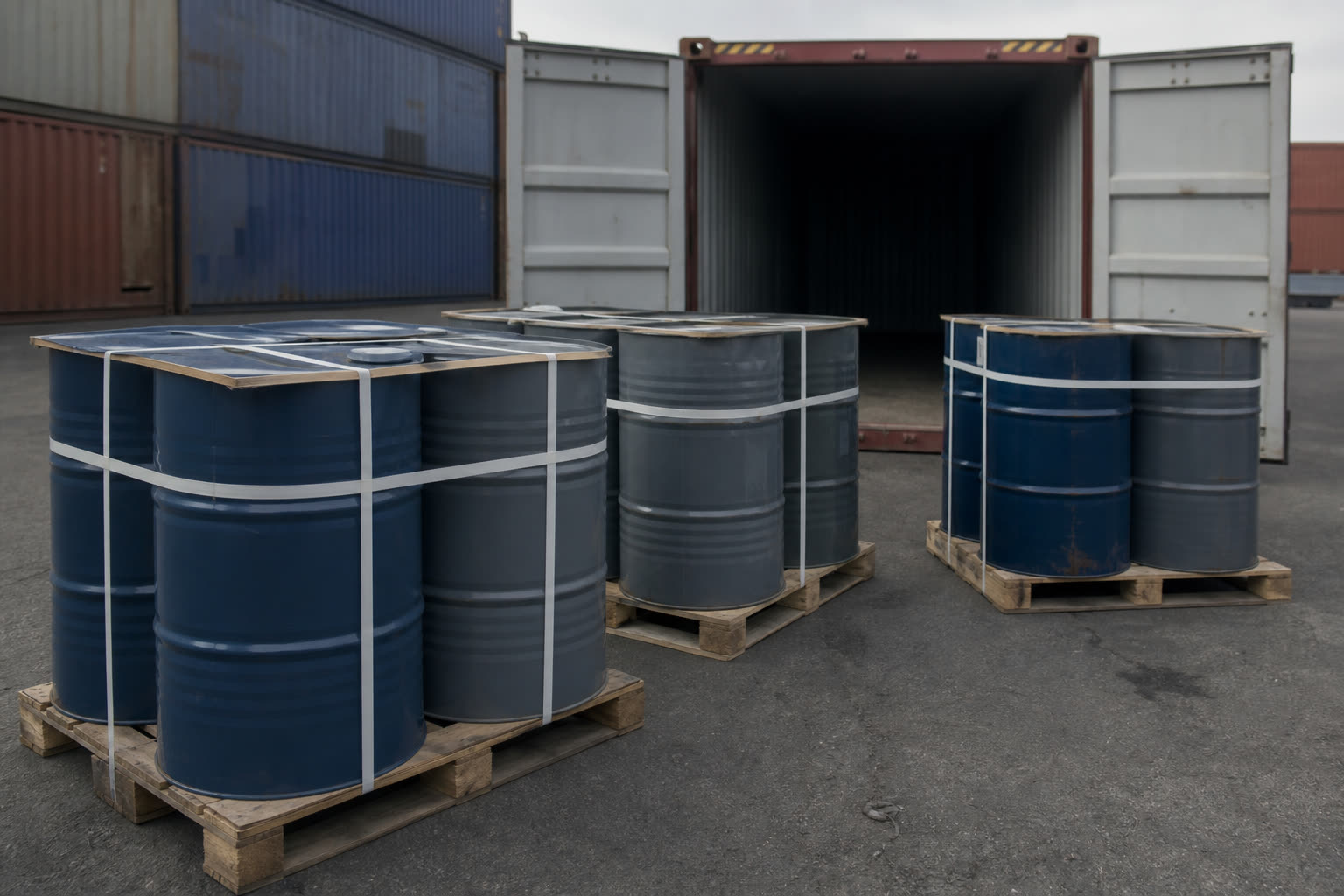
For a buyer in India, imported turpentine carries ocean freight, port handling, customs clearance and duty exposure before it reaches the factory gate. Dangerous goods surcharges apply because all origins ship as UN 1299 Class 3. Domestic GTO moves by road in 200 litre barrels or in 12,000 to 18,000 litre tankers with none of those layers. For buyers outside India the comparison flips into a freight race between origins, and Indian material is well placed for the Middle East, Africa and Europe westbound. The cost mechanics are broken down in turpentine oil price factors.
Which origin is more consistent lot to lot?
Consistency comes from the supply chain, not the flag. Chinese and Indonesian turpentine passes through large consolidators, so a trader may deliver blended material from several distilleries in one shipment. That can smooth averages but it can also shift the minor terpene fingerprint between lots. Buying Indian GTO from a single established supplier means the resin catchment, the still and the handling stay the same season after season. We have run this trade from Kanpur since 1980, and repeat buyers tell us the GC traces line up year over year.
What about lead time and order flexibility?
- Imported material typically means container quantities, 4 to 8 week transit, and payment terms set by an overseas trader.
- Domestic GTO can start at a single 200 litre barrel, scale to tanker loads, and arrive in days.
- Sampling is faster locally. We send samples before bulk so your lab approves the exact material, then every consignment ships with a matching certificate of analysis.
When does imported turpentine still make sense?
Honest answer: when your chemistry demands a terpene split that Indian material cannot economically reach, for example a beta-pinene heavy feed at very large volume. Even then, many buyers find it cleaner to buy the isolated terpene, such as alpha-pinene 95, than to import crude turpentine and fractionate it themselves.
How should a buyer run the comparison in practice?
Do it with numbers, not brochures.
- Get GC assays for each candidate origin on the same laboratory method.
- Cost each option to your gate: product, freight, duty, clearance, finance on transit time.
- Weight the risk items: single shipment delays, quality claims across borders, currency swings.
- Trial the shortlisted material in your actual process, because solvency and odour behave in the pot, not on paper.
The playbook for sourcing within India, including how to vet a supplier, is covered in buy turpentine oil india.
What audit questions separate a strong origin from a weak one?
Whichever origin you shortlist, put the same five questions to the supplier and score the answers.
- Which pine species and resin catchment feeds your still, and has it changed in the last three seasons?
- Can you show GC traces for the last several lots side by side, not just a typical specification sheet?
- Who fills the barrels, and are they new or reused?
- What happens if a delivered lot fails my incoming tests, and who pays for resolution across a border?
- Can I get a sample of the exact lot that will ship, rather than a generic sample?
Domestic suppliers are simply easier to hold to these answers. A claim against a trader three shipping legs away is a negotiation. A claim against a supplier a train ride away is a phone call. That difference rarely appears in a price comparison spreadsheet, but every buyer who has lived through one failed import shipment prices it in afterwards.
Does currency movement change the picture?
For Indian buyers, yes. Import quotes are dollar linked, so a weakening rupee inflates landed cost between contract and clearance. Domestic GTO is priced in rupees end to end, which removes one variable from budgeting. Exporters buying Indian material enjoy the mirror advantage when the rupee softens against their home currency.
Where does Shade Shine Pine fit?
We supply both gum turpentine oil and double distilled grade from Kanpur, export to the United States, Thailand, Indonesia and China, and back every lot with a certificate of analysis. If you are benchmarking Indian GTO against an import quote, ask us for a sample and run the two side by side in your lab. Then price a container of 200 litre barrels or a tanker load on +91 96965 09933 and compare landed cost line by line.