White phenyl is built on three things: pine oil, an emulsifier, and water. We have been supplying pine oil to phenyl units across India since 1980, and the single most common question we get from new buyers is which grade to use. This guide answers that question in plain trade language, based on what we have seen work across hundreds of formulation discussions over 46 years.
What Does Pine Oil Actually Do in White Phenyl?
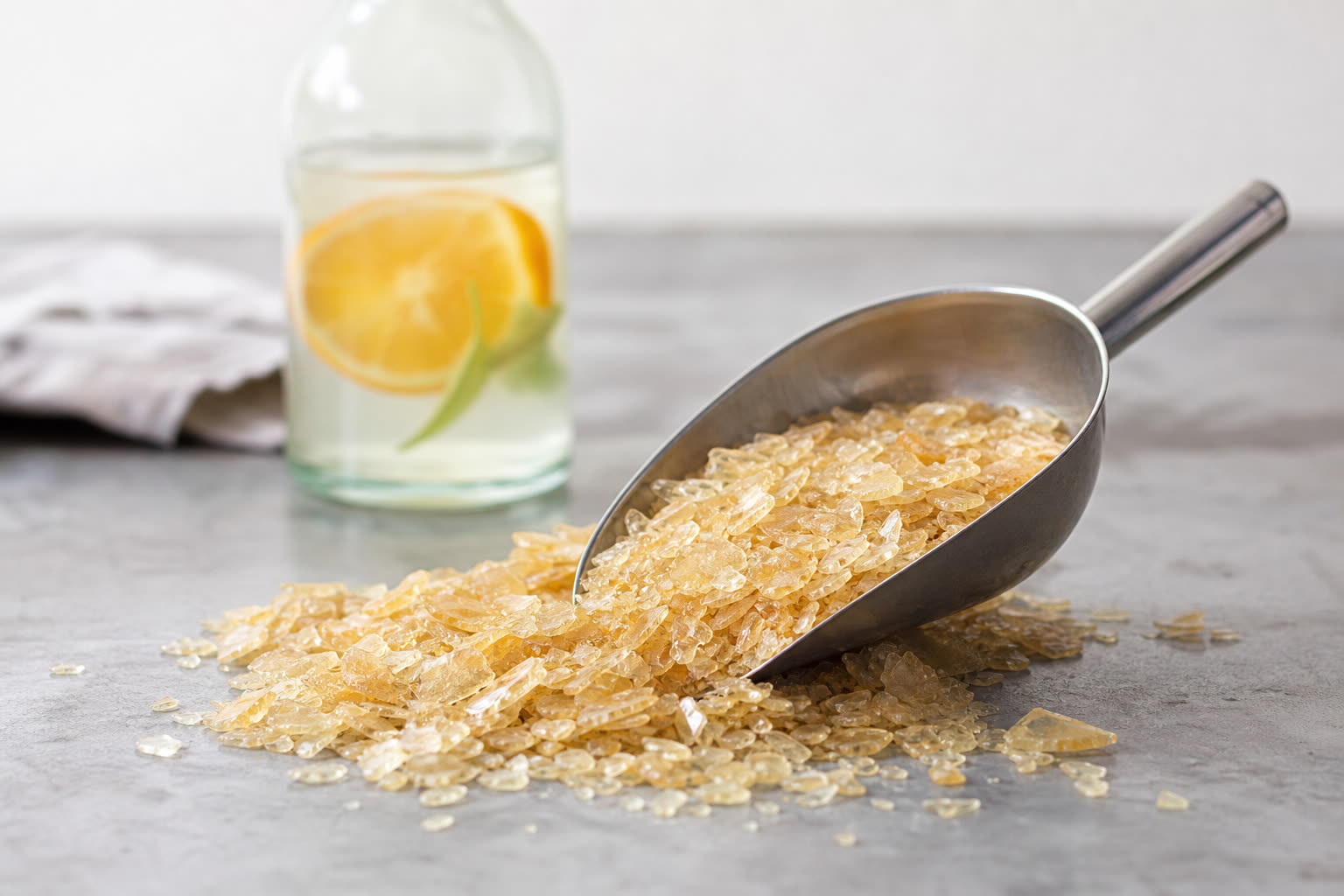
Pine oil is the active core of white phenyl. It provides the characteristic piney fragrance, the deodorising effect, and the emulsifiable oil phase that turns milky white when diluted with water. The oil is a mixture of terpene alcohols, predominantly alpha-terpineol, with smaller fractions of other terpenic compounds. The percentage figure on the label refers to the total terpene alcohol content. Higher terpene alcohol content means a purer, more concentrated, and more fragrant oil. The figure is typically determined by refractive index measurement or gas chromatography against a reference standard, and it is the primary specification point when buying pine oil for phenyl work.
Which Grade Is Used for White Phenyl?
In Indian trade practice, three grades of pine oil are most commonly used for phenyl work: 22%, 32%, and 42%. Each has a distinct role.
- 22% pine oil is the entry-level phenyl grade. It emulsifies readily, produces a stable milky product, and keeps raw material cost low. Units making economy-range white phenyl for municipal contracts or price-sensitive retail typically start here. The fragrance is present but mild. Dilution ratios in the trade commonly run around 1:15 to 1:20 for the final ready-to-use product when working with a well-made concentrate at this grade.
- 32% pine oil is the mid-range workhorse. It gives a stronger fragrance note, better covering power on surfaces, and still emulsifies well with standard anionic and nonionic emulsifier systems. Units targeting household retail and institutional supply tend to favour this grade because the fragrance persistence is noticeably better than the 22% material, and the product performance on greasy floors is improved.
- 42% pine oil sits at the upper end of what most phenyl units formulate with directly. The terpene alcohol content is high enough to produce a rich, full-bodied fragrance. Concentrates made with 42% oil are often sold at a premium price point. Some units use 42% oil to make a super-concentrate that the end customer dilutes at 1:20 or beyond, getting a higher-value product from the same volume of raw material.
Our 65% and 85% grades are not typically used as the primary oil in ready-formulated phenyl. They are used as booster additions in very high-actives concentrates, or as fragrance-strength corrections in blends where the base oil grade is too mild for the target market. Some export formulations specify these higher grades for performance in harder water or cold-climate conditions.
How Does the Emulsifier Work?
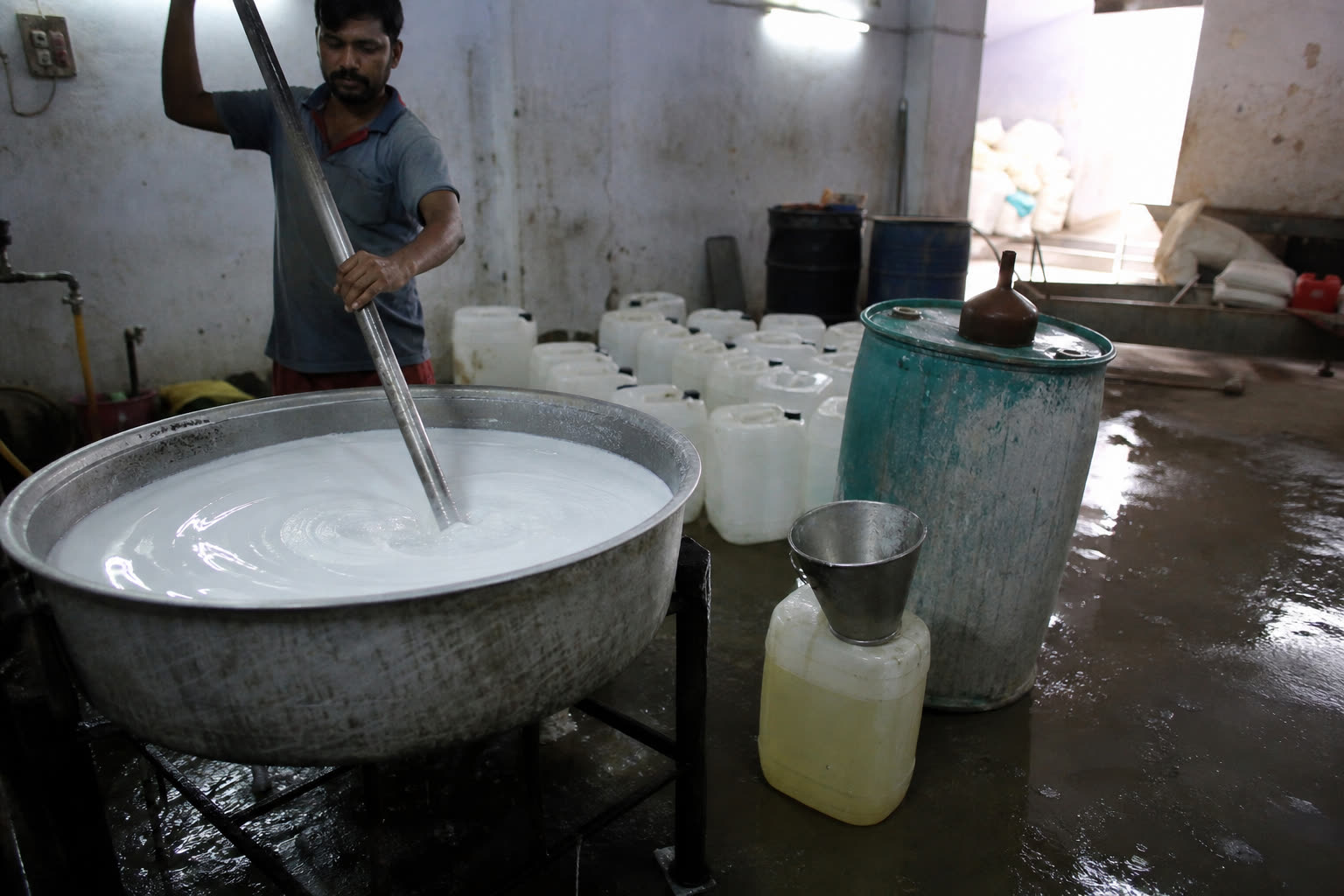
Pine oil does not self-emulsify in water. You need an emulsifier to bring the two phases together as a stable, creamy white dispersion. In Indian phenyl trade, emulsifiers are sold as proprietary blends, typically combining sulphonated castor oil, known as Turkey Red Oil, with SLES, anionic or nonionic surfactants, or combinations of these. The exact blend varies by supplier, and different emulsifiers perform better or worse depending on the pine oil grade and the hardness of the dilution water.
The typical concentrate ratio we see buyers use is roughly two parts pine oil to one part emulsifier by weight, though this varies depending on the emulsifier's active content and the pine oil grade. Higher-grade pine oils sometimes need slightly less emulsifier to achieve the same emulsion stability. A concentrate prepared at these proportions is then let down with water at the point of final product preparation, typically in ratios from 1:10 to 1:20 depending on the strength desired.
We always recommend that any new formulation gets a bench trial before scaling. Emulsion stability should be checked at room temperature, at 40 degrees Celsius, and after a freeze-thaw cycle if the product will be sold in northern markets in winter. The whiteness and opacity of the diluted product, and whether the emulsion separates over 24 or 48 hours, are the key practical tests to run before committing to a production batch.
Why Does the Grade Affect Milkiness and Coverage?
The opacity of white phenyl when diluted comes from the refractive index difference between fine oil droplets and water. A well-emulsified higher-grade pine oil produces a denser, more uniformly white dispersion because there is more terpene alcohol content forming droplets of the right size. A poorly emulsified or low-grade oil may produce a thinner, more transparent product that consumers associate with dilution or low quality, even if the cleaning performance is adequate.
Coverage on floors is partly sensory and partly functional. The terpene alcohols in pine oil help cut greasy films and leave a clean surface after mopping. This is why units positioning their product for institutional customers, hotels, and hospitals tend to use the 32% or 42% grade: the surface result is visibly better, and the fragrance lingers longer through a working day.
What About PCM Tops and Turpentine in Phenyl Blends?
Some phenyl units incorporate small quantities of PCM tops phenyl cleaner or gum turpentine oil into their concentrates to modify the fragrance profile. PCM tops carry a distinctive medicinal-pine character that some market segments associate strongly with effective disinfectant cleaning. Turpentine adds a sharper, more volatile top note to the blend. These are additions to fine-tune character, not substitutes for the pine oil base. The quantity used in each case is usually small relative to the pine oil volume, and the effect on emulsion stability needs to be checked for each specific combination.
Supply and Packing from Our Works
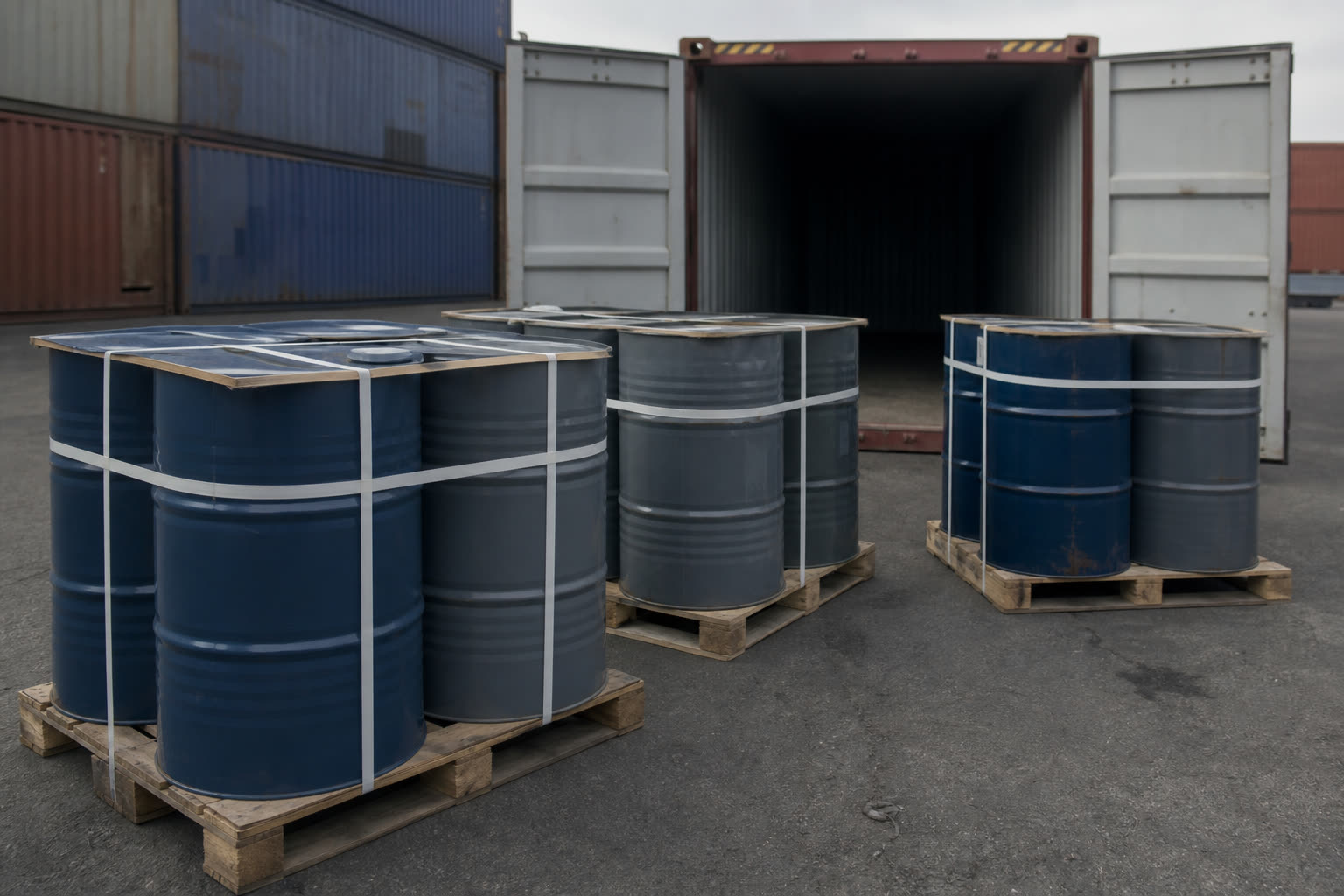
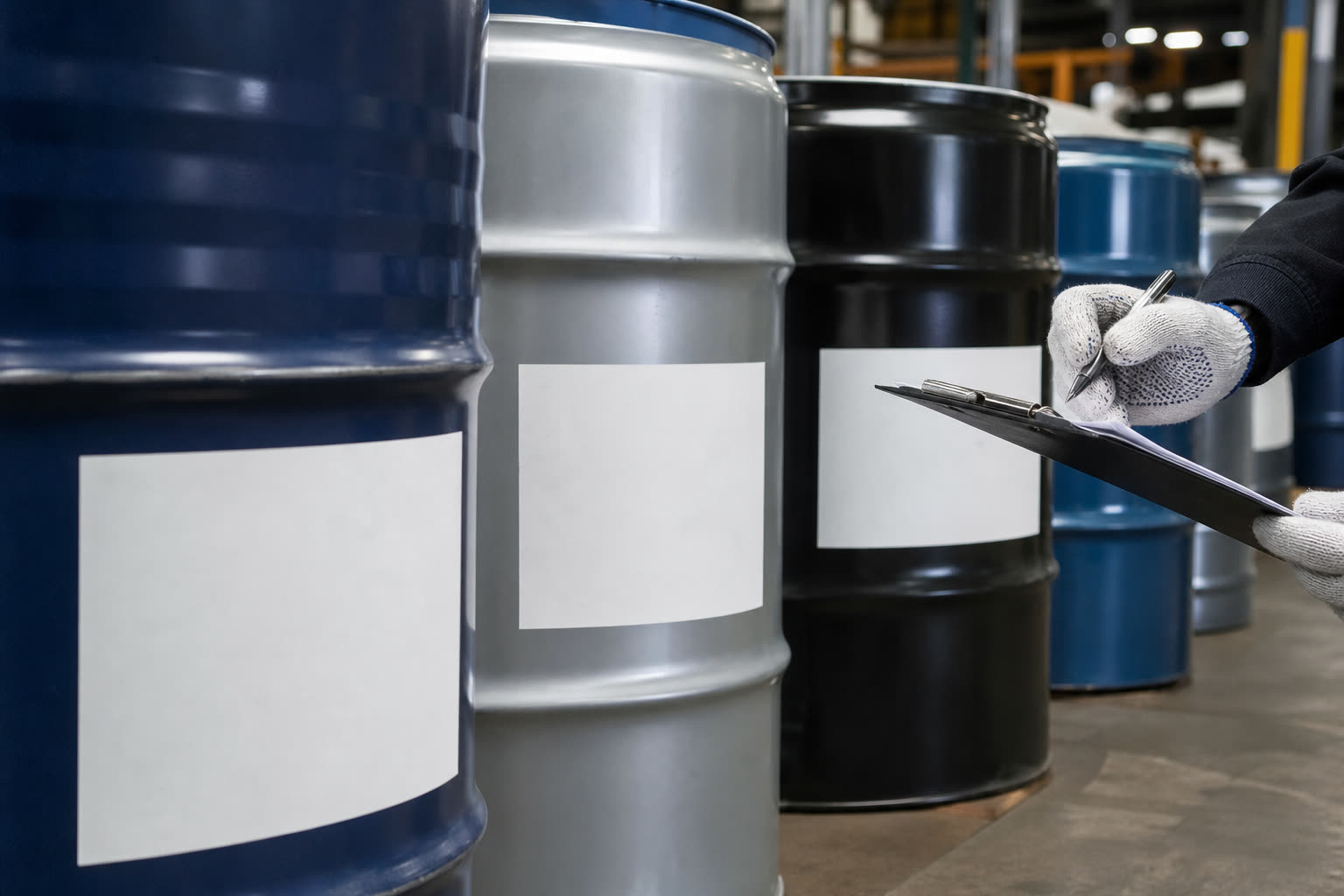
We supply pine oil in 200 litre mild steel barrels for unit-level buyers and in 12,000 to 18,000 litre road tankers for larger operations running regular production. If you are a phenyl unit in UP, Rajasthan, Haryana, or Delhi NCR and need consistent supply, tanker dispatch can be arranged directly from our Kanpur works. Trial quantities in drums are available for new accounts wanting to evaluate a grade before committing to a larger volume.
If you are setting up a white phenyl line for the first time, or moving from a 22% grade to 32% or 42%, write to us at info@shadeshinepine.com or call Yash Agarwal at +91 96965 09933. We will discuss which grade fits your target product and your price point, and we can talk through emulsifier system options as well.