Quality disputes in the pine chemical trade are not as common as some buyers fear, and they are usually less dramatic than both parties anticipate at the start. In 46 years of producing and exporting turpentine, rosin, pine oil and related products, we have dealt with our share of quality claims. Most were resolved in a matter of days through straightforward investigation. A few took longer. The common factor in every case that resolved well was that both sides had followed basic evidence-preservation norms from the start: sealed samples, documented receipt, and a clear sequence of investigation before anyone asserted blame. This post sets out how the process works and what both parties should do.
What constitutes a quality claim?
A quality claim arises when the buyer tests the received goods and finds that one or more parameters fall outside the agreed specification. The specification is whatever is written in the contract, purchase order, or proforma invoice, or, if no specification is stated there, the COA values that accompanied the shipment. A claim is not the same as dissatisfaction with a batch that technically meets spec but does not perform the way the buyer expected in their process. That is an application question, not a quality claim. The distinction matters because the remedies are different.
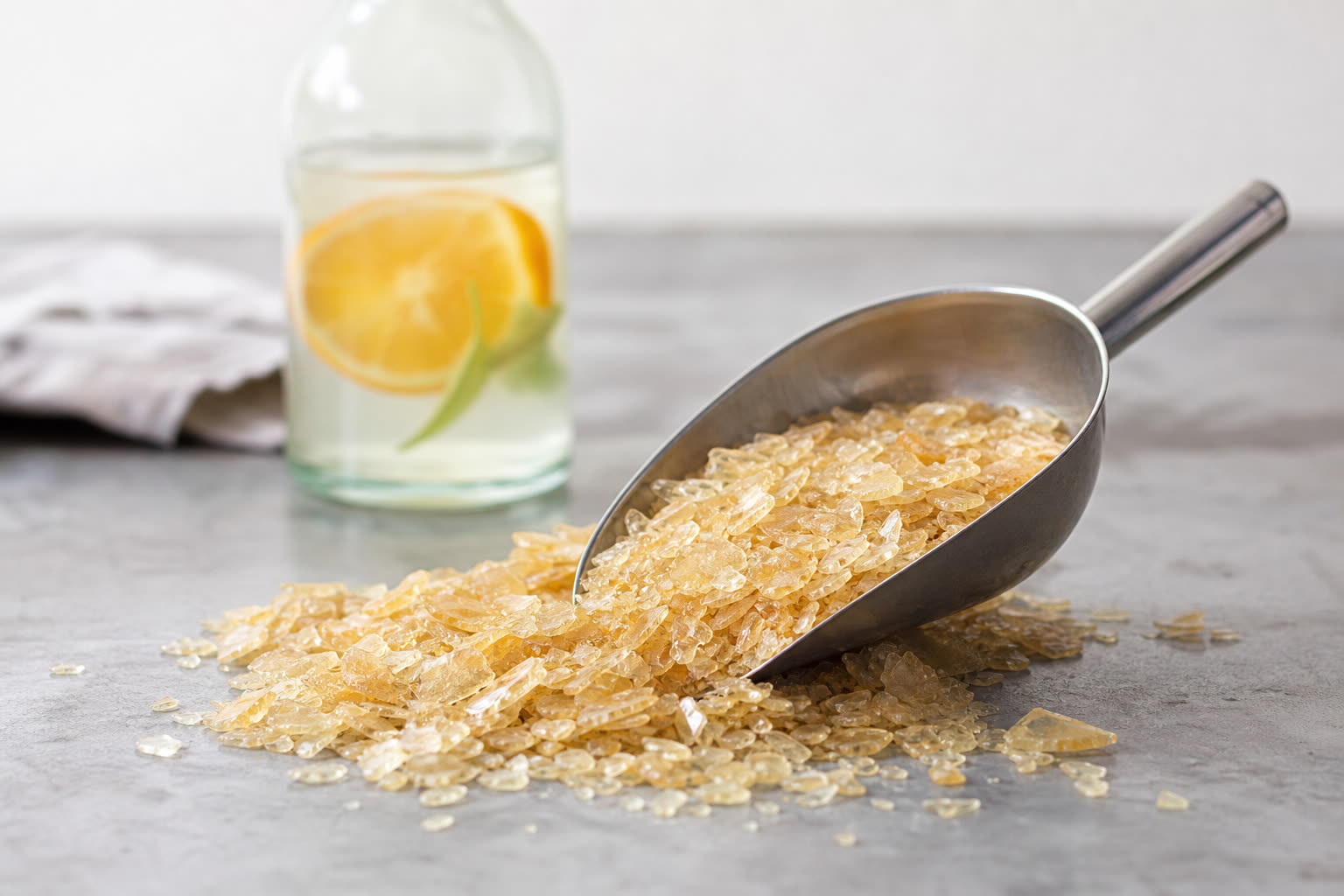
Common triggers for quality claims in pine chemicals include: GC composition outside specification (e.g., alpha-pinene below the agreed minimum in gum turpentine oil); colour darker than the COA or grade agreed for gum rosin; specific gravity outside the agreed range; residue on evaporation above the agreed limit; or physical contamination (water, foreign material) discovered on opening the drums. Each of these has a different root cause and a different investigation path.
Time limits: report promptly or waive the claim
In the chemical trade, there is a widely observed norm that quality claims must be raised within a specific time window after delivery. What is reasonable varies by product and jurisdiction, but a common benchmark in Indian export trade is 14 to 30 days from the date of delivery for a visible or easily tested quality issue. For issues that only emerge after processing or further testing, 45 to 60 days from delivery is sometimes accepted, but this needs to be agreed in advance in the contract.
Do not sit on a quality concern. The moment you open drums and find something unexpected, document it: take photos, draw a sealed sample from the affected drum, note the drum number and the batch number from the COA, and notify the supplier in writing within 24 to 48 hours. A buyer who raises a claim three months after delivery, with no contemporaneous documentation, has almost no chance of a successful resolution regardless of whether their complaint is legitimate. By then, the supplier's retention samples may have been disposed of, the vessel is long gone, and causation cannot be established.
What to do immediately on receipt
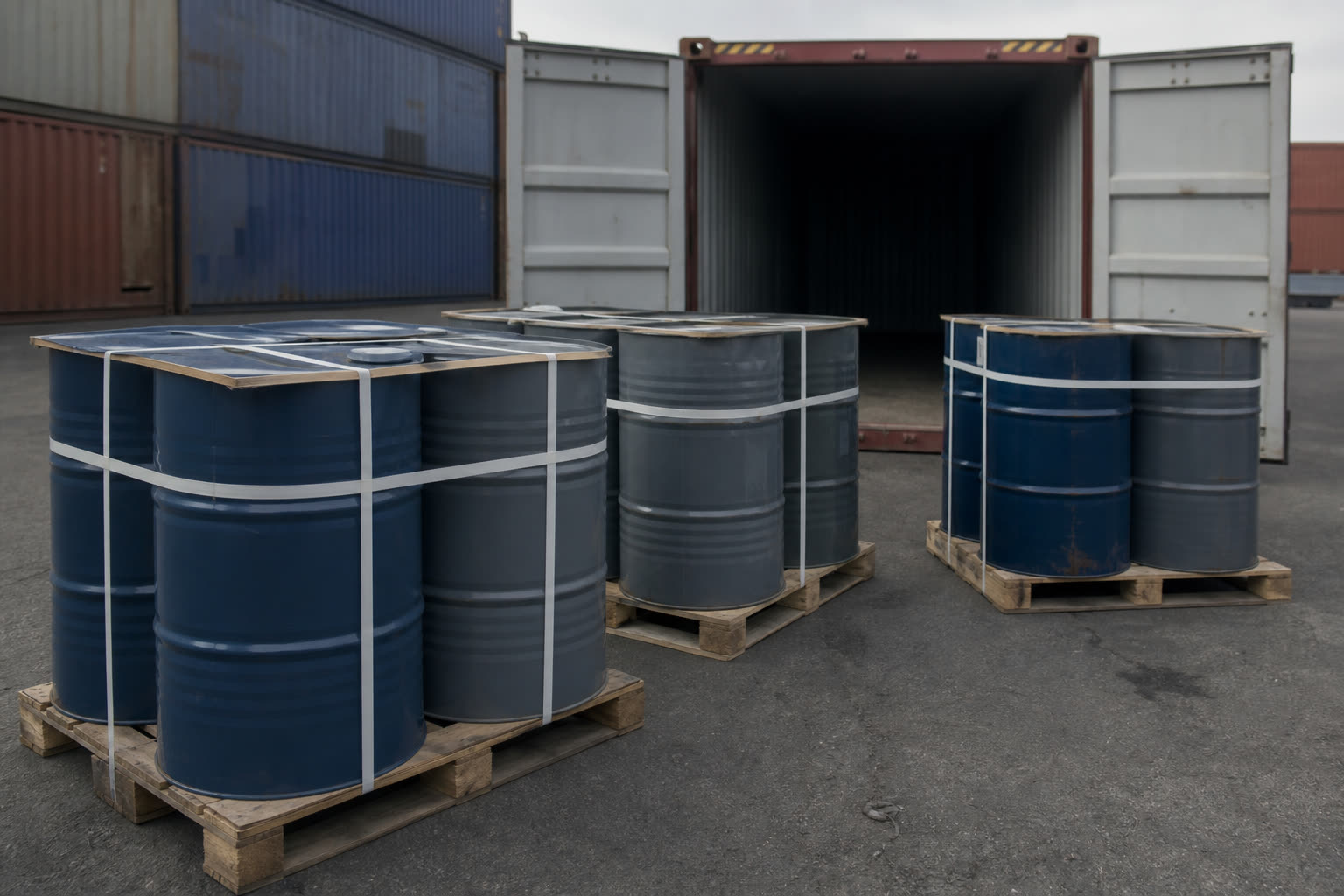
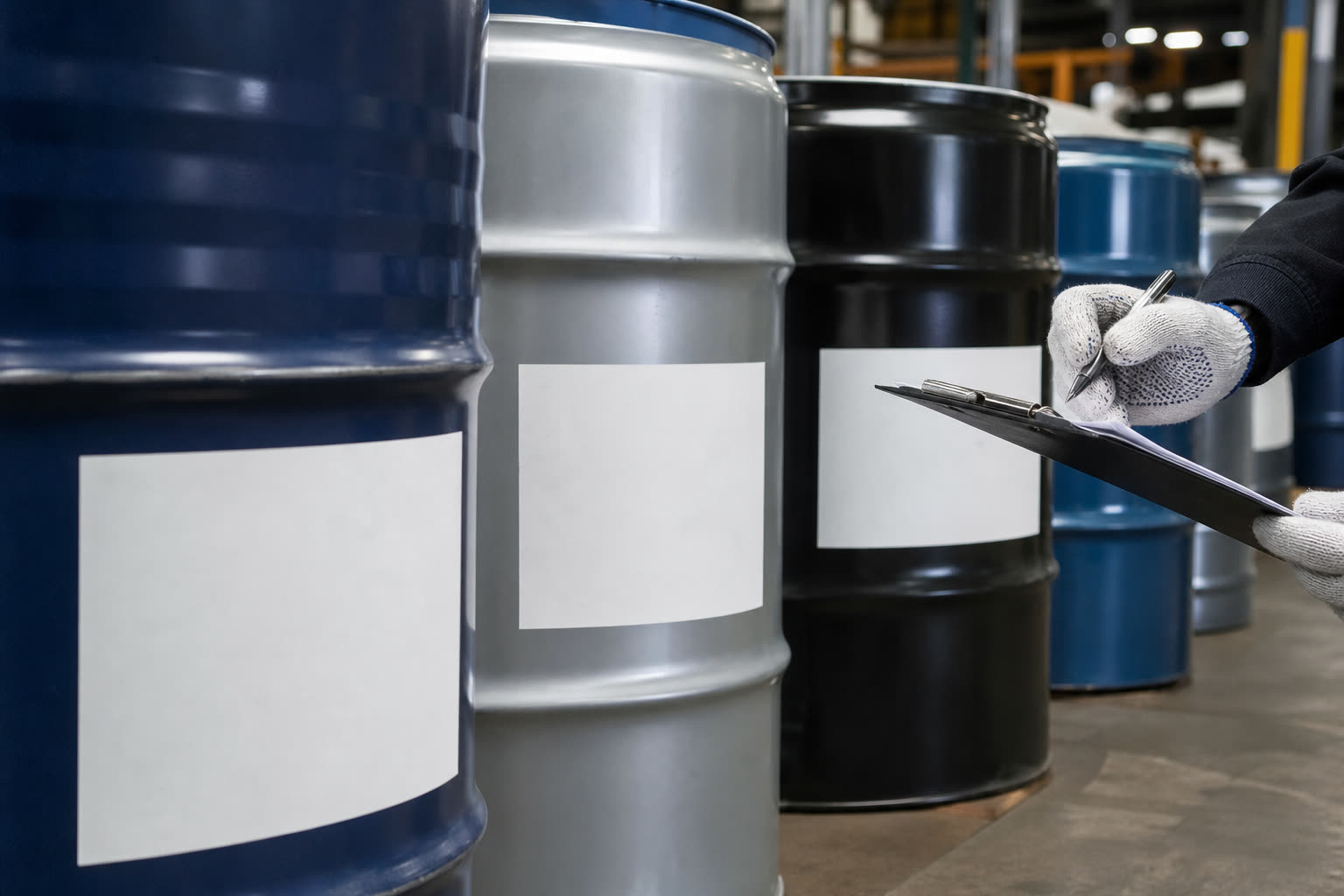
When a shipment of drums arrives, the practical routine is: check the drum count against the packing list, inspect drums visually for damage (dents, leaks, open bungs), check that UN markings and product labels are intact, and draw a representative sample from at least two to three drums in the lot. Seal those samples, label them with the drum number, batch number, and date of sampling, and store them appropriately (away from heat and light for flammable liquids). These are your reference samples if anything goes wrong.
If any drums are visibly damaged on delivery, photograph them and note the damage on the delivery receipt before signing. Damage that is not noted on the delivery receipt is very difficult to claim against the carrier or insurer later.
The investigation sequence: internal first, then joint
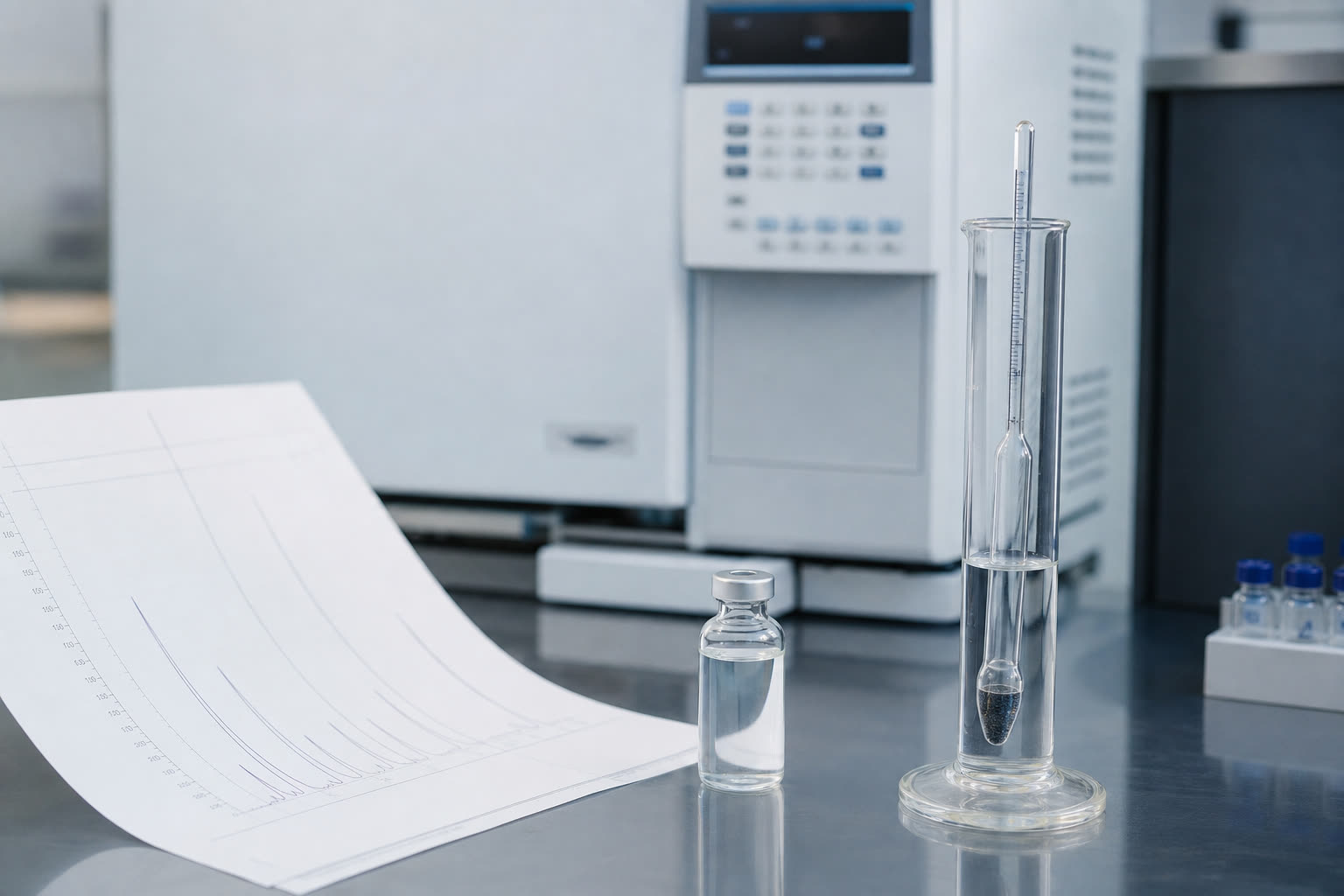
If your in-house test results differ from the COA, the first step is to retest from your sealed receipt sample, using the same test method that is specified in the product standard or agreed in the contract. Different test methods for the same parameter (for example, GC column conditions, or the specific gravity temperature reference point) can produce different results that are not, in fact, contradictory. Confirm your test method matches the one stated on the COA.
If the results still differ after internal retesting, notify the supplier and share your specific test results and method. At this point, we open our retention sample from the same batch and retest it at our laboratory. We compare results. In most cases, this internal exchange resolves the question: either one party finds a testing error, or there is a method discrepancy that explains the gap.
Third-party testing: when and how
If both parties have retested and the results still differ materially, the standard resolution is joint appointment of an independent third-party laboratory. Internationally recognised testing bodies for chemical products include SGS, Intertek, and Bureau Veritas, among others. All three operate across India and in most major import markets. The process is:
- Both parties agree the lab, the test parameters, and the test methods in writing before any sample is submitted.
- Both parties send their sealed retention samples to the agreed lab simultaneously, or a joint sample is drawn in the presence of both parties' representatives.
- The lab tests to the agreed method and reports results to both parties.
- Both parties agree in advance that the lab's results will be binding, or agree the process for what happens if results fall between the parties' own test outcomes.
Third-party testing costs money, typically shared equally unless the results clearly establish fault, in which case the responsible party conventionally bears the cost. Agree this in writing before commissioning the test. Do not commission the test and then argue about who pays afterwards.
What remedies are normal?
If the product is confirmed out of specification, the normal remedies in the pine chemical trade are: replacement of the non-conforming portion; price adjustment (discount proportional to the degree of non-conformance); or, where the product has already been consumed or processed, a credit note against the next order. Full order replacement is typically reserved for cases where the product is significantly out of specification and the buyer suffered genuine process or formulation losses as a result.
Goodwill settlements, where the supplier offers a partial credit or discount without admitting liability, are common in long-standing trading relationships when the discrepancy is minor or the investigation is inconclusive. They preserve the relationship without either party needing to establish blame definitively. We are comfortable with goodwill settlements where the numbers are reasonable and the buyer is acting in good faith.
What we will not accept
We will not accept a quality claim that is unsupported by test data, has no contemporaneous documentation, is raised outside the agreed claim window, or where the buyer has consumed the entire product and is raising a complaint only on invoice-payment day. These are not quality claims in any meaningful sense; they are pricing tactics, and we treat them as such. We assume good faith in buyers, and we ask for the same in return.
If you have a quality concern about any of our products, contact us before escalating. Most issues have a straightforward explanation and a clean resolution. Write to info@shadeshinepine.com or call Yash Agarwal on +91 96965 09933. A phone call at the start of a query resolves it faster than an email chain that runs for three weeks.