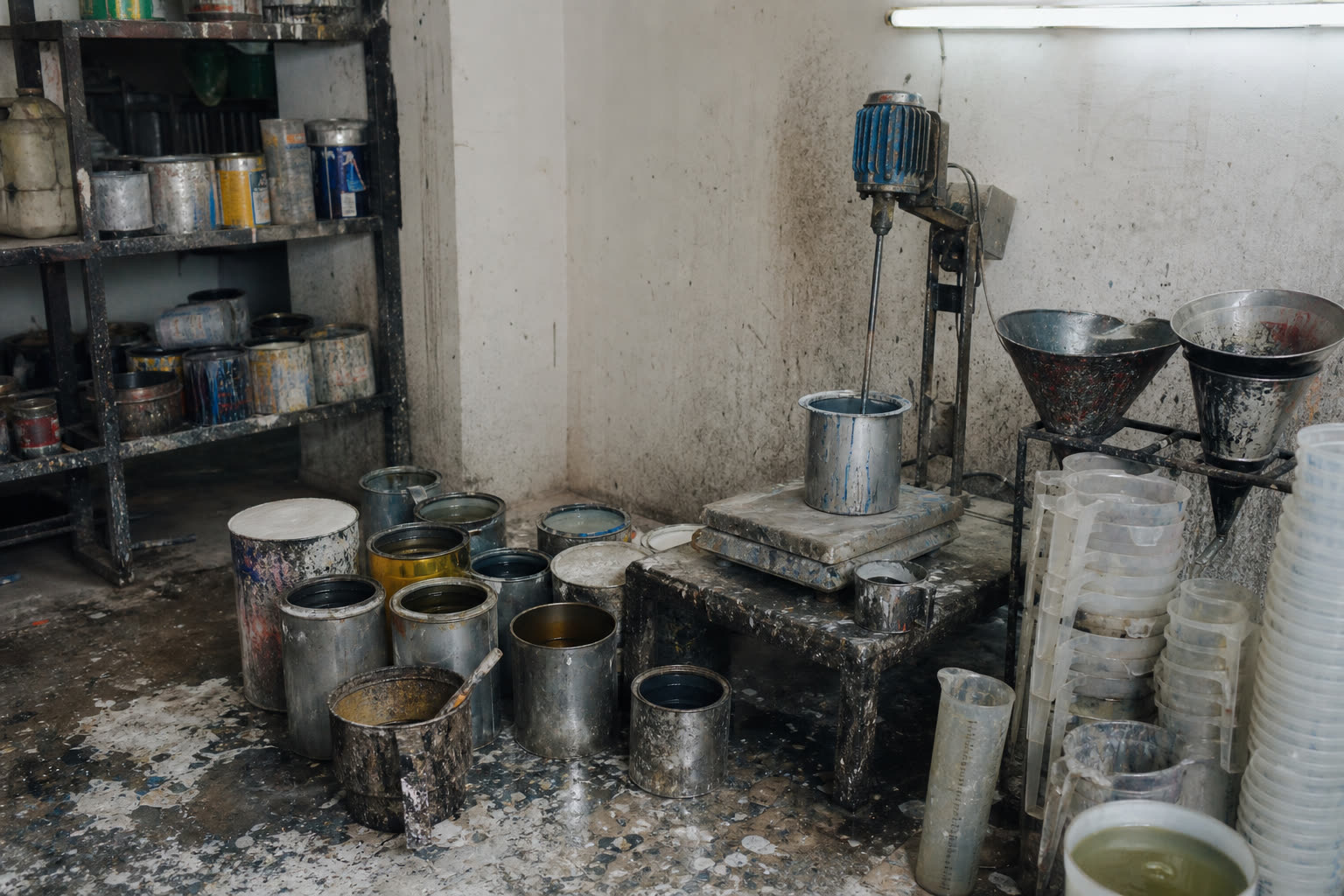
A paint thinner is a designed solvent blend, not a single chemical, even when the label says nothing more than the word thinner. The blender chooses each component for a reason: solvency for the target resin, evaporation rate to match application conditions, flash point to meet safety and transport requirements, and cost to hit a price point in a competitive market. We supply terpene solvents to thinner blenders across Uttar Pradesh, Rajasthan, Gujarat, and Maharashtra, and the conversation about what to blend and why comes up with almost every regular buyer.
What Are the Main Solvent Classes in an Indian Paint Thinner?
Most Indian paint thinners are built from a combination of aromatic hydrocarbons, aliphatic hydrocarbons, and esters or ketones, with terpene solvents added selectively. The aromatic fraction, historically dominated by toluene and xylene, provides strong solvency for alkyd, nitrocellulose, and polyurethane binders. The aliphatic fraction, usually a white spirit or mineral turpentine cut, moderates solvency and raises the flash point to bring the blend into a safer handling range. Esters such as butyl acetate and ketones such as MEK add fast evaporation for nitrocellulose systems that need a rapid surface dry. The ratio of these classes changes entirely depending on whether the thinner is designed for alkyd enamel, NC lacquer, PU, or epoxy.
A standard NC thinner in the Indian trade might contain toluene and butyl acetate with small ketone or alcohol additions. A general alkyd thinner is more likely to be a blend of white spirit with a smaller aromatic fraction. A PU thinner typically avoids water-contaminated solvents such as simple alcohols that would react with isocyanate groups in two-pack PU systems.
Where Do Gum Turpentine and Dipentene Fit?
In alkyd and oil-based thinner blends, gum turpentine enters as a premium terpene fraction that raises the KB solvency of the finished blend, improves resin compatibility for natural and semi-natural resins, and provides the clean pine fragrance associated with quality enamel thinners. Blenders typically use it at five to twenty percent of the total blend in products positioned as turpentine-based or premium alkyd thinners. The gum turpentine content is what differentiates these from plain white spirit thinners in the eyes of the retail and trade buyer.
Dipentene serves a different role. It is added to provide anti-skinning character to the blend, so that paints thinned with the product have better in-can stability after partial use. It also adds a slightly slower evaporation tail to the solvent blend, which helps levelling in brush and roller application. The typical addition for dipentene in an alkyd thinner blend is five to fifteen percent of the solvent fraction. At this level it is enough to provide measurable anti-skinning benefit without dominating the evaporation profile of the blend.
How Do Indian Blenders Handle Aromatic Content?
Aromatic content is a double-edged issue in Indian thinner blending. High aromatic fractions give strong solvency and are typically cheaper than terpene alternatives, but they carry higher health hazard profiles, particularly for benzene contamination that must be controlled in commercial grades, and they face increasing scrutiny under evolving occupational health awareness in Indian industry. The practical response in the mid-market thinner segment has been to reduce xylene and toluene levels and partially substitute them with mineral turpentine or, in premium lines, with terpene fractions including gum turpentine and dipentene.
This substitution is not always straightforward. An aromatic-rich thinner can dissolve certain resins that a terpene blend cannot, and the formulator has to verify compatibility with the actual binder system before changing the solvent profile. Testing protocols include viscosity measurement at application temperature, pot life observation, and film clarity checks after full cure.
Does the Evaporation Rate of Terpene Solvents Affect Application Quality?
Yes, and this is a practical concern that blenders sometimes overlook when substituting terpene fractions into otherwise petroleum-based thinner recipes. Gum turpentine has a moderate evaporation rate that suits brush and roller application of alkyd enamels, giving enough open time for good levelling before the surface film begins to set. Dipentene is slightly slower-evaporating than gum turpentine, which can be an advantage in hot summer conditions in northern India where a faster-evaporating thinner causes brush drag and lap marks in large-area applications such as ceilings and wall panelling. When designing a thinner blend intended for the hot-weather market, including dipentene at five to ten percent of the blend can measurably improve application quality without requiring any change to the paint formulation itself. This kind of season-specific blending is something we have discussed with several of our thinner-blender customers in Kanpur, Delhi, and Jaipur, and it is worth considering if your thinners are sold across a climate range that includes coastal and interior India.
What Are the Labelling and Classification Obligations for a Thinner Blend?
Under Indian customs and trade classification, composite solvent and thinner blends fall under HSN 3814. A blender who sells finished thinners has obligations to provide Safety Data Sheets for each blend, label containers with flash point and hazard information, and classify the blend for transport under ADG or equivalent rules. Turpentine oil is classified UN 1299, Class 3, Packing Group III. A blend containing turpentine as a significant fraction will typically inherit that classification unless the flash point and composition of the finished blend warrant a different designation. These are regulatory details a thinner blender should confirm with their SPCB and transport compliance advisor rather than relying on the solvent supplier to resolve.
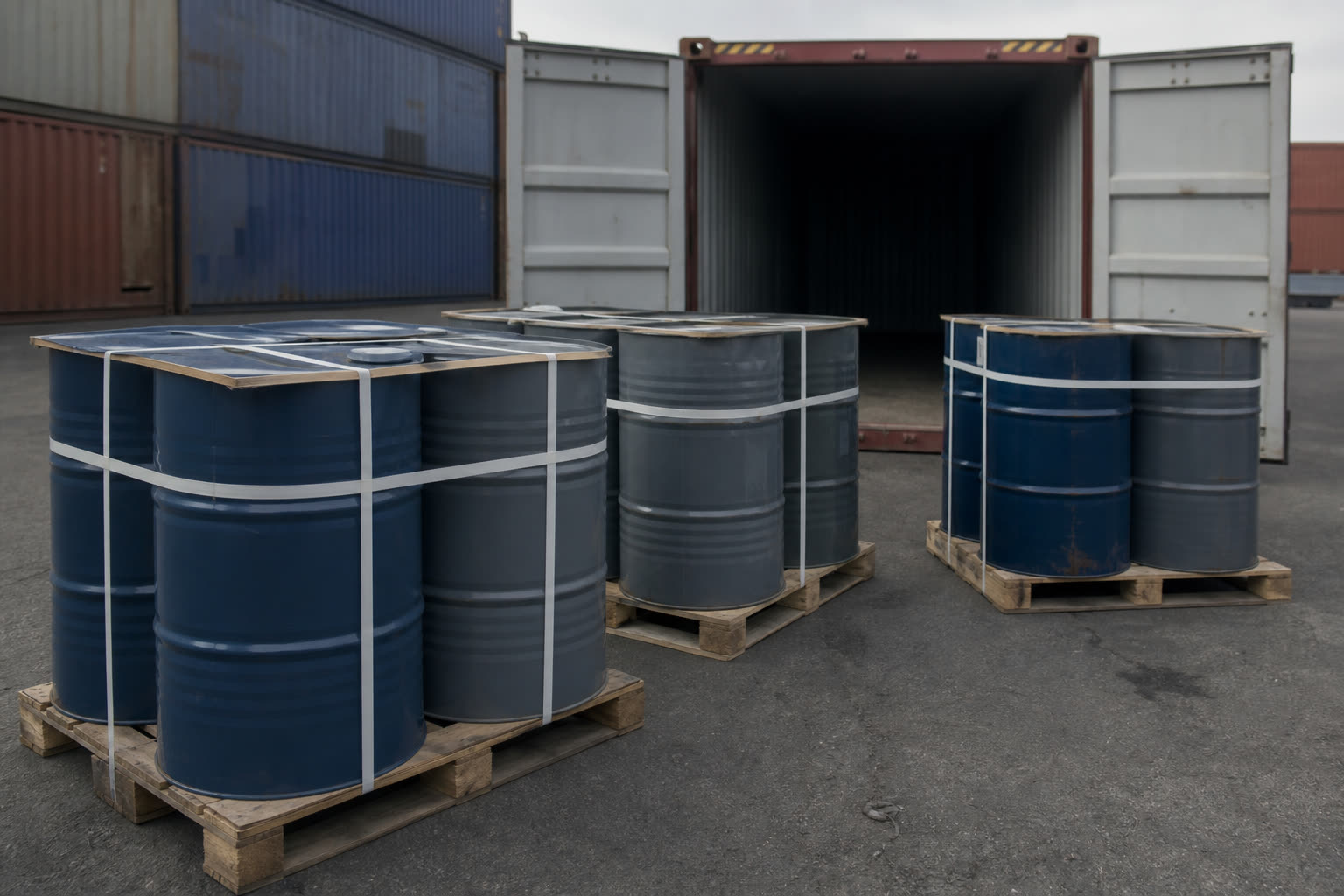
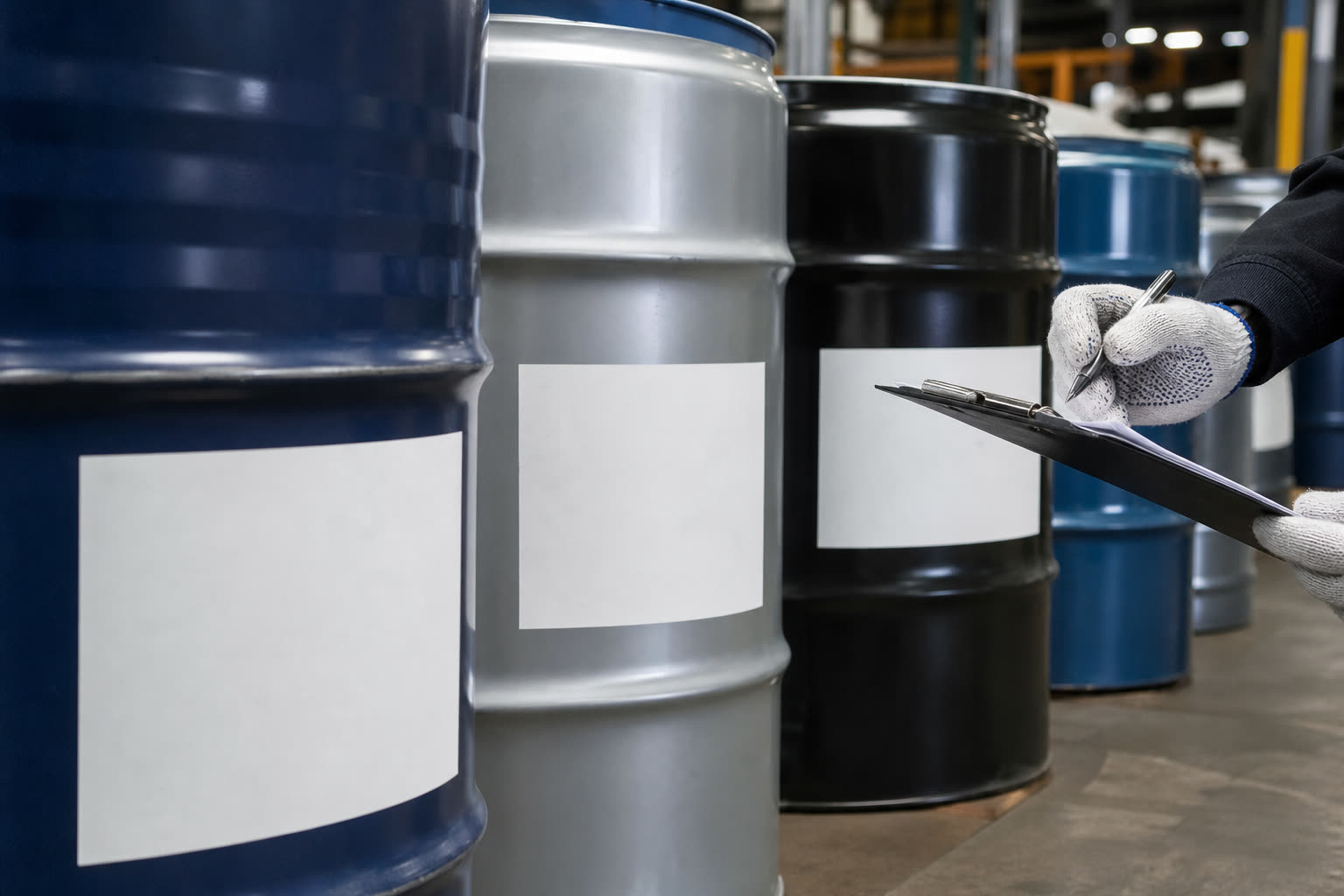
We supply gum turpentine, DDTO, and dipentene to thinner blenders in standard 200 litre barrels, with full GC analysis and SDS documentation. For larger volumes we dispatch in road tankers. To discuss your blend requirements, contact Yash Agarwal at info@shadeshinepine.com or +91 96965 09933.