Mineral turpentine oil is a flammable petroleum product and must be treated as one at every stage of handling, storage, and use. The flash point of standard MTO conforming to IS 1745 is above 35 degrees Celsius when tested by the Abel closed-cup method. That puts it in the Class B flammable liquids category under Indian Petroleum Rules. Understanding what that means in daily practice is the difference between a safe storage setup and a preventable incident in your premises.
What Does Flash Point Mean in Practical Terms?
Flash point is the lowest temperature at which a liquid produces enough vapour to form an ignitable mixture with air near its surface when a test flame is applied to the surface. A flash point above 35 degrees Celsius means that at normal room temperatures in most Indian conditions during winter and monsoon, MTO will not spontaneously produce an ignitable vapour cloud at the surface of a closed container or in a reasonably ventilated workspace. However, in peak summer conditions when surfaces and ambient air temperatures in northern and central India can exceed 40 to 45 degrees Celsius, the safety margin narrows. Hot drummed MTO sitting in direct afternoon sun can approach flash point conditions at an open bung or vent, and during decanting the vapour concentration above the drum opening rises. This is when following fire rules becomes non-negotiable, not optional.
How Should MTO Be Stored in a Shop or Works?
- Keep containers sealed when not in use: Drums and bottles should remain sealed except when actively dispensing. An open 200 litre drum in a warm workshop creates unnecessary vapour accumulation and accelerates quality drift from moisture ingress. Tighten bungs firmly after each dispensing session.
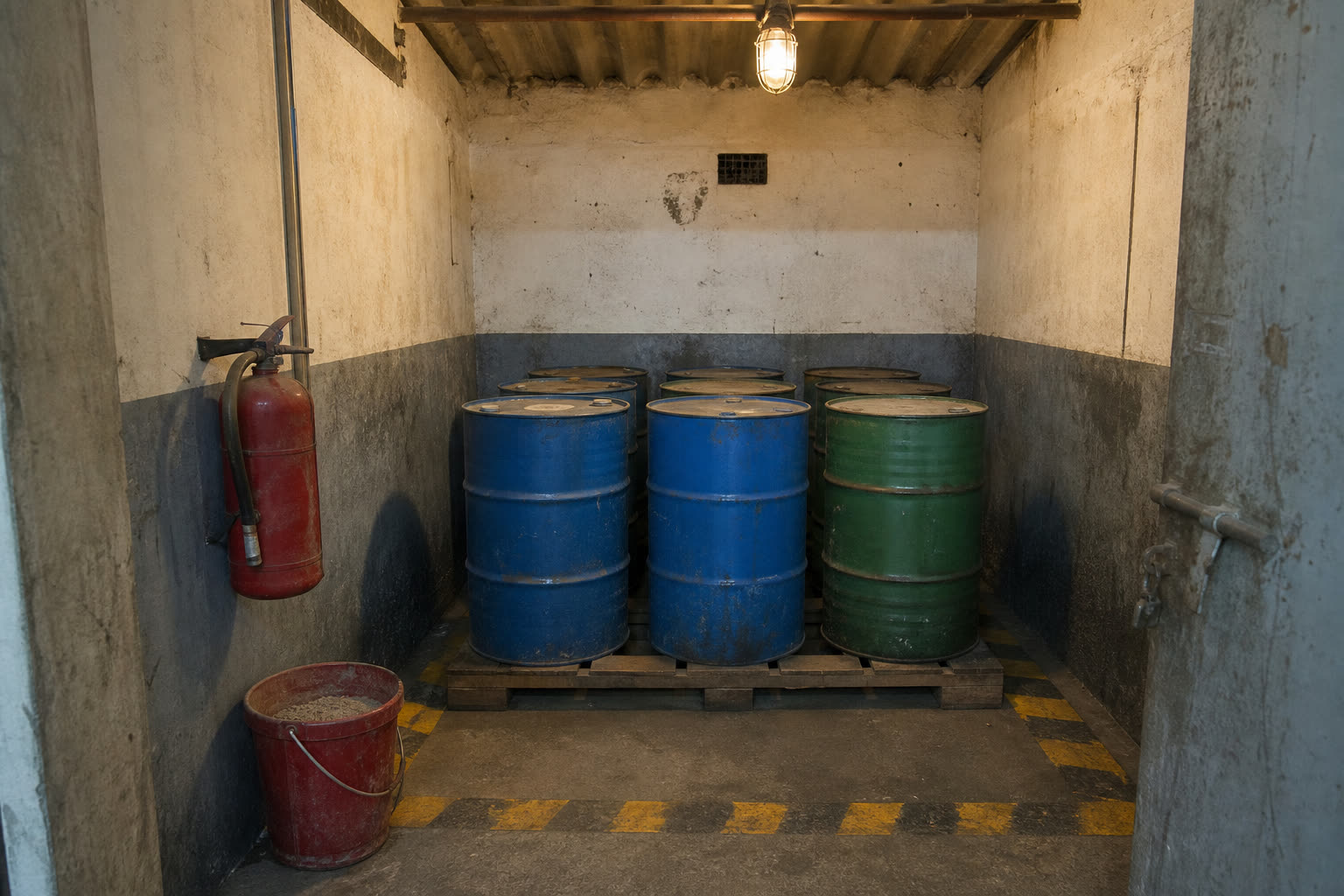
- Store away from all ignition sources: MTO must not be stored near open flames, LPG burners, welding bays, grinding stations, electrical panels that may spark, or any heat source. A dedicated solvent store with no electrical switches inside the storage area is the correct setup for quantities above a few litres. Switches outside the room, lights in sealed fittings inside.
- Provide adequate ventilation: Even below flash point, MTO vapour accumulates in confined spaces, causes discomfort, and displaces oxygen over time. Store bulk quantities in a ventilated room or shed. Natural cross-ventilation through opposed openings is adequate for small stocks of a few drums. Forced mechanical ventilation is advisable for larger stores holding several thousand litres.
- Control static electricity during transfer: When transferring MTO from a drum into smaller containers or into spray equipment tanks, static electricity generated by liquid flow can accumulate on containers and create an ignition risk. Bond the drum and the receiving container with a grounding wire or bonding clip before opening and transferring. This is standard procedure for all petroleum solvent transfers and takes seconds to do correctly.
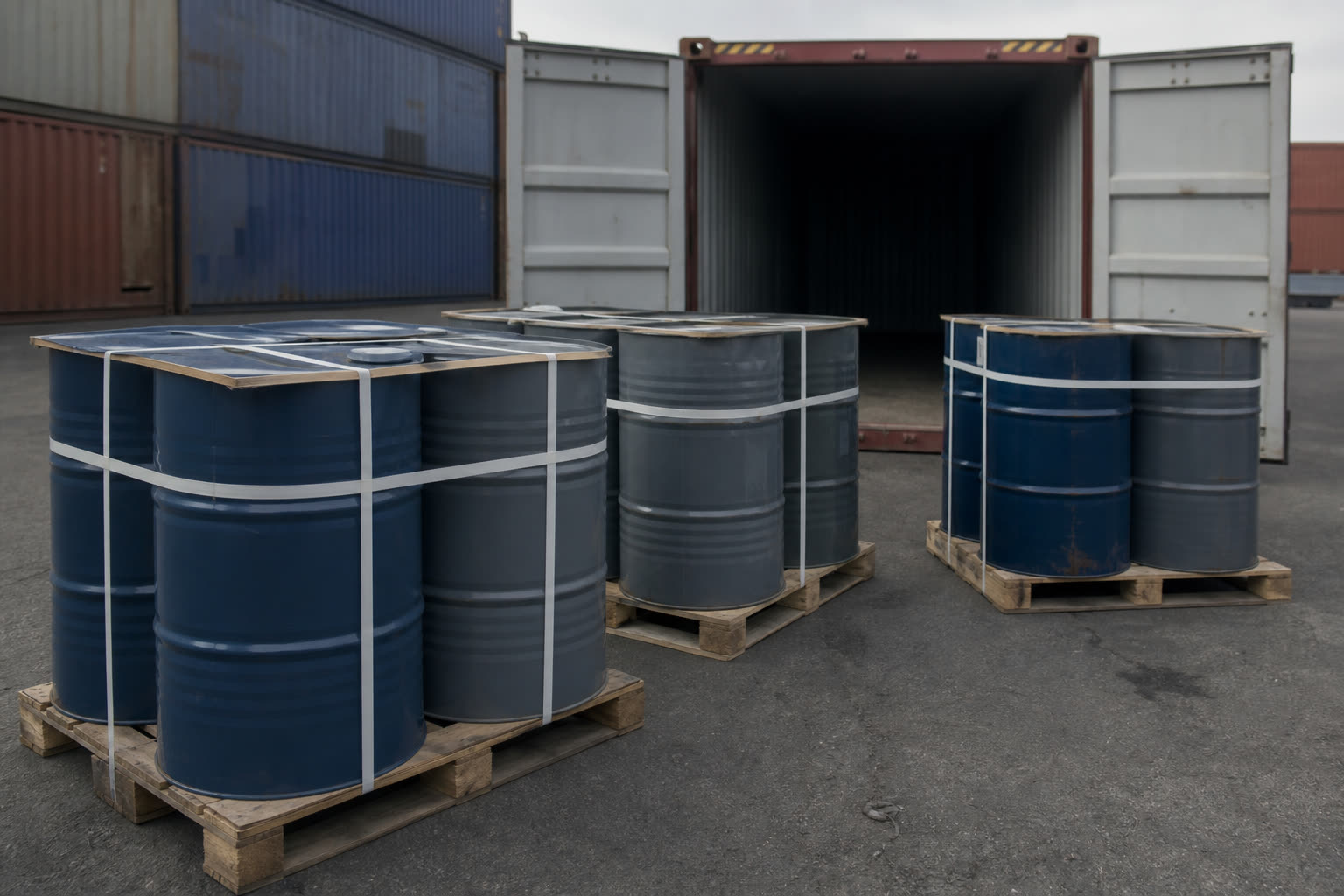
- Store drums upright on pallets: 200 litre drums should stand upright on a dry pallet or clean floor. Drums stored on their sides increase the risk of bung-seal leakage and make level inspection difficult. Keep the bung at the top when upright to minimise vapour space contact with the seal.
What Quantity Requires a Licence?
Under Indian Petroleum Rules, storage of Class B petroleum products above certain thresholds requires a licence issued by the relevant state authority or district magistrate. The exact volume threshold and the authority issuing the licence vary by state and by the classification of the premises. Stockists, hardware traders, and industrial users holding MTO in quantity should verify the current requirements applicable to their premises with the district authority. Do not assume that a modest-looking drum shed is exempt; the rules apply to total stored volume across all containers on the site. Follow your local fire rules in all cases and keep a copy of the licence visible in the store area.
Labelling and Container Identification
Every container of MTO should carry the product name, applicable grade reference, volume of contents, supplier identification, and the flammable goods caution label with the correct symbol as required under IS 1745. Unlabelled containers of clear solvent on a crowded workshop shelf are a persistent source of dangerous confusion in the Indian trade. Our Shade Shine 1 litre bottles carry full labelling as required. For drums, apply a drum label immediately on receipt and maintain it legibly throughout the drum's working life. If the original label is damaged, replace it before the drum enters active use.
Is MTO Storage Different from Kerosene Storage?
The flash points of MTO and kerosene are similar, both above 35 degrees Celsius, so the storage classification is comparable. MTO should not be stored in the same area as NC thinner, acetone, or other Class A solvents with much lower flash points. Mixing storage categories in a single room elevates the overall risk level for the entire store. See our post comparing MTO, kerosene, and NC thinner for more on how these products differ in handling.
Order in the Right Pack for Your Storage Setup
We supply mineral turpentine oil in Shade Shine 1 litre bottles packed in cartons for retailers and small users who want minimal on-site stock and simple storage, and in 200 litre drums for premises equipped to handle and store flammable liquids properly. Road tanker supply is available for industrial accounts with appropriate bulk storage facilities. Contact Yash Agarwal at +91 96965 09933 or email info@shadeshinepine.com to discuss supply arrangements that match your storage capacity.