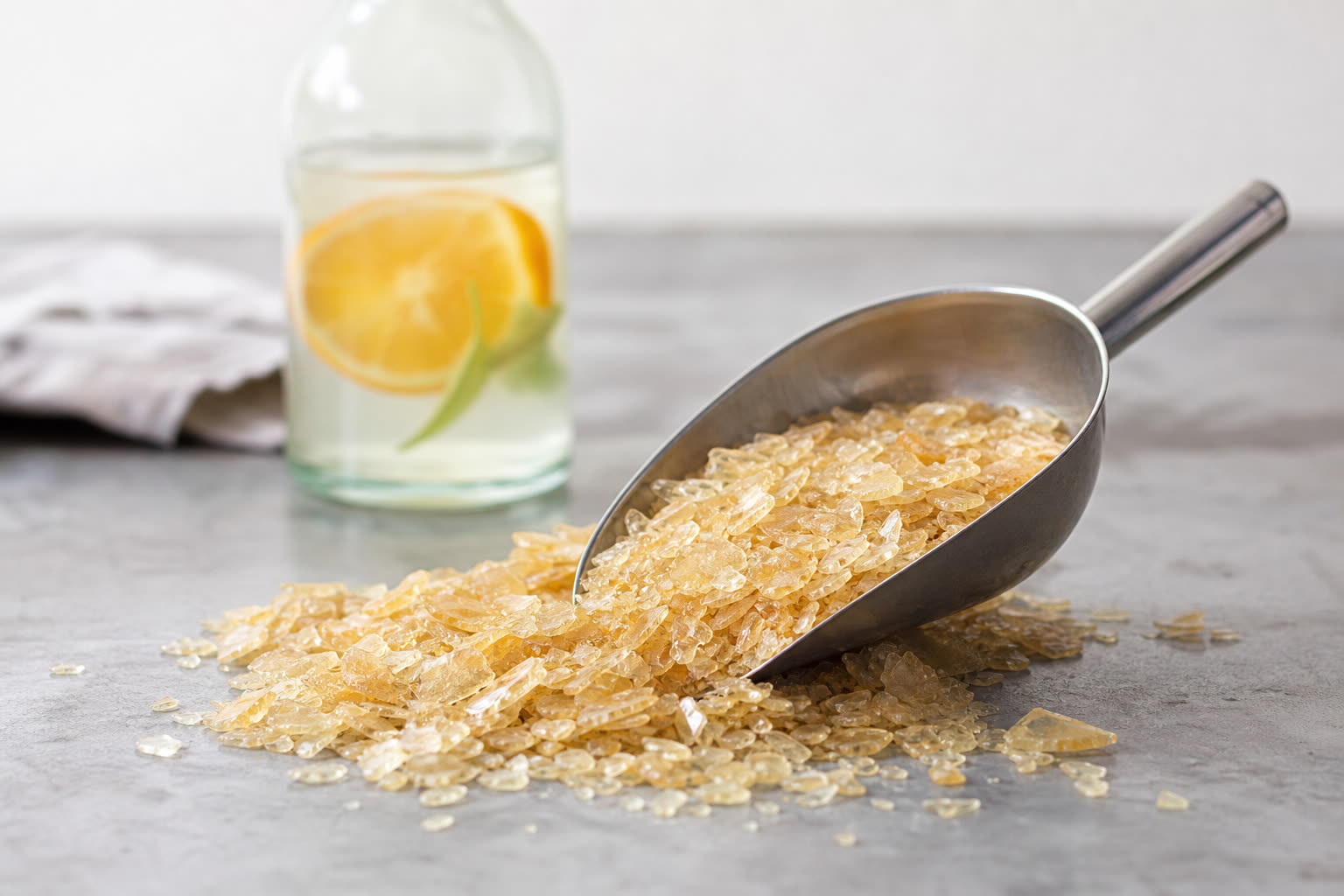
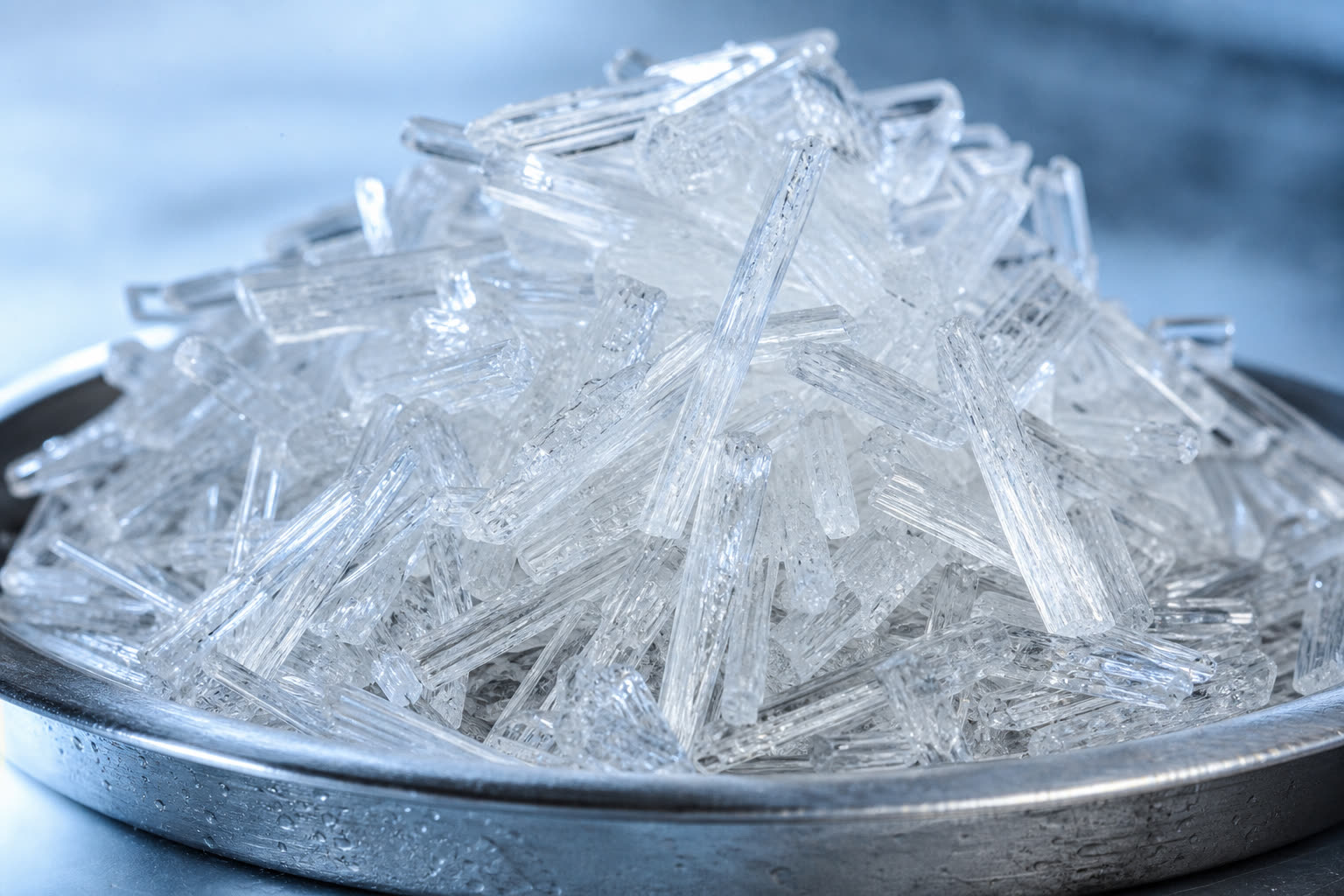
Menthol is a cyclic monoterpene alcohol found naturally in peppermint and related Mentha species. The commercial product used in oral care, pharmaceuticals, flavours, and cosmetics is l-menthol (CAS 2216-51-5), the naturally occurring, optically active enantiomer. It is the one that gives the familiar cooling sensation by activating the TRPM8 cold-sensitive receptor in skin and mucous membranes. The two crystal forms, bold and rice, are physically different presentations of the same l-menthol molecule.
Crystal Size and Physical Form
The distinction between bold and rice crystals is entirely about the physical size and shape of the crystals produced during cooling and crystallisation of molten menthol:
- Bold crystals are large, flat, plate-like or prismatic crystals, typically ranging from 5 to 15 mm across. They are visually striking, clearly crystalline, and have a relatively low surface area to mass ratio.
- Rice crystals are smaller, needle-like or granular crystals, 1 to 4 mm in size, resembling grains of rice in shape. They have a higher surface area to mass ratio than bold crystals.
Both forms are produced from the same menthol source and meet the same purity specifications. Purity for pharmaceutical and food-grade menthol is typically above 99% l-menthol by GC, with tight limits on other isomers (dl-menthol, d-menthol, isomenthol, neomenthol) that have weaker or different sensory profiles.
When to Use Bold Crystals
Menthol bold crystals are preferred in several situations:
- Dissolution in ethanol or other solvents for fragrance and flavour concentrate preparation: the larger crystal size makes manual weighing and handling simpler and less dusty
- Retail and semi-retail packs sold to smaller formulators who measure by weight or volume without sophisticated dosing equipment
- Traditional and Ayurvedic preparations where crystal menthol is added directly to formulations by weight
- Cold cream and ointment bases where menthol crystals are melted into the oil phase: crystal size has little effect on the process, and bold crystals are convenient to handle
- Room freshener and inhalation products where crystals are placed directly in a diffuser or steam vessel
The main handling consideration with bold crystals is that they can be prone to caking when stored in humid conditions, as crystals bridge together in the bag or drum. Using desiccant in packaging and storing at stable temperatures mitigates this.
When Rice Crystals Are the Better Choice
Menthol rice crystals are preferred for:
- Toothpaste and oral care: rice crystal menthol disperses more easily in the paste base during mixing because the smaller particle size increases contact area with the carrier
- Pharmaceutical dosage forms including tablets, lozenges, and capsules where menthol must be blended with powders: rice crystals mix more homogeneously with excipients in a powder blend
- Automated dosing and filling lines where vibratory feeders and screw augers are used: the smaller, more uniform grain size flows more predictably through automated equipment
- Confectionery applications such as mint sweets and chewing gum where menthol is incorporated into a gum base or sugar mass: smaller crystals distribute more evenly
Chemical Specifications: What to Check
For either form, a procurement specification should confirm:
| Parameter | Typical Specification |
|---|---|
| Assay (l-menthol by GC) | 99.0% minimum |
| Specific rotation | -49 to -50 degrees (confirms l-isomer) |
| Melting point | 41-44 deg C |
| Residue on evaporation | Max 0.05% |
| Water content | Max 0.2% |
These parameters are the same regardless of crystal size. If a supplier quotes different purity for bold versus rice, ask for the COA and GC trace to understand the actual assay figures.
Storage Precautions
Menthol is a volatile solid with a significant vapour pressure at room temperature. It should be stored in sealed, cool conditions away from strong heat sources. The characteristic cooling odour that permeates a store room is evidence of ongoing loss. For long-term storage above 30 days, keeping drums sealed and in a cool, shaded location preserves both purity and mass. Menthol crystals should not be stored near food or pharmaceuticals that should be free of menthol contamination, as the vapour is pervasive.
Menthol combines well with eucalyptol (1,8-cineole) in oral care and inhalation formulations, where the two cooling materials complement each other's sensory profiles.
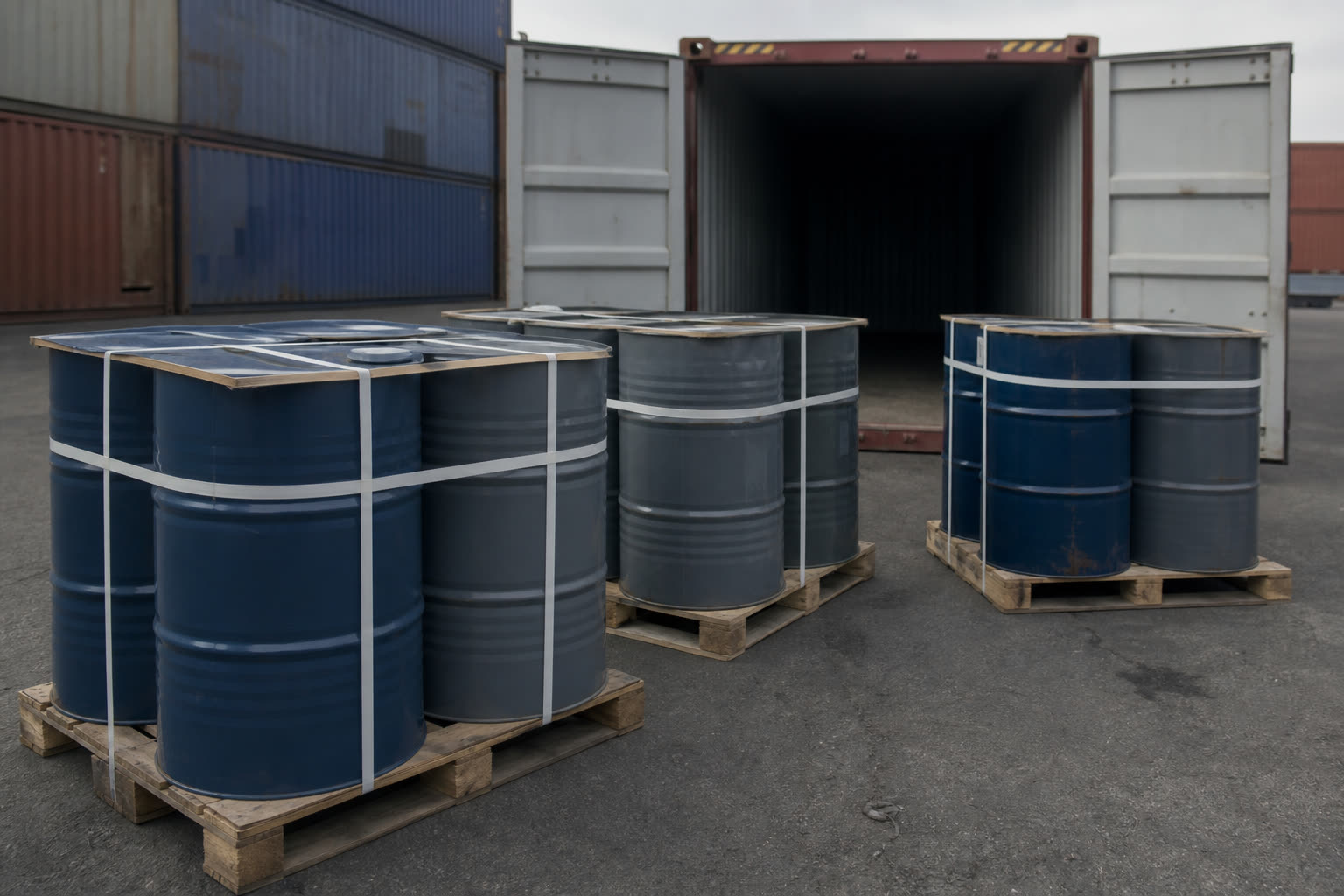
Shade Shine Pine Industries supplies both bold and rice crystal menthol in sealed HDPE bags and 200 litre drums, with exports to pharma and oral care buyers internationally. Samples are available for quality evaluation. Reach our team at +91 96965 09933 or info@shadeshinepine.com to request a sample and current price list.