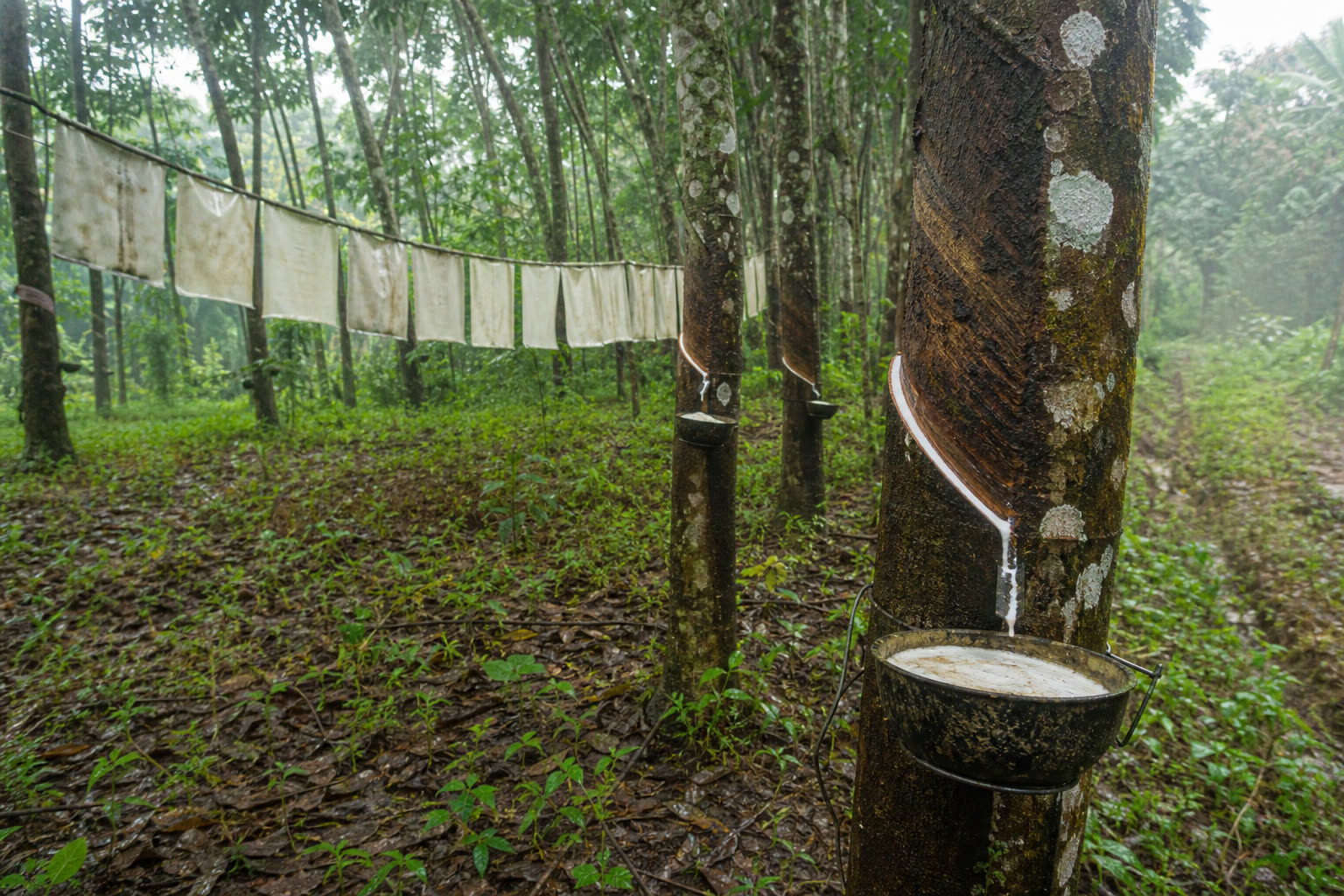
Kerala's rubber belt, centred on Kottayam and spreading into Ernakulam, Idukki, and Pathanamthitta, is one of the most distinctive industrial clusters in South India. The state grows a very large portion of India's natural rubber and processes it through a chain of primary processing units, compounding operations, and finished goods works that collectively use a range of chemical inputs. Among those inputs, pine-derived materials occupy a specific and technically important niche. We have supplied this cluster from Kanpur and wanted to set out exactly what we provide and why it matters to rubber processing operations.
Why Does the Rubber Industry Use Pine Chemicals?
The connection between pine chemistry and rubber processing is not immediately obvious, but it is well established in the trade. Three categories of pine-derived materials appear regularly in rubber compounding and processing: pine tar oil, turpentine oil (both gum turpentine and double-distilled forms), and rosin-derived resins used as tackifiers.
Each serves a different function, and understanding the distinction matters for procurement. Pine tar oil is not the same as refined pine oil, and turpentine used in rubber processing is not the same grade used in paint solvents. Getting the specification right for the application is something we can help with.
Pine Tar Oil as a Rubber Process Material
Pine tar oil is a dark, viscous material produced by destructive distillation of pine wood. Its chemical composition includes phenolic compounds, aromatic hydrocarbons, and a range of terpene-derived materials. In rubber compounding, pine tar oil functions as a softener and process aid. It reduces the viscosity of unvulcanised rubber compound, making it easier to mix fillers and curatives in an internal mixer or on an open mill.
Pine tar also contributes a measure of tack to the unvulcanised compound. In the building of multi-ply rubber products such as industrial hose, belting, and moulded goods, the ability of the compound to adhere to itself and to fabric substrates before vulcanisation is critical to the structural integrity of the final product. Pine tar oil is one of the traditional tackifying agents in this process.
The dark colour of pine tar oil means it is used exclusively in dark-coloured or black rubber compounds, which accounts for the large majority of industrial rubber goods produced in Kerala. It is not suitable for light-coloured or transparent compounds.
Turpentine in Rubber Applications
Gum turpentine oil (GTO) finds use in rubber processing principally as a solvent for rubber cements and contact adhesives. Rubber cements are used for bonding rubber to itself and to other substrates, and turpentine has historically been a preferred solvent because of its compatibility with natural rubber and its reasonable evaporation rate that allows a workable open time before bonding.
Double-distilled turpentine oil (DDTO) offers a cleaner, more consistent composition than crude gum turpentine and is preferred where solvent purity affects adhesive performance. Kerala rubber operations with in-house bonding or assembly processes often specify DDTO to get predictable solvent performance from batch to batch.
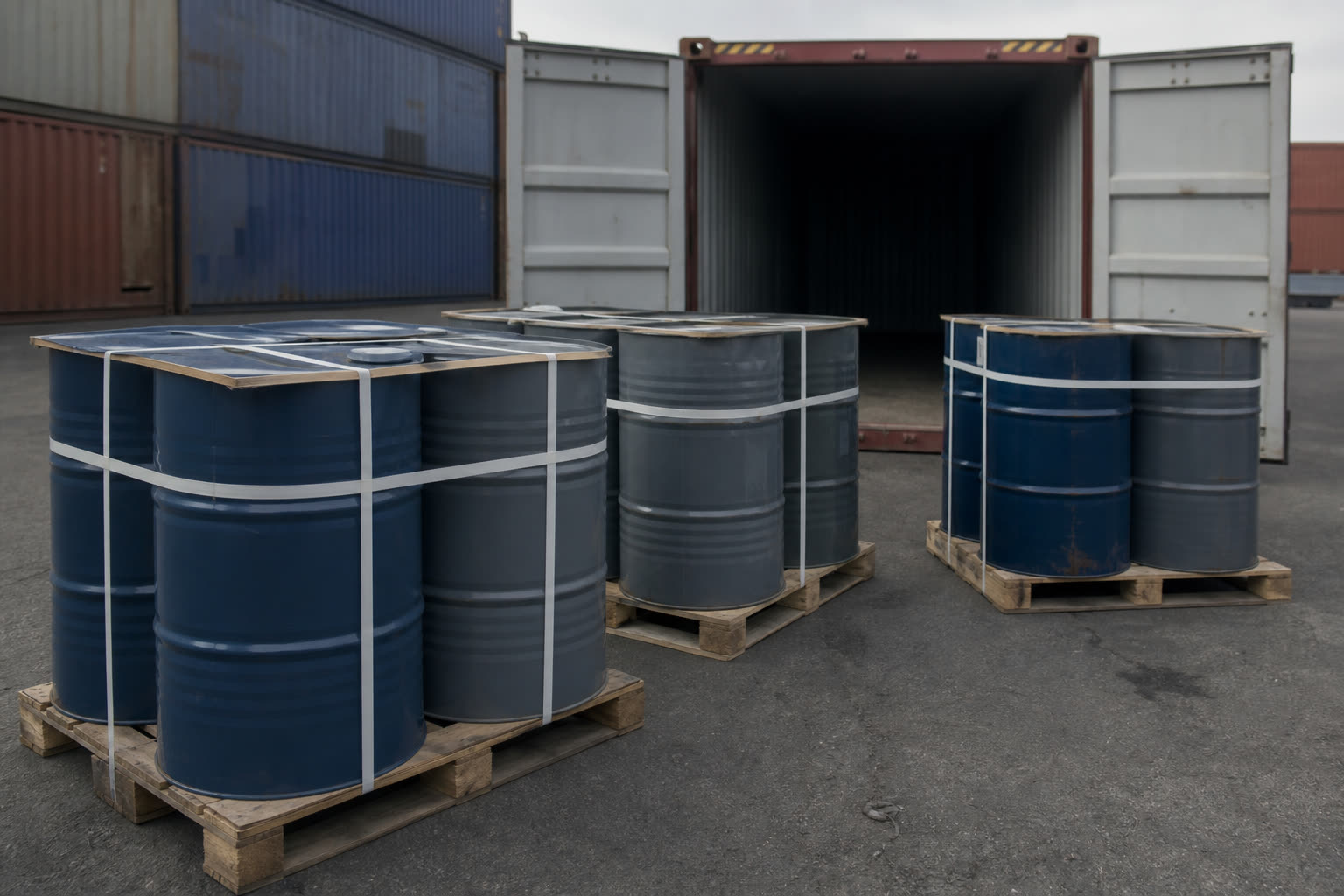
We supply both GTO and DDTO in 200-litre drums and in tanker loads depending on volume requirements. For Kerala buyers who use turpentine continuously in production, a tanker delivery that covers several months of consumption is often the most economical arrangement.
Rosin Esters as Tackifiers in Rubber Compounding
Rosin-derived tackifiers are a broad category that includes ester gum (the glycerol ester of rosin), pentaerythritol esters, and other modified forms. In rubber compounding, these materials are used to increase the tack of the unvulcanised compound and to improve adhesion in multi-layer constructions.
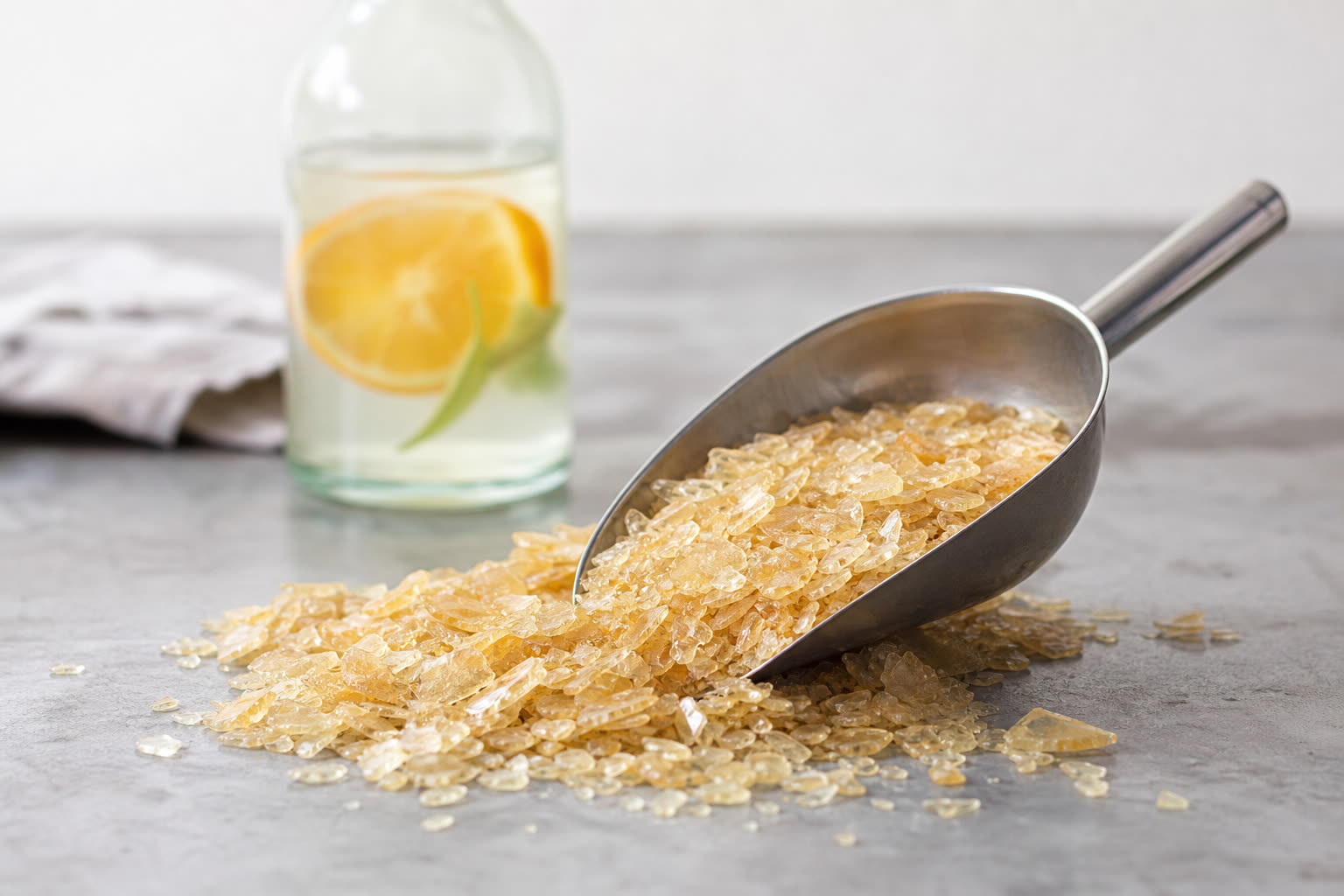
Ester gum, produced by esterifying gum rosin with glycerol, is the most widely used entry point into this category. It is a pale, brittle solid that disperses into rubber compound during mixing and remains as a tackifying resin after vulcanisation is complete. Kerala rubber compounding units that make adhesive formulations, pressure-sensitive products, or rubber-based contact adhesives often use ester gum as a core ingredient.
The connection between rosin quality and tackifier performance is direct. Rosin grade affects the softening point, acid value, and colour of the ester product. We carry nine grades of gum rosin and can advise on which grade suits a given ester gum application based on the softening point and colour requirements the buyer is working to.
Glycerol Ester and Further Rosin Derivatives
Beyond ester gum, we supply glycerol ester of rosin directly, which some Kerala buyers prefer to the unesterified rosin because it offers improved heat stability and reduced crystallisation tendency. For adhesive applications where the product is stored at tropical temperatures, the improved stability of the glycerol ester is a meaningful practical advantage.
How Material Moves from Kanpur to Kerala
The distance from Kanpur to Kottayam is considerable, roughly 2,200 to 2,400 kilometres depending on the route. Road freight transit typically takes five to six days. We work with transporters who handle hazardous and non-hazardous chemical freight to Kerala regularly and are familiar with the documentation requirements for pine tar oil and turpentine, which require GHS-compliant handling.
For buyers who consolidate orders, we can dispatch pine tar, turpentine, and rosin together on the same vehicle, covering all their pine chemical needs in a single freight movement. Tanker dispatch for liquid materials and bagged rosin on the same coordinated shipment is something we arrange routinely for buyers who need both formats.
Kerala buyers also sometimes ask about menthol crystals and camphor oils, which have applications in some rubber-adjacent personal care and pharmaceutical operations that operate alongside the rubber processing cluster in Kottayam and Ernakulam. We carry both and can add these to the same shipment, reducing freight cost across the order. Our menthol crystals are bold crystal grade suitable for pharmaceutical and cosmetic applications.
If your rubber processing or compounding operation in Kerala purchases pine tar oil, gum turpentine, DDTO, ester gum, or gum rosin, we would welcome a conversation about your requirements. Contact Yash Agarwal at info@shadeshinepine.com or call +91 96965 09933 to discuss supply terms, specifications, and scheduling.