Incoterms are the internationally agreed rules that define, for any given shipment, which party pays which cost and exactly where the risk of loss or damage moves from seller to buyer. They are published by the International Chamber of Commerce; the current version is Incoterms 2020. Every proforma invoice and purchase contract for an international chemical shipment should name the rule and the specific place, in that version. When we quote a buyer, we always specify, for example, "FOB JNPT, Incoterms 2020" rather than just "FOB," because the version matters and the place matters.
Incoterms do not determine who owns the goods at any given moment, what the payment terms are, or what happens if the quality is wrong. Those are separate contract matters. Incoterms only handle delivery, cost allocation and risk transfer.
EXW: the seller does almost nothing
Ex Works means we make the goods available at our plant in Kanpur, and essentially everything else is the buyer's problem: loading the truck, arranging the inland haulage to port, completing Indian export customs, booking the vessel, paying the ocean freight, insuring the cargo, and clearing customs at the destination. Risk transfers the moment the goods are placed at the buyer's disposal at our premises, even before they are loaded onto the collecting vehicle.
EXW looks attractive to buyers because the quoted price is the lowest. In practice, it is very difficult for a foreign buyer to arrange Indian export clearance and port logistics from abroad. We do not usually recommend EXW to overseas buyers. It creates problems that neither side wants.
FOB: the common seller-responsible term for sea freight
Free On Board means we deliver the goods on board the ship at the named Indian port, we complete Indian export customs, and we bear the cost and risk until the goods are on the vessel. Once the goods cross the ship's rail (in practical terms, once they are loaded), risk and cost pass to the buyer. The buyer pays ocean freight and insurance from that point.
FOB works well for buyers who have strong freight relationships and want to control their own shipping costs. Technically, Incoterms 2020 recommends FCA (Free Carrier) for containerised cargo, because in a container movement the goods are handed to the carrier at the container terminal before the ship is loaded. The FOB/FCA distinction matters legally if something happens to the container between the terminal gate and vessel loading. In practice, many buyers and sellers in the chemical trade still use FOB for containerised shipments. We use whichever term the buyer specifies, but we flag the FCA alternative for buyers who want cleaner risk allocation.
CFR and CIF: seller pays freight, buyer bears transit risk
This is the point that surprises many first-time importers. Under both CFR (Cost and Freight) and CIF (Cost, Insurance and Freight), the seller pays the ocean freight to the destination port. But under Incoterms 2020, risk transfers at the port of loading, when the goods are on board the vessel, not on arrival at the destination.
The practical difference between CFR and CIF is insurance. Under CIF, the seller arranges cargo insurance for the voyage, but at the minimum Institute Cargo Clauses (C) level, which is the most basic cover. If you want broader cover, negotiate it explicitly in the contract. Under CFR, the seller has no insurance obligation at all; the buyer should arrange their own cover from the moment the goods are loaded.
For shipments of gum turpentine oil or double-distilled turpentine oil, which travel as IMDG Class 3 flammable liquids, cargo insurance needs to reflect the hazardous goods classification. Standard open cover policies cover this, but verify with your insurer.
DAP: the seller delivers to your door
Delivered at Place means we bear cost and risk all the way until the goods arrive at the named destination, ready for unloading. We pay ocean freight, destination port charges, and any costs up to that point. The buyer unloads and handles import customs, duties and local delivery from there.
DAP is useful for buyers who want a simple "landed cost" to budget against. It puts more management responsibility on us, which is fine for destinations we know well. For buyers new to importing from India, DAP can simplify their first order considerably.
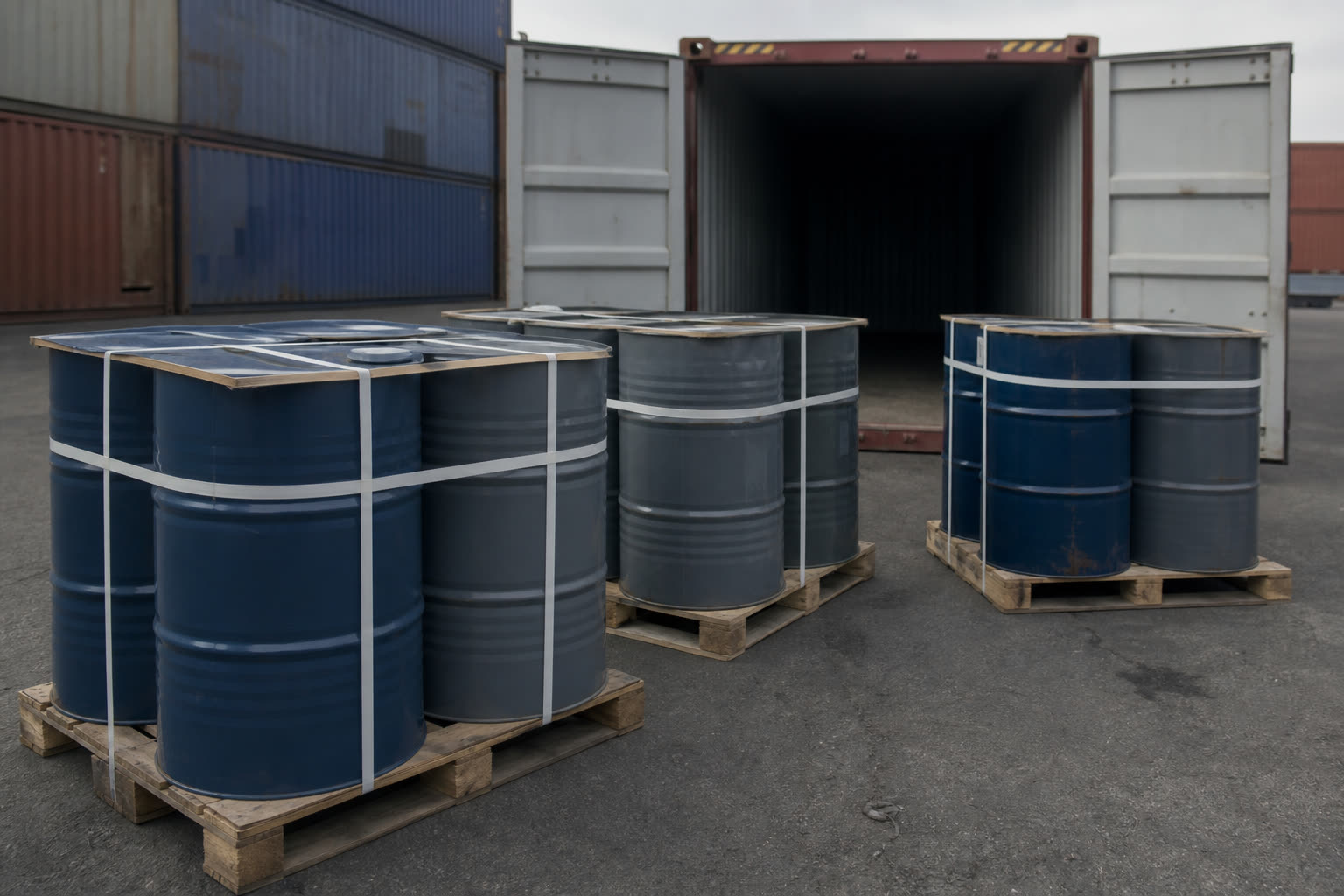
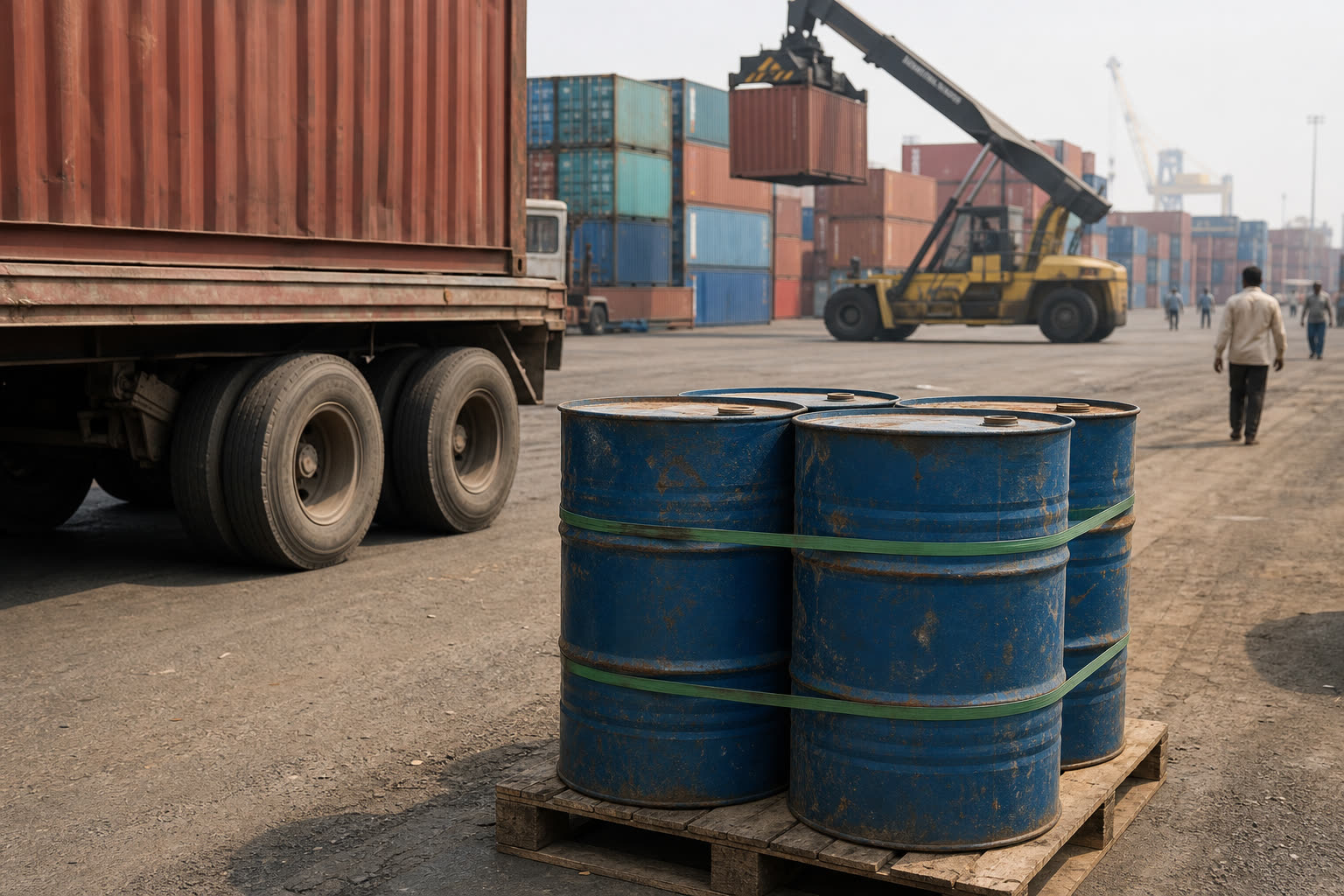
A worked example: 80 drums of turpentine on a 20-foot container
| Cost item | FOB JNPT | CFR Nhava Sheva to Rotterdam | CIF Rotterdam | DAP buyer's warehouse |
|---|---|---|---|---|
| Product cost (ex-works Kanpur) | Seller | Seller | Seller | Seller |
| Inland haulage to port | Seller | Seller | Seller | Seller |
| Indian export customs | Seller | Seller | Seller | Seller |
| Ocean freight | Buyer | Seller | Seller | Seller |
| Marine insurance | Buyer | Buyer | Seller (min. ICC-C) | Seller |
| Destination port charges | Buyer | Buyer | Buyer | Seller |
| Import customs and duty | Buyer | Buyer | Buyer | Buyer |
| Risk transfers at... | Vessel, origin port | Vessel, origin port | Vessel, origin port | Named destination |
Which term should you choose?
The honest answer: it depends on your freight-buying power, your familiarity with import procedures, and how much you want to control your landed cost.
- If you buy large volumes regularly and have freight contracts, FOB is usually the most economical. You control the shipping cost and insurance.
- If you want a simple all-in price for budgeting, CIF or DAP gives you that. You pay a premium for the convenience, but fewer surprises.
- CFR sits between FOB and CIF: you get the seller's freight buying, but arrange your own insurance. Useful if you have a good open-cover policy already.
For gum rosin shipped in 25 kg bags, the logistics are different from drummed liquids, and the freight and insurance calculations change accordingly. We quote in whatever Incoterm the buyer needs.
If you are working out a first order and want to understand how the numbers look under different terms, write to us at info@shadeshinepine.com or reach Yash Agarwal at +91 96965 09933. We will put together a comparison across the terms that suit your trade lane. Clear pricing from the start saves arguments later.