Raw gum rosin is not a varnish on its own, and no working paint chemist treats it as one. What makes rosin commercially significant in alkyd chemistry is that it reacts with and modifies the polyester backbone, changing the speed of drying, the gloss response, the surface hardness, and the compatibility of the finished resin with both pigments and solvents. We have supplied rosin to alkyd resin cookers across India for over four decades, and the grade decision is one the buyer almost always has to think through carefully.
What Does Rosin Actually Contribute to an Alkyd?
Rosin is a mixture of resin acids, predominantly abietic acid and its isomers, with an acid value typically between 155 and 185 mg KOH per gram. When incorporated into an alkyd during the polyesterification cook, those acid groups react with the polyol and diacid components, functionally becoming part of the polymer chain. The result is a resin with faster dry response, higher surface gloss, and better initial hardness than a purely fatty-acid-based alkyd at equivalent oil length. The trade-off is that rosin-modified alkyds can be less flexible and more prone to discolouration if the rosin grade is not chosen carefully. The softening point of gum rosin, generally in the range of 70 to 80 degrees Celsius depending on grade and source, also influences how the cook proceeds at the elevated temperatures, typically 240 to 300 degrees Celsius, used in varnish kettles.
Which Colour Grade Should a Paint Maker Specify?
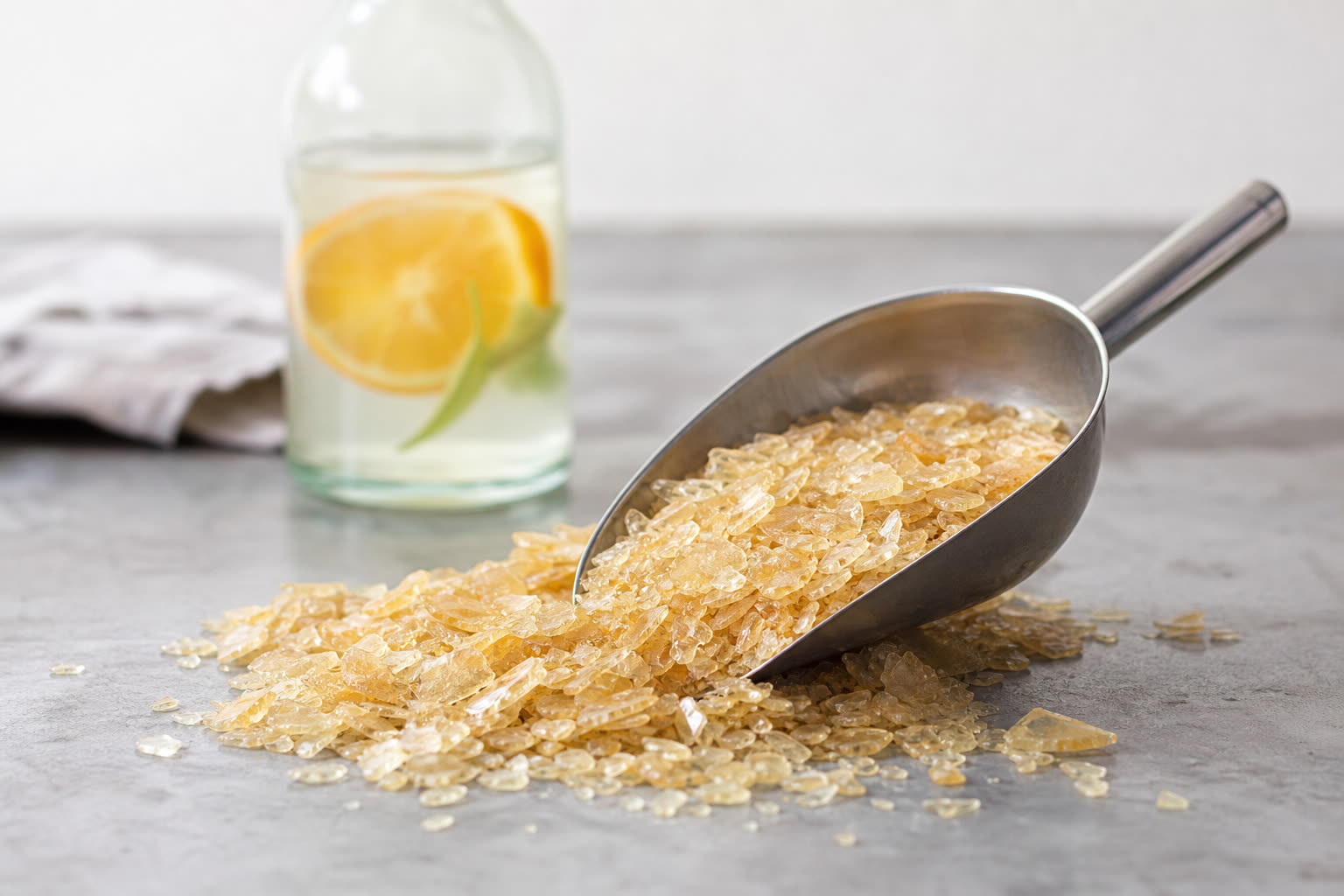
The ASTM colour grading system for gum rosin runs from X through WW, WG, N, M, K, I, H, G, and F, with X and WW being the palest and G or F the darkest amber. Our gum rosin is available across the full range from WW to K, and the choice maps directly to the end product colour requirement.
- WW (Water White): The lightest grade, used for pale or clear varnishes, light-coloured furniture finishes, and gloss enamels where colour in the base resin would compromise the finished shade. Gardner colour of the dissolved resin will be minimal.
- WG (Window Glass): Slightly more yellow than WW but still acceptable for most off-white and pastel-toned alkyd enamels. This is the grade a large share of Indian alkyd cookers use because it balances light colour with a more accessible price.
- N and M: These grades carry a clear amber body. They are suitable for mid-toned and strongly pigmented topcoats, wood primers, and systems where the alkyd colour will be masked by pigment loading. Red oxide and grey primers almost always use M or darker.
- K: The darkest grade we carry. Used in heavily pigmented industrial paints, bituminous coatings, and lower-cost varnishes where final colour is not a constraint.
How Does Ester Gum Differ from Straight Rosin in an Alkyd Cook?
Ester gum, which is glycerol esterified with gum rosin, reduces the free acid content that raw rosin would introduce into a cook. This gives the varnish maker more control over acid value in the finished resin and avoids unwanted side reactions with driers. Our ester gum typically carries an acid value below 15 mg KOH per gram, compared to 155 to 185 for raw rosin. It also improves the flexibility and water resistance of the cured film compared to straight rosin modification. Many Indian varnish cookers use ester gum rather than raw rosin precisely to keep the final acid value of their alkyd within specification without excessive trimol addition.
What About Glycerol Ester of Gum Rosin?
The glycerol ester of gum rosin, which we also supply, is closely related to ester gum and in trade usage the names are sometimes used interchangeably. Our glycerol ester is used in paints, printing inks, and adhesive formulations where a tackifying resin with moderate softening point and good oil solubility is needed. In the context of alkyd and varnish chemistry, it can be used as a blending resin to adjust body, tack, and gloss response.
How Is a Rosinated Alkyd Varnish Typically Cooked?
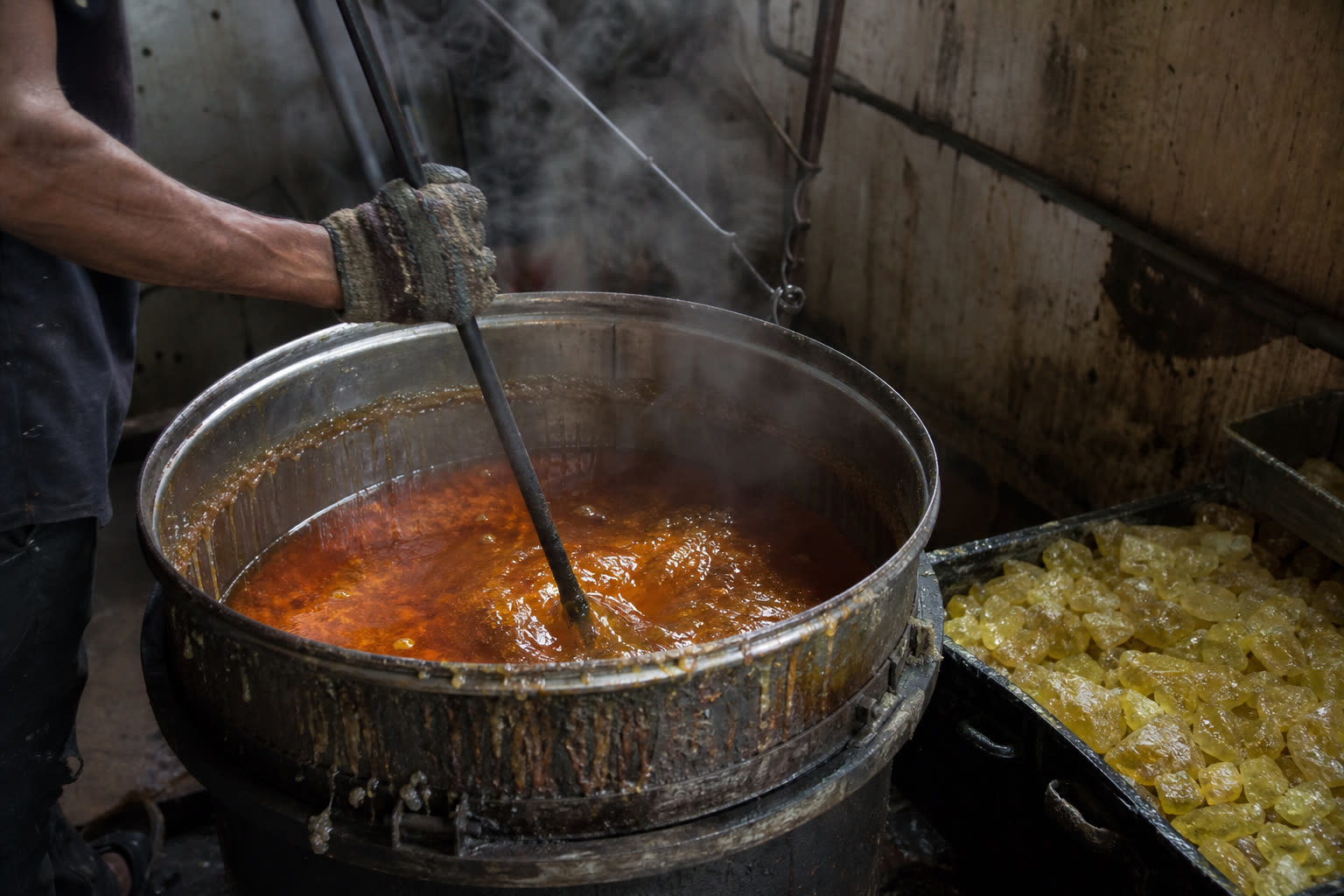
A simplified alkyd cook sequence runs as follows: the fatty acid or oil and the polyol are charged first, the temperature is raised to begin esterification, rosin or ester gum is added at a defined stage, the cook continues to target acid value and viscosity, and the resin is then dissolved in the required solvent, commonly mineral turpentine or gum turpentine, at a controlled temperature to avoid flash risk. Published commercial examples of rosinated alkyd formulations show finished solids in the range of 42 to 70 percent and Gardner colour limits tied directly to the rosin grade used in the cook. The exact cook protocol is proprietary to each resin house and varies with kettle size, catalyst, and the specific oil and polyol used. We do not offer varnish cooking as a service, but we can supply rosin and ester gum to specification and work with your technical team to select the right grade for your process.
What Should You Check When Buying Rosin for Alkyd Use?
Never buy on grade letter alone. Ask for the certificate of analysis covering: colour (Gardner or Lovibond), acid value, softening point (ring and ball), ash content, volatile content, and any moisture or insoluble matter limits. These parameters vary between sources even within the same nominal grade, and they affect cook behaviour and finished resin quality. We have supplied gum rosin to alkyd resin makers in Kanpur, Ahmedabad, Mumbai, and Chennai for decades. Our long experience in the trade means we can discuss specification requirements frankly before you place an order.
To request samples or a quotation for rosin in any grade from WW to K, or for ester gum and glycerol ester of gum rosin, contact Yash Agarwal at info@shadeshinepine.com or +91 96965 09933. We dispatch in 25 kg bags (solid rosin) or in the grades and pack sizes your operation requires.