Indonesia buys a meaningful volume of Indian pine chemicals every year. The country's paint and coatings sector, soap and detergent industry, and fragrance compounders all draw on products like pine oil, turpentine, dipentene, and terpineol. We have been supplying Indonesian buyers since the mid-1990s, and the trade lane is well established. That said, Indonesia's import rules for chemicals have changed significantly in recent years, and anyone shipping in 2025 and 2026 needs to be working from the current framework, not from how things worked a few years ago.
What drives Indonesian demand for pine chemicals?
Indonesia is a large producer of paints, industrial coatings and wood finishes for both domestic consumption and ASEAN regional export. Pine oil and turpentine are used as solvents and odour agents in these formulations. The fragrance sector, which supplies the domestic consumer goods industry, uses terpineol and dipentene extensively. There is also demand for pine oil as a disinfectant and floor-cleaning ingredient, a segment that has grown alongside the expansion of Indonesia's middle-class household products market.
Indonesia does produce some pine-derived materials domestically, but supply from Sumatra's pine forests is not sufficient to meet the full downstream demand, making Indian and Chinese imports a regular part of the supply picture. Indian pine chemicals, drawn from oleoresin tapped in Madhya Pradesh, Himachal Pradesh and Uttarakhand, are considered reliable in quality by Indonesian buyers who have worked with them.
What is the current Indonesian import licensing framework?
This is where buyers and sellers both need current advice. The framework shifted substantially with Indonesia's Ministry of Trade Regulation 20/2025, issued in mid-2025, which governs the import of chemicals, hazardous materials and minerals. The older API-U and API-P importer identifications have been restructured into the NIB-based (Nomor Induk Berusaha) business registration system. All Indonesian importers now operate under a NIB, which functions as the base importer identification.
Whether a specific pine chemical product requires additional import approvals, such as a PI (Import Approval) or LS (Surveyor Verification), depends on the exact HS code in Indonesia's tariff system (BTKI) and whether that code appears in the annexes of Permendag 20/2025. Pine oil under HS 3805.20 and turpentine products under other 3805 subheadings may or may not be listed. The honest answer is that you need to check the current INSW portal (Indonesia's national single window for trade) for the specific BTKI code before every shipment. Your Indonesian buyer and their customs broker are the people to do that check.
We tell all our Indonesian buyers: verify in INSW before the purchase order is confirmed. If a PI or LS is required for your specific product code, the approval must be in place before the goods are shipped from India, not after they arrive at the port. Getting this wrong creates costly delays at Tanjung Priok or Tanjung Perak.
Does the ASEAN-India Free Trade Agreement help on duty?
It can. The ASEAN-India Free Trade Agreement (AIFTA), also known as AITIG, provides preferential tariff rates for eligible goods originating in India and imported into Indonesia. To claim the preferential rate, the Indian exporter must obtain an AIFTA Certificate of Origin, known as Form AI, from an authorised issuing authority in India (typically the relevant Export Inspection Council office or DGFT-authorised agency). The Form AI must travel with the shipment and be presented to Indonesian customs.
The actual preferential duty rate for a given HS code depends on Indonesia's AIFTA tariff schedule, which you should verify directly in Indonesia's tariff system rather than assume a number. The AIFTA does not waive any import licensing requirements, LARTAS controls, or other regulatory requirements. It is purely a duty-reduction instrument. Whether the duty saving justifies the additional documentation effort depends on the volume and margin on the specific product.
For large container shipments of pine oil or gum turpentine oil, a Form AI is usually worth the effort. For smaller trial shipments, some buyers prefer to clear under the MFN rate first and then formalise the AIFTA procedure once the trade is established. Confirm with your customs house agent (CHA) in India and your buyer's broker in Indonesia before deciding.
Which Indonesian ports handle chemical imports?
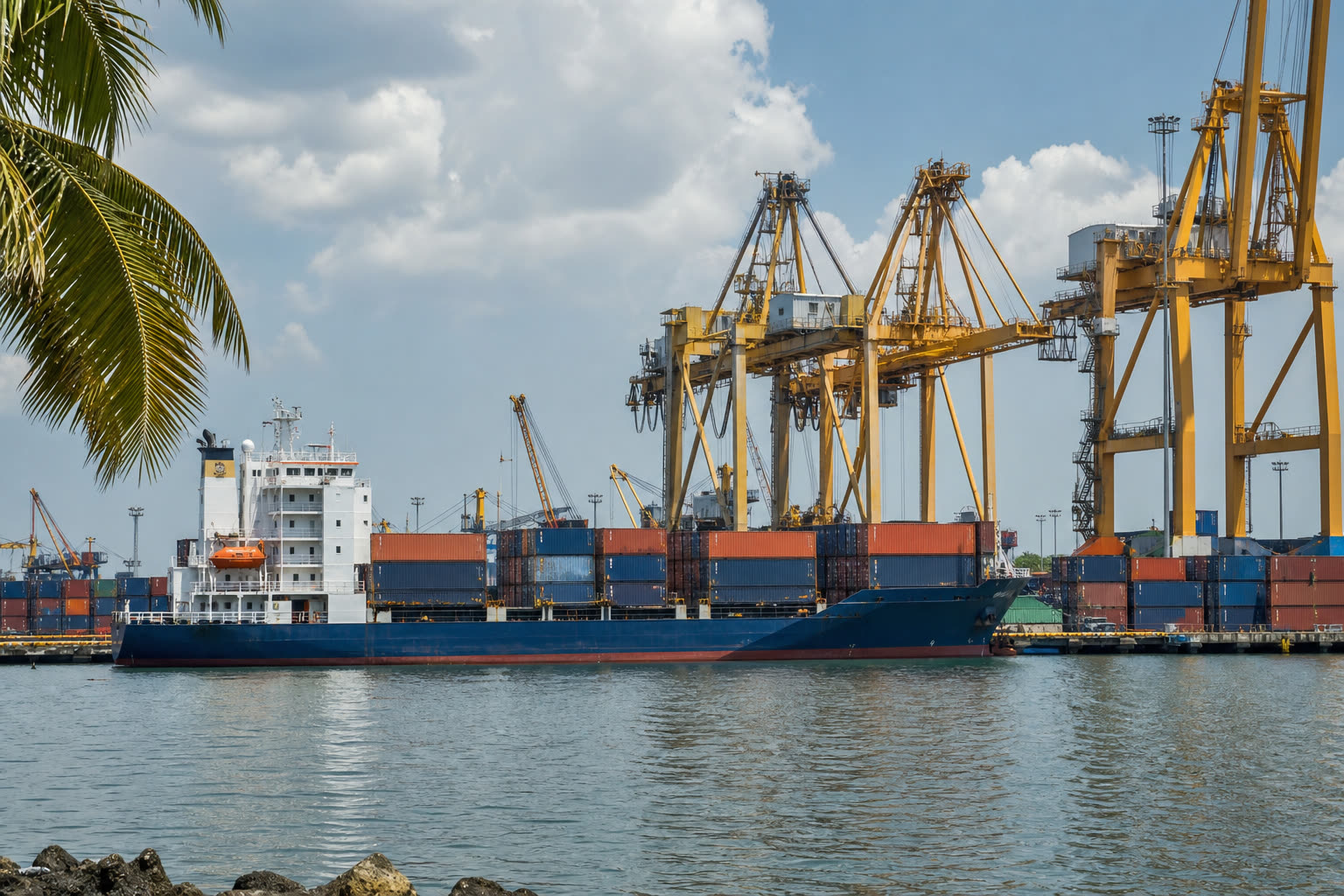
Tanjung Priok port in Jakarta is Indonesia's largest container port and handles the majority of chemical imports into Java. Most buyers in the Jakarta-Bandung-Karawang industrial corridor receive goods there. Tanjung Perak in Surabaya is the main port for East Java buyers, which includes a significant share of Indonesia's paint and chemical processing capacity. For buyers in Sumatra, Belawan port near Medan is the practical entry point.
Shipping lines from JNPT or Chennai typically connect to Tanjung Priok with a transit time of around 10 to 14 days, depending on the routing. Direct services exist on some lines; others transit through Singapore or Port Klang. Your freight forwarder will advise on current schedules and rates.
What documentation does an Indonesian buyer typically need?
For a standard chemical shipment into Indonesia, the core document set includes: commercial invoice with BTKI/HS code, product name and CAS number; packing list; bill of lading; Certificate of Analysis; Safety Data Sheet in either English or Bahasa Indonesia (English is generally accepted for industrial chemicals); and the AIFTA Form AI if preferential duty is being claimed. If a PI or LS is required for the specific product, those documents must be in hand before the goods ship.
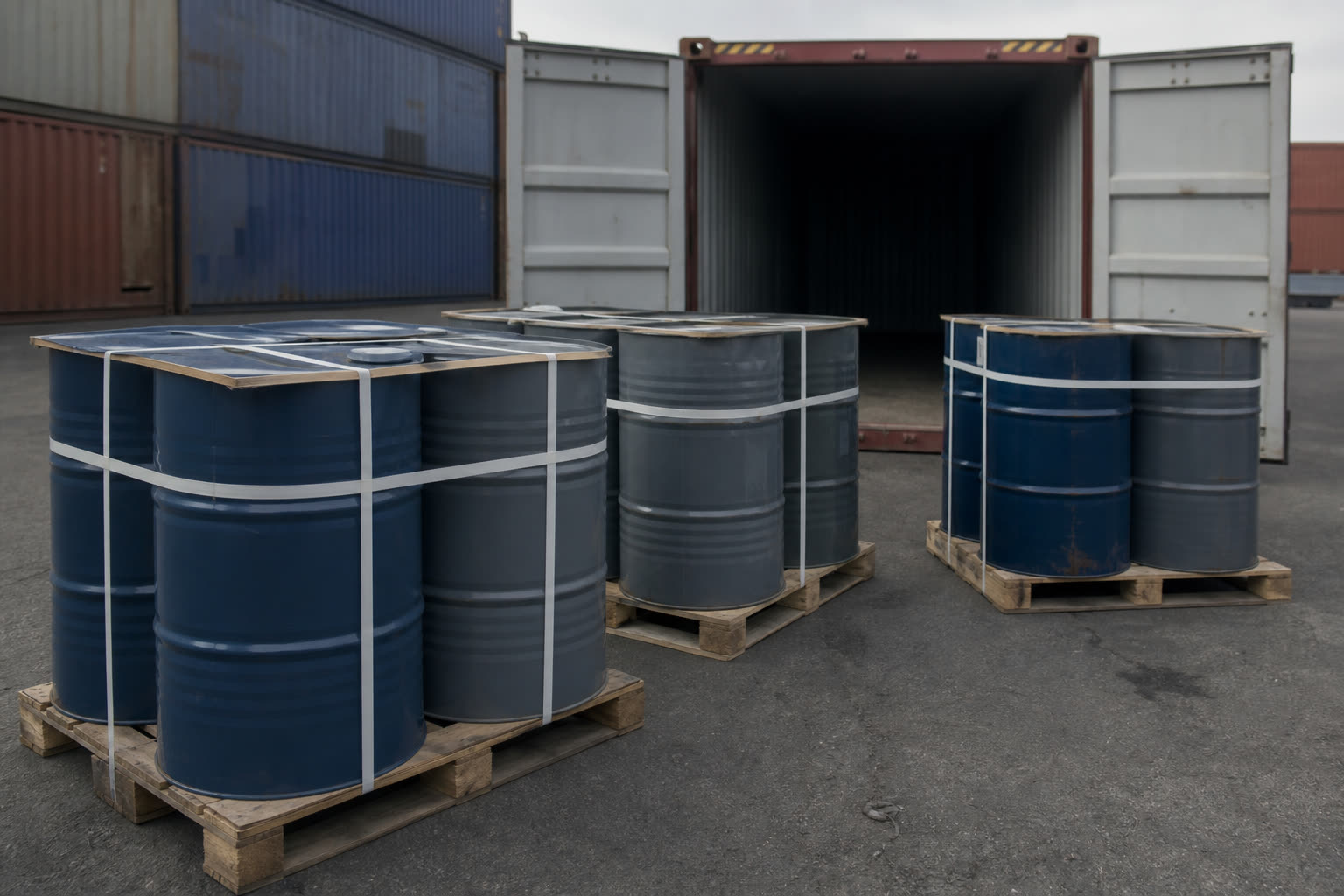
Indonesian customs also requires a packing declaration for container shipments. Your freight forwarder will prepare the container/cargo packing certificate as part of the dangerous goods documentation for products like turpentine that travel as IMDG Class 3.
If you are an Indonesian buyer looking to source pine oil, turpentine, terpineol or dipentene from India, we are glad to discuss product specifications, packing options and documentation support. Contact Yash Agarwal at info@shadeshinepine.com or +91 96965 09933. We have been doing this since 1980 and we know the paperwork as well as we know the product.