A well-documented shipment clears customs quietly. A poorly documented one sits at a port waiting for someone to explain what is in the container. After 46 years of exporting pine chemicals from Kanpur to buyers in the US, Southeast Asia, China and the Middle East, we can tell you that documentation discipline is not bureaucratic box-ticking. It is how you protect the buyer's money and your own reputation. Here is every document we prepare, what it does, and what it must contain.
1. Commercial Invoice
The commercial invoice is the master document. It tells customs, the buyer and the bank exactly what has been sold, at what price, on what terms. Ours carries: our GSTIN and IEC (Importer-Exporter Code), the buyer's name and address, invoice number and date, product name (chemical name, not just a trade name), CAS number, HS code, quantity in litres or kilograms, unit price and total value, currency, Incoterm and named place (e.g. "FOB JNPT, Incoterms 2020"), country of origin, and whether the export is under LUT (see below). The HS code for turpentine is 3805.10; for gum rosin and rosin grades it is 3806. Get the HS code right; errors here cause customs to question the entire shipment.
2. Packing List
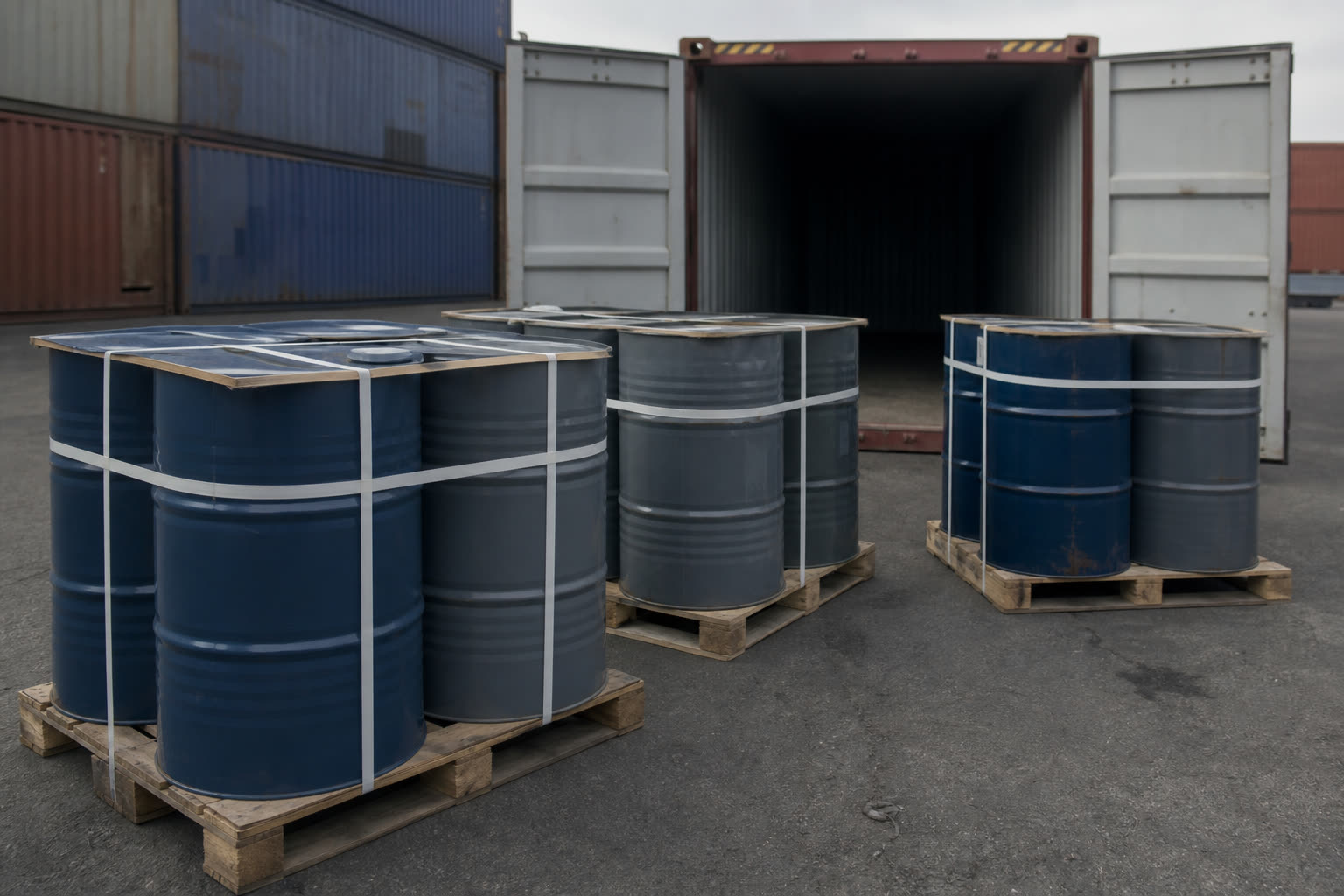
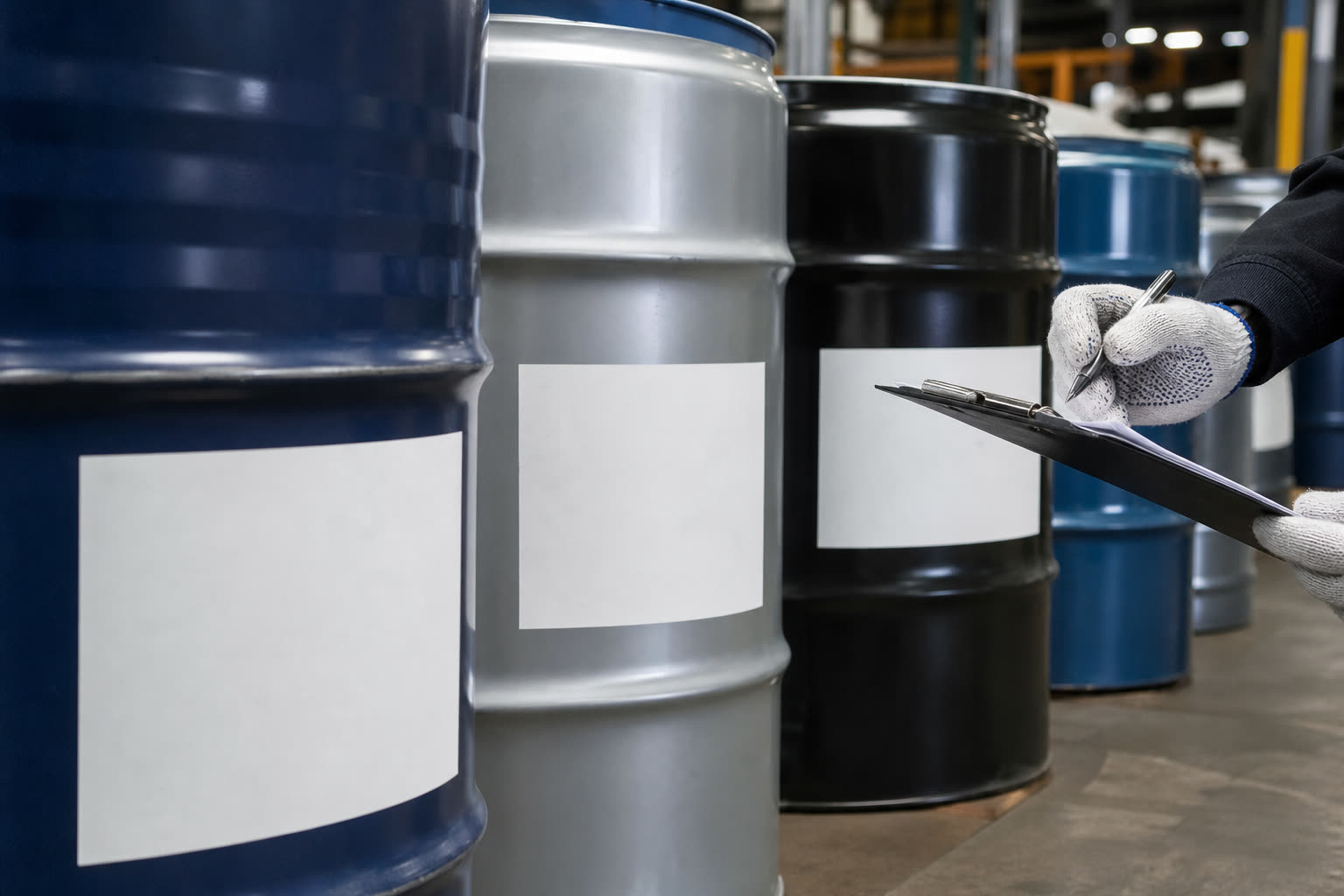
The packing list tells the physical story: how many packages, what type (200-litre steel drums for liquids, 25-kg woven bags for solid rosin grades), net weight, gross weight, dimensions, and the drum or bag marks and numbers. For a 20-foot container of gum turpentine oil, that means 80 drums, the tare weight of each drum, and total gross weight. Customs uses this to verify what is actually in the container. The packing list and commercial invoice must agree on quantity; discrepancies trigger examination.
3. Certificate of Analysis (COA)
The COA is the technical passport of the batch. It records the actual measured values for every specification parameter on that production lot: for turpentine, that means specific gravity, refractive index, initial boiling point, colour, alpha-pinene content, and residue on evaporation. For gum rosin, it covers softening point (ring and ball), colour grade (WW through K), acid value, and ash content. The COA must show the batch number, production date, test methods used, and the signature of the quality control person. Buyers who have been in the trade any length of time read COAs carefully. We do too, before we sign them.
4. Safety Data Sheet (SDS)
The SDS is a regulatory requirement for chemical shipments, not just a courtesy document. It must comply with the GHS (Globally Harmonised System) format, 16 sections, and ideally in the language required at the destination. For the US, the SDS must align with OSHA HazCom 2012 requirements. For the EU, it follows REACH Regulation Annex II. For most Asian markets, English is accepted for industrial chemicals. The SDS for turpentine must clearly state the flammable liquid classification (Class 3, UN 1299, PG III), the flash point, first-aid measures, and storage requirements. It must be current, updated for the current version of the product formulation. We keep batch-specific SDS files and update them when any specification or regulatory classification changes.
5. Certificate of Origin (COO)
The certificate of origin declares that the goods were produced in India. It is needed when the buyer's country offers preferential import duty under a trade agreement with India, or when the buyer's LC or import regulations require it. For ASEAN buyers claiming the ASEAN-India FTA (AIFTA) preferential duty rate, the specific Form AI must be obtained from an authorised Indian issuing agency. For non-preferential certificates, the relevant Export Promotion Council or authorised Chamber of Commerce issues them. The COO must be applied for before the shipment departs; it cannot be backdated. DGFT's eCoO 2.0 portal handles preferential COO applications electronically.
6. Bill of Lading (BL)
The bill of lading is issued by the shipping line and serves three functions at once: it is the receipt from the carrier confirming the goods were loaded; it is the transport contract; and it is a document of title, meaning possession of the original BL can transfer ownership of the goods. For letter of credit transactions, the bank will scrutinise the BL for compliance with the LC terms: on-board date, port of loading, port of destination, number of originals, notify party, and whether it is clean (no remarks from the carrier about damaged or suspect packaging). Any remark on the BL makes it a claused BL, which LC-issuing banks will typically reject. Make sure drums are in perfect condition before loading.
7. Insurance Certificate
Under CIF terms, we provide cargo insurance. Under FOB or CFR, the buyer arranges their own cover. Either way, the insurance certificate should match the invoice value plus a margin (typically 110%) and cover the journey from origin to destination. For dangerous goods like turpentine (IMDG Class 3), confirm with your insurer that hazardous goods are covered under the policy. Many standard marine open covers include hazardous chemicals; some do not.
8. LUT and GST Compliance Documents
This is the India-specific regulatory piece. Under India's GST framework, exports are zero-rated, meaning no GST is charged on exports. To export without paying IGST upfront, we file a Letter of Undertaking (LUT) annually in Form GST RFD-11 on the GST portal. The LUT acknowledgement number is referenced on our export invoices. If the LUT is not in place, we would have to pay IGST on the export and then claim a refund, which ties up working capital unnecessarily. We have maintained continuous LUT filings since the GST framework started. Our CHAs verify the LUT status before every shipment cycle.
9. Shipper's Declaration for Dangerous Goods
For turpentine and any other IMDG-classified products, the shipper must complete a dangerous goods declaration (IMO Declaration / Multimodal Dangerous Goods Form). This certifies that the goods are properly classified, packed, marked, labelled, and in proper condition for transport by sea. This document must be prepared and signed by a trained, authorised person. We prepare these for every turpentine and double-distilled turpentine oil shipment.
10. Shipping Bill
The shipping bill is the Indian customs export declaration, filed electronically through ICEGATE (the Customs EDI portal). It summarises the commercial invoice details and triggers the customs examination and clearance process. Once goods are examined (or Let Export Order is issued without examination), the shipping bill is endorsed and becomes the key document for GST refund claims if applicable.
Every shipment we send carries this complete documentation set. If you have questions about how we document a specific product or route, or if you are a first-time importer who wants to understand what to expect before your goods arrive, write to us at info@shadeshinepine.com or call Yash Agarwal on +91 96965 09933. We find that a 20-minute call before the first order saves hours of confusion later.