Buying Mineral Turpentine Oil wholesale in India is not complicated once you know what to look for. The product itself is well-established, the supply chain runs through major public-sector refineries, and grade specifications are published. What trips up buyers is not the chemistry but the procurement details: grade confusion, incomplete quotes, vague COAs, and logistics gaps. This guide covers each of those areas.
Which MTO Grade Do You Actually Need?
MTO sold in India is not one uniform product. The key variables are aromatic content, distillation range, flash point, and residue on evaporation. The Bureau of Indian Standards reference is IS 1745:2018, which covers petroleum hydrocarbon solvents. Within that framework, you will encounter terms like low-aromatic MTO, regular MTO, and sometimes grade designations tied to specific refinery product sheets.
For most paint and enamel thinning applications, regular MTO meeting IS 1745 with an aromatic content in the 17 to 30 percent range and a flash point above 35 degrees Celsius is suitable. If your application involves sensitive materials, skin contact, or closed environments, a low-aromatic grade with tighter odour and aromatic limits is worth the small premium. Ask your supplier to state the grade and the IS 1745 edition on the quote so you can compare like with like across suppliers.
What Should a Proper COA Cover?
A Certificate of Analysis for MTO should include at minimum: appearance and clarity, density at 15 degrees Celsius, distillation profile including initial boiling point and final boiling point, flash point by Abel closed cup, aromatic content as percentage volume, residue on evaporation, copper strip corrosion result, and colour. A COA that lists only density and flash point is not sufficient for a commercial procurement decision. If a supplier cannot produce a full parameter COA from a recognised laboratory, treat that as a caution sign.
Request the COA for the specific batch you are buying, not a generic product datasheet. The batch number and test date should appear on the document. For a first purchase from a new supplier, it is reasonable to ask for a pre-shipment sample so you can run your own verification before committing to a full tanker or a large drum order. See our related post on how to read a certificate of analysis for detail on interpreting each parameter.
Drum Versus Tanker: Which Is Right for Your Operation?
The choice between 200-litre drums and a road tanker delivery depends on your storage licence, your daily consumption rate, and your pump-out equipment.
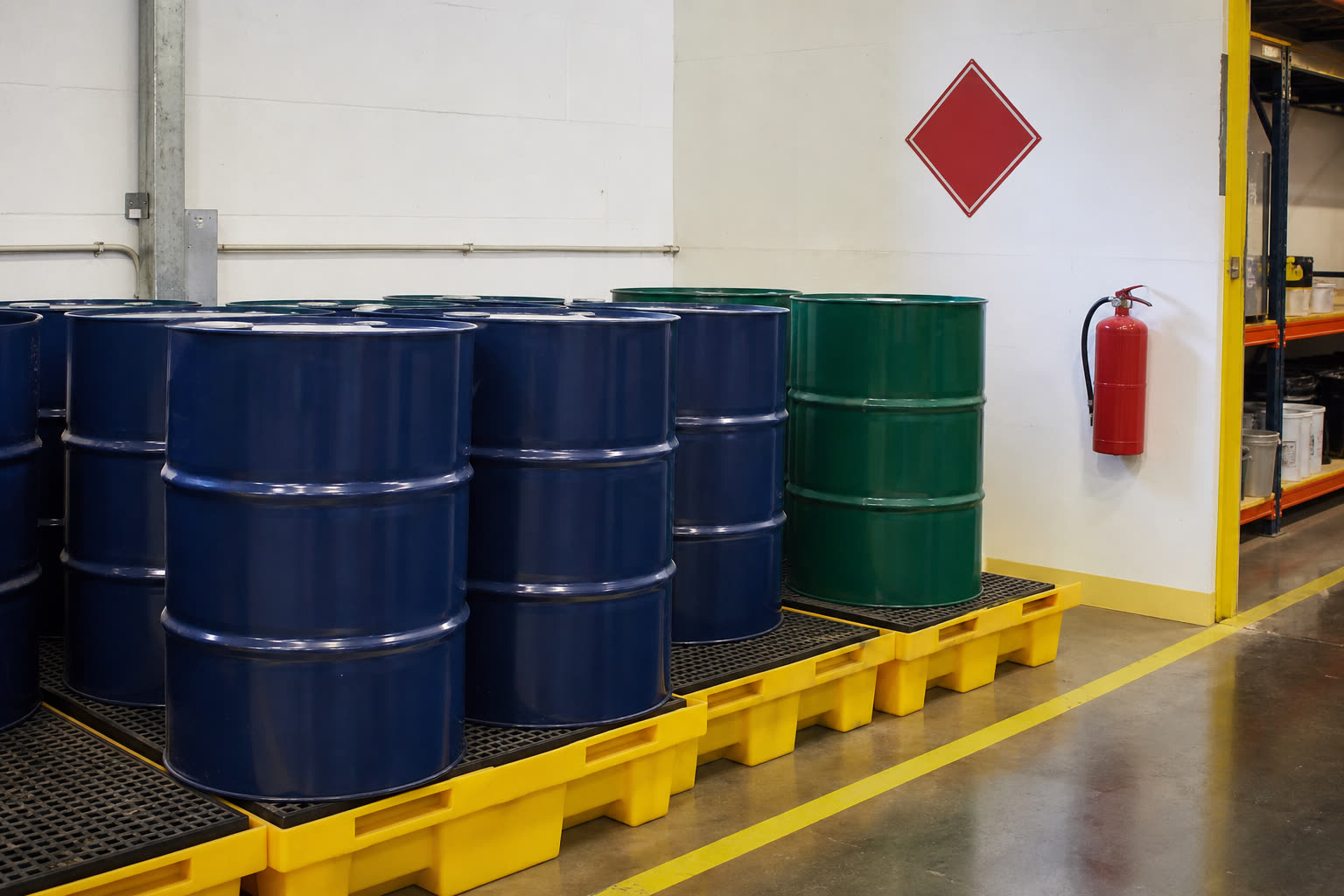
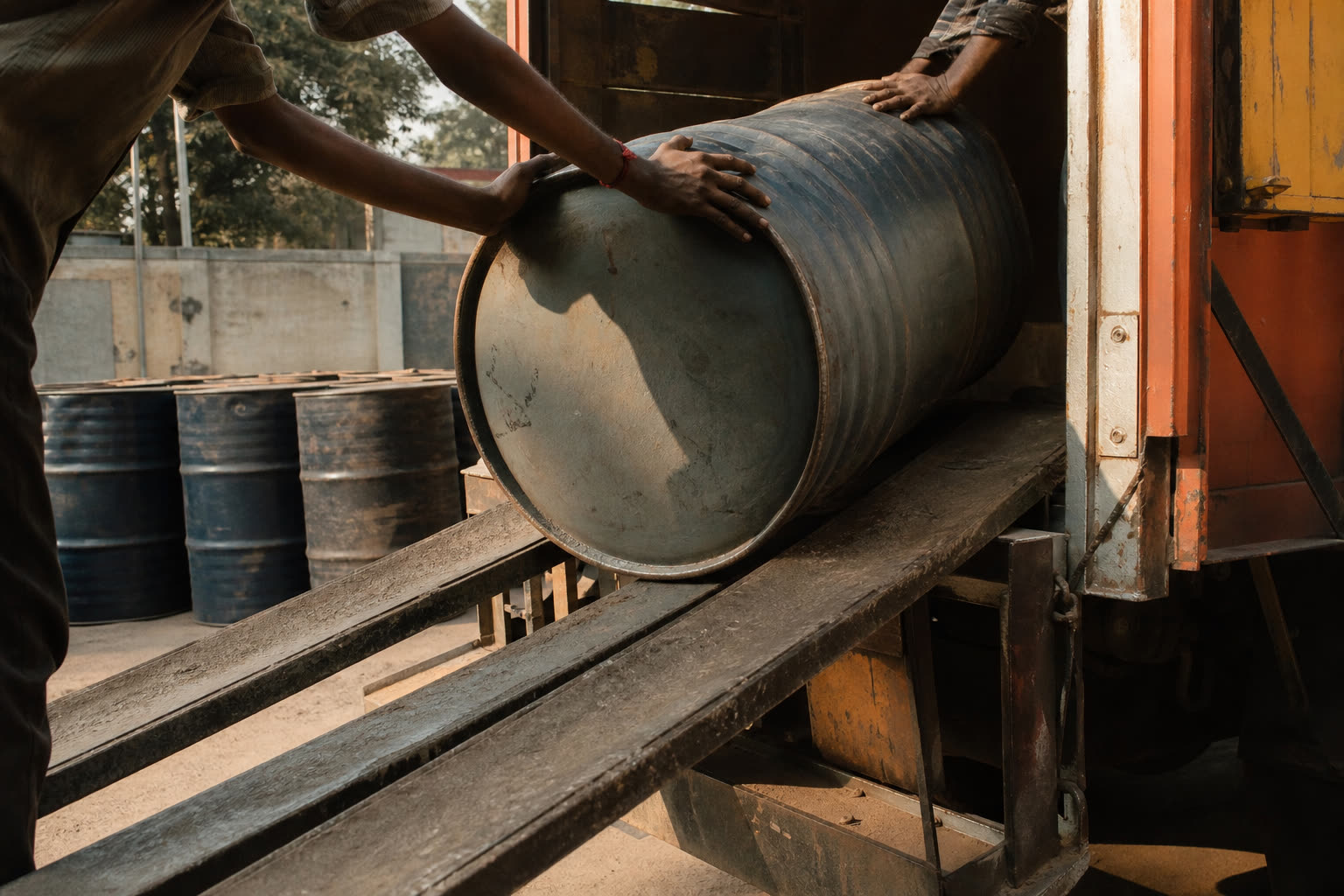
- Drums are more flexible for buyers with smaller or irregular needs. You take delivery of what you need, when you need it, without requiring a bulk tank or a PESO-licensed bulk storage installation beyond the applicable drum-quantity exemption limits. Drums can be moved around a warehouse and decanted into smaller containers as needed.
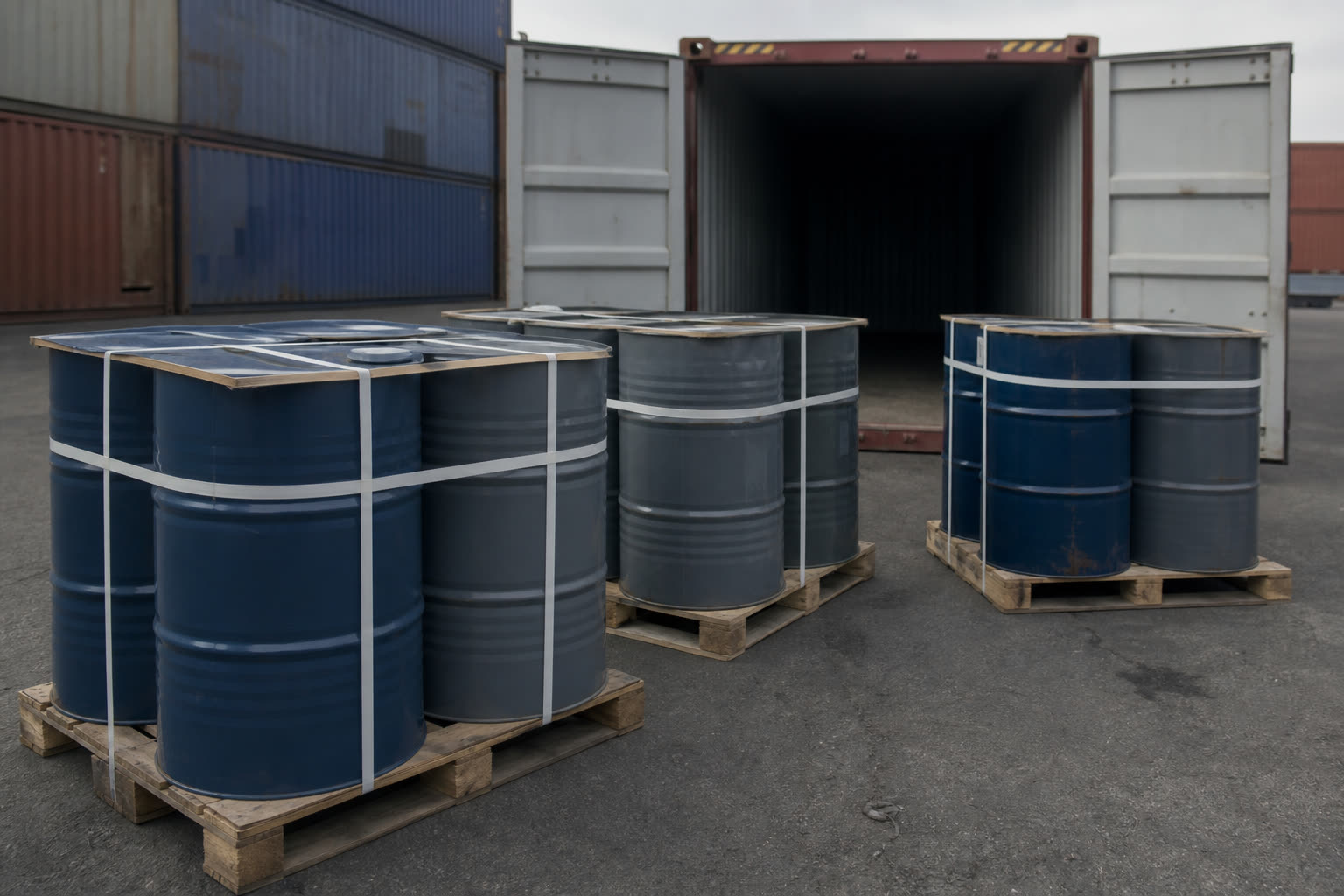
- Tanker supply reduces the cost per litre significantly for buyers consuming several kilolitres per month. The tanker delivers directly into your approved bulk storage tank, cutting out the drum handling cost entirely. You need licensed bulk storage, appropriate earthing and bonding points, and a way to receive the tanker safely and legally.
- For retail and hardware trade, neither drums nor tankers are the end format. Here, 1-litre and 5-litre branded consumer packs are what move off the shelf, and those packs come from distributors who buy in drums or tankers and repack.
What Should a Fair Wholesale Quote Include?
A properly structured MTO wholesale quote should state: the ex-depot or ex-works price per kilolitre or litre, the applicable GST rate and amount, the freight charge and mode (road tanker or drum delivery), any loading or handling fees, the payment terms, the delivery lead time, the quantity tolerance, and the grade or specification reference. Quotes that show only a per-litre delivered price without breaking out these components make it hard to compare suppliers or to understand what you are paying for.
Ask specifically whether the price is ex-depot basic, ex-depot all-inclusive, or delivered at your gate. The difference between ex-depot and delivered-to-site can be a meaningful percentage on a per-litre basis depending on distance and mode. Also confirm whether the quoted price is fixed for the duration of your order or subject to revision if the refinery depot price moves between order confirmation and delivery.
Red Flags to Watch For
A few situations should prompt extra caution when buying MTO in bulk:
- A price substantially below the prevailing refinery depot benchmark without a clear explanation. Adulterated or off-spec material sometimes enters the market at attractive prices.
- A supplier who cannot name the source refinery or provide a refinery batch COA, and instead offers only a self-generated quality certificate.
- A quote that bundles MTO with another solvent in a way that is not clearly disclosed, or uses descriptions like turpentine substitute or solvent naphtha without specifying whether the product meets IS 1745.
- Delivery in drums that show signs of reuse, damage, or unclear labelling. MTO drums should be clearly marked with product name, batch reference, hazard symbols, and emergency contact information per applicable rules.
Logistics and Lead Times
MTO from major Indian refineries moves through depot networks across the country. For buyers in northern India, depots near Mathura, Panipat, and Bhatinda are the typical reference points. Lead times from order to delivery depend on depot stock position, tanker availability, and distance. For drum orders, a reliable regional supplier who already holds stock can often turn around an order faster than a spot purchase from a distant depot. Factor lead time into your stock planning, particularly in the October-to-February peak-demand months when paint-sector buying is heaviest.
We stock and supply MTO from our base in Kanpur alongside double distilled turpentine oil and other pine chemicals. We supply in 1-litre Shade Shine branded bottles for retail trade, in 200-litre drums for mid-size buyers, and by road tanker for bulk customers with appropriate licensed storage. For current availability and pricing, contact Yash Agarwal at info@shadeshinepine.com or +91 96965 09933.