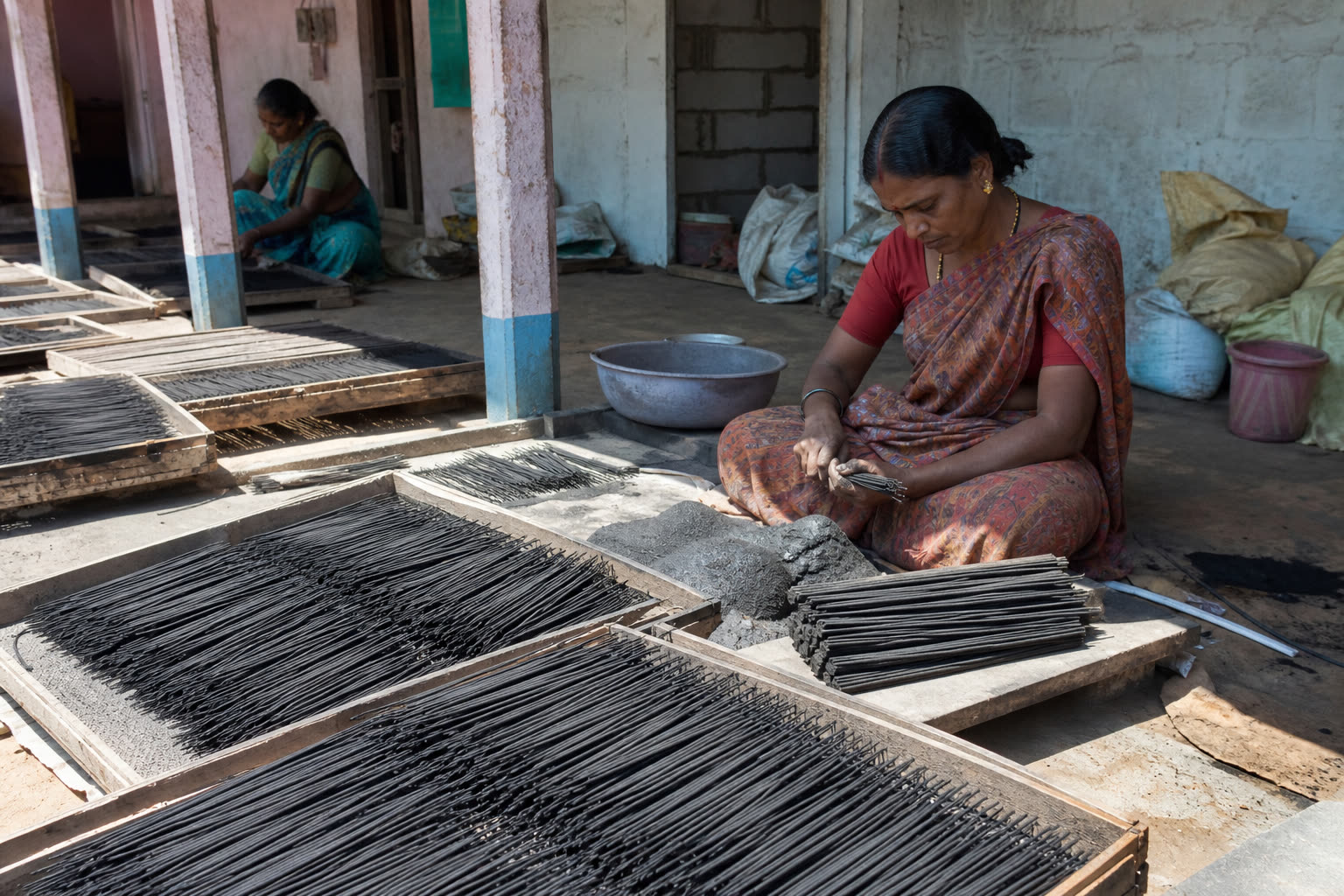
Karnataka is India's agarbatti heartland. Bengaluru and Mysuru together account for a substantial share of the country's incense stick output, with hundreds of units ranging from large organised producers to home-based rollers employing women across the city's neighbourhoods. Mysore Agarbathi earned a Geographical Indication tag in 2005, a recognition that points to just how deep the craft runs in this part of the country. We have been supplying the aroma and pine chemical inputs that feed this cluster for over four decades, and in this post we want to explain what the trade actually looks like from the raw-material side.
Why Does an Agarbatti Unit Buy Pine Chemicals?
A common question from buyers outside the sector is why an incense works would be interested in pine-derived materials at all. The answer lies in the masala or wet paste that forms the core of most agarbatti formulations. The base paste is a blend of wood powder, charcoal, and a binder such as jigat, but the fragrance layer on top draws heavily on aroma chemicals, several of which are downstream products of turpentine and pine oil processing.
Dihydromyrcenol (DHM) is among the most widely used aroma chemicals globally, and Karnataka agarbatti units are regular buyers. It contributes a clean, fresh, slightly citrus character that lifts floral and woody bases without overpowering them. For masala sticks that need to smell welcoming rather than sharp, DHM is the standard fix.
DHM tops, the lighter fraction that distils off first during DHM production, carry a brighter, more volatile note. They evaporate quickly on the burning coal and give the first impression of fragrance when a stick is lit. Units blending their own masala recipes buy DHM tops as a separate fraction to control that opening note independently of the body fragrance.
What Role Does Terpineol Play in Incense Bases?
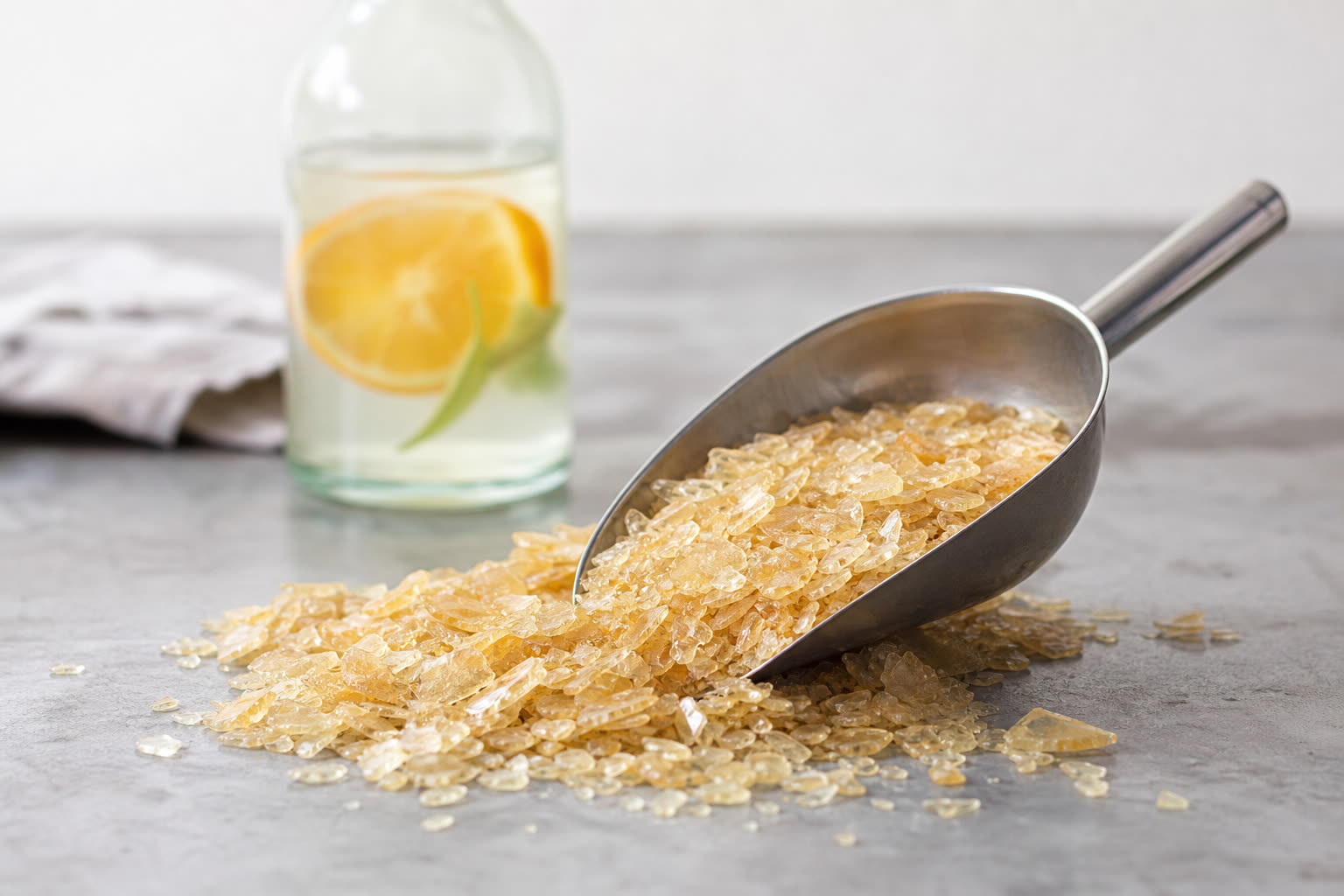
Terpineol is another cornerstone input for this cluster. It has a lilac, pine-floral odour that blends into a wide range of incense profiles and is particularly useful in sandalwood and floral masala bases where a soft, rounded background is needed. Karnataka units buying terpineol are typically looking for the alpha-terpineol fraction at perfumery or technical grade depending on the price point of their product line.
Terpinyl acetate, the ester of terpineol, gives a fresh-herbal character and is used in incense recipes aiming for a more complex, layered burn. Where terpineol alone reads as floral, terpinyl acetate pushes the profile towards pine-fresh territory. Many Bengaluru units use both in combination.
Camphor Powder in Agarbatti and Pooja Products
Camphor powder has a clear functional role in Karnataka incense production. It appears in two distinct contexts. First, in the masala itself, where a small percentage of camphor modifies the burn character and contributes the sharp, clean top note that many temple-use varieties depend on. Second, camphor is a primary ingredient in standalone pooja products, including camphor tablets pressed or formed separately for use in aarti and ritual lighting. Karnataka's large temple culture and religious goods trade mean that camphor demand from this cluster is steady across the year and spikes around festival seasons.
Isoborneol is the upstream intermediate used to produce synthetic camphor, and some of the larger chemical blending units in and around Bengaluru source isoborneol directly to process or resell downstream. We supply isoborneol powder as well as finished camphor powder depending on what the buyer's own capacity looks like.
Pine Oil in the Masala Base
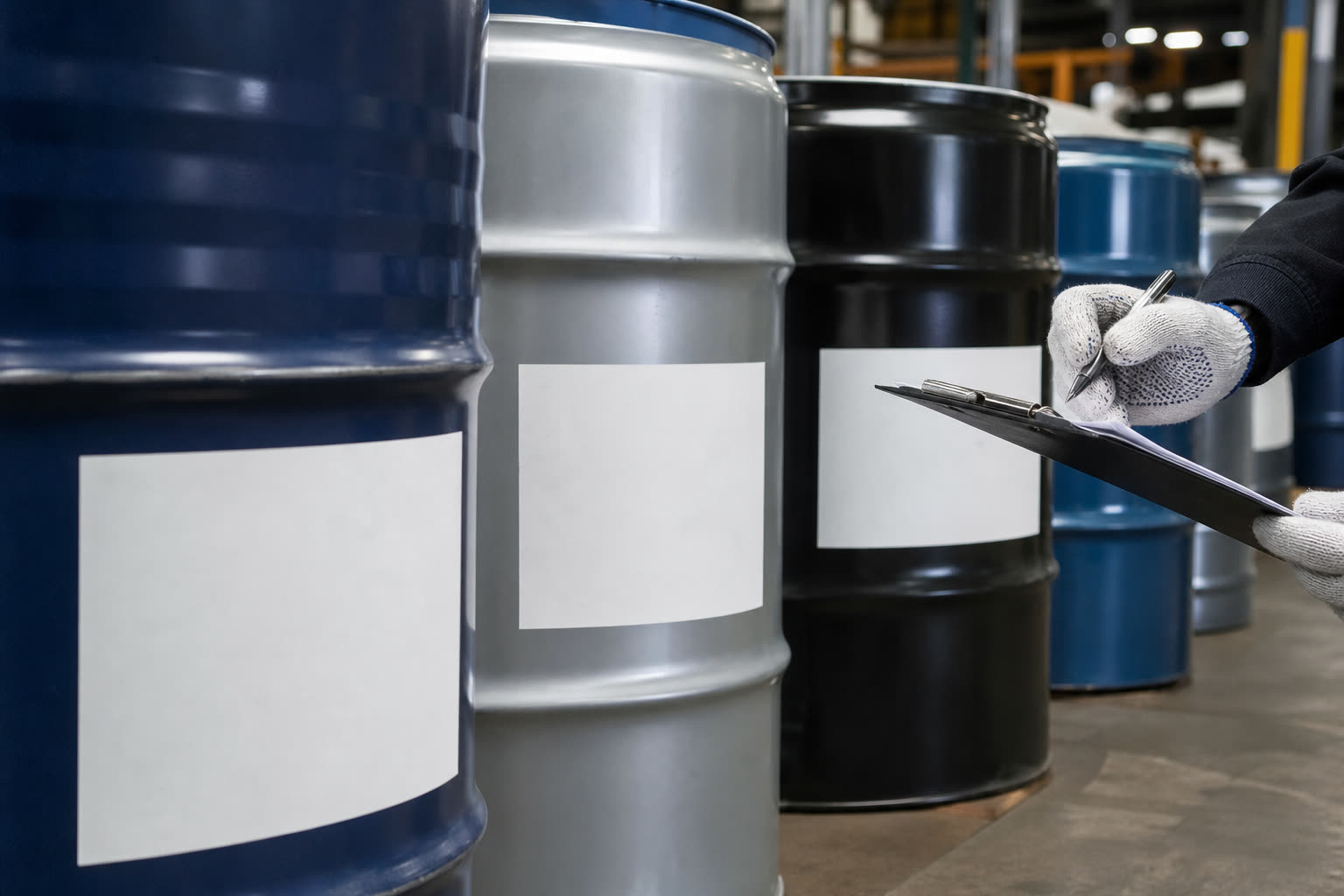
Pine oil at 32 percent terpineol content or higher functions as an emulsifier and fragrance base in agarbatti masala. The pine-floral note it contributes sits comfortably underneath the featured fragrance of a stick, whether that featured note is sandalwood, rose, or a synthetic accord. Some Karnataka producers also use pine oil as a partial solvent when working with synthetic fragrance compounds that require a carrier with a compatible odour profile. We sell pine oil in 200-litre barrels to units that purchase regularly, and in tanker loads for the larger operations running continuous production.
How Fragrance Notes Are Layered in a Masala Stick
A well-constructed masala agarbatti typically has three fragrance layers that release at different stages of burning. The top note, which hits as soon as the stick is lit, is usually a volatile material such as DHM tops or a citrus fraction. The middle note, which carries through most of the burn, is often terpineol, terpinyl acetate, or a blended floral accord. The base note, which lingers after the stick is done, comes from resins, wood notes, and heavier aroma chemicals. Understanding this structure helps a raw-material buyer decide which fractions to purchase and in what proportions.
Logistics from Kanpur to Bengaluru
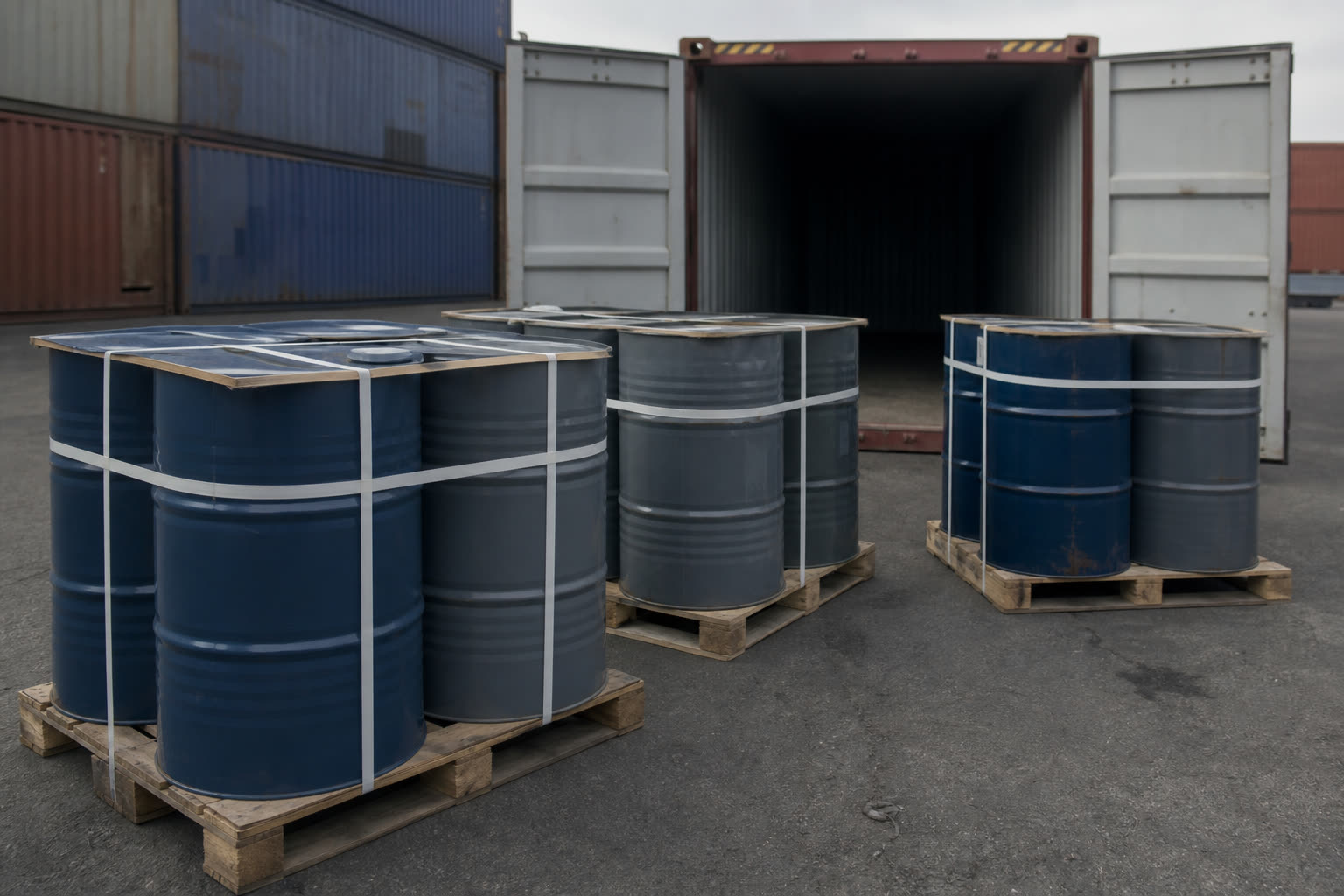
Kanpur sits roughly 2,000 kilometres north of Bengaluru by road. We move liquid materials in 200-litre drums or in 12,000- to 18,000-litre tankers depending on order volume. For agarbatti units running high volumes, tanker dispatch is the most cost-effective option and reduces per-litre freight to acceptable levels. Solid materials, including camphor powder, travel in 25-kilogram bags stacked on pallets. Transit time is typically three to four days by road freight, and we can coordinate dispatch schedules to match a unit's production cycle. For buyers spread across Bengaluru and Mysuru who prefer to consolidate their procurement, we can handle mixed loads with liquid and solid materials on the same dispatch.
We have been in this trade since 1980, and Bengaluru's agarbatti cluster has been one of our consistent destination markets. Karnataka buyers typically return to us season after season because we hold stock and dispatch reliably, which matters when a unit is running close to its production schedule. If you are buying DHM, DHM tops, terpineol, terpinyl acetate, camphor powder, or pine oil for incense production in Karnataka, we would like to hear from you. Reach out to Yash Agarwal at info@shadeshinepine.com or call +91 96965 09933 to discuss your requirements and get a quote.