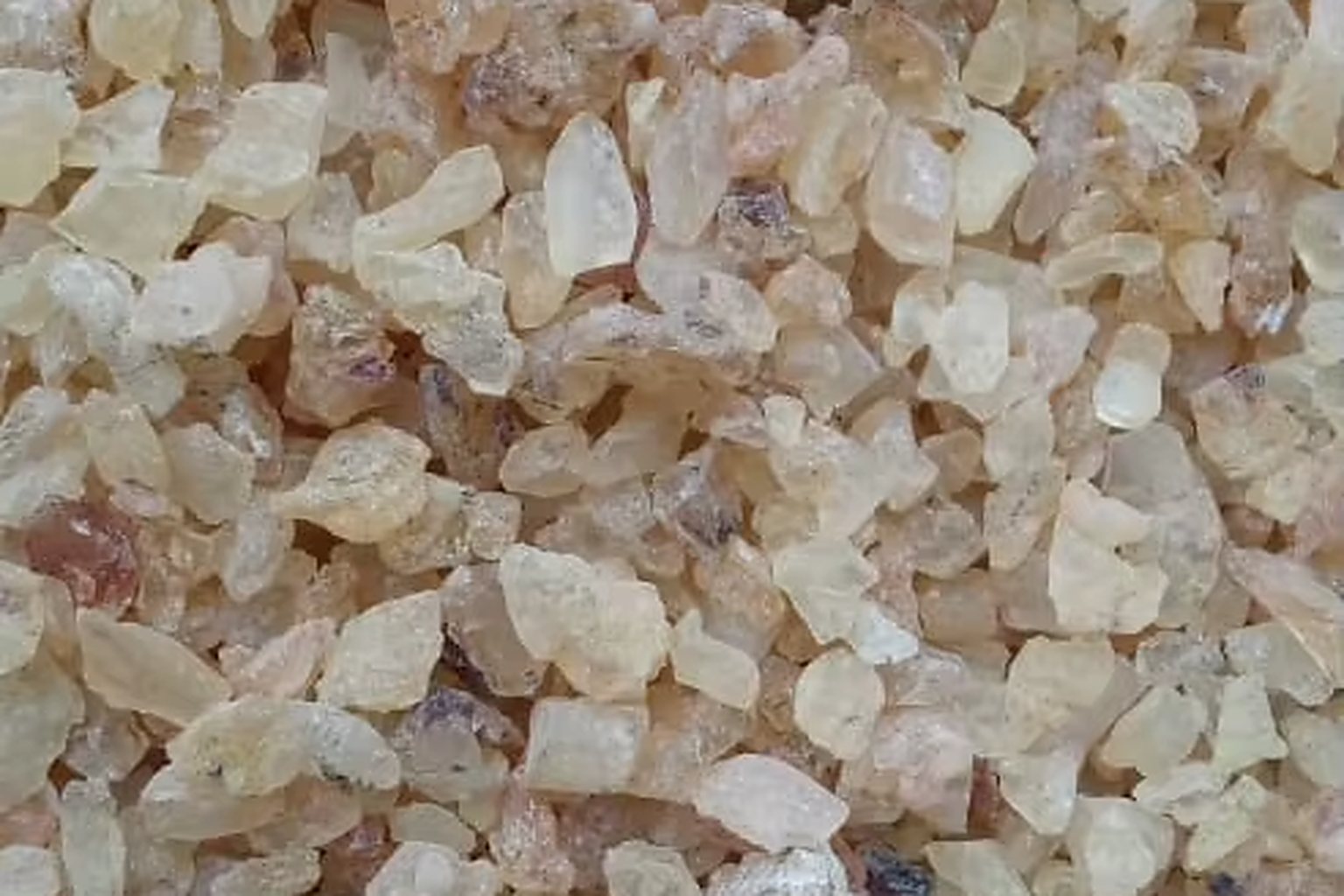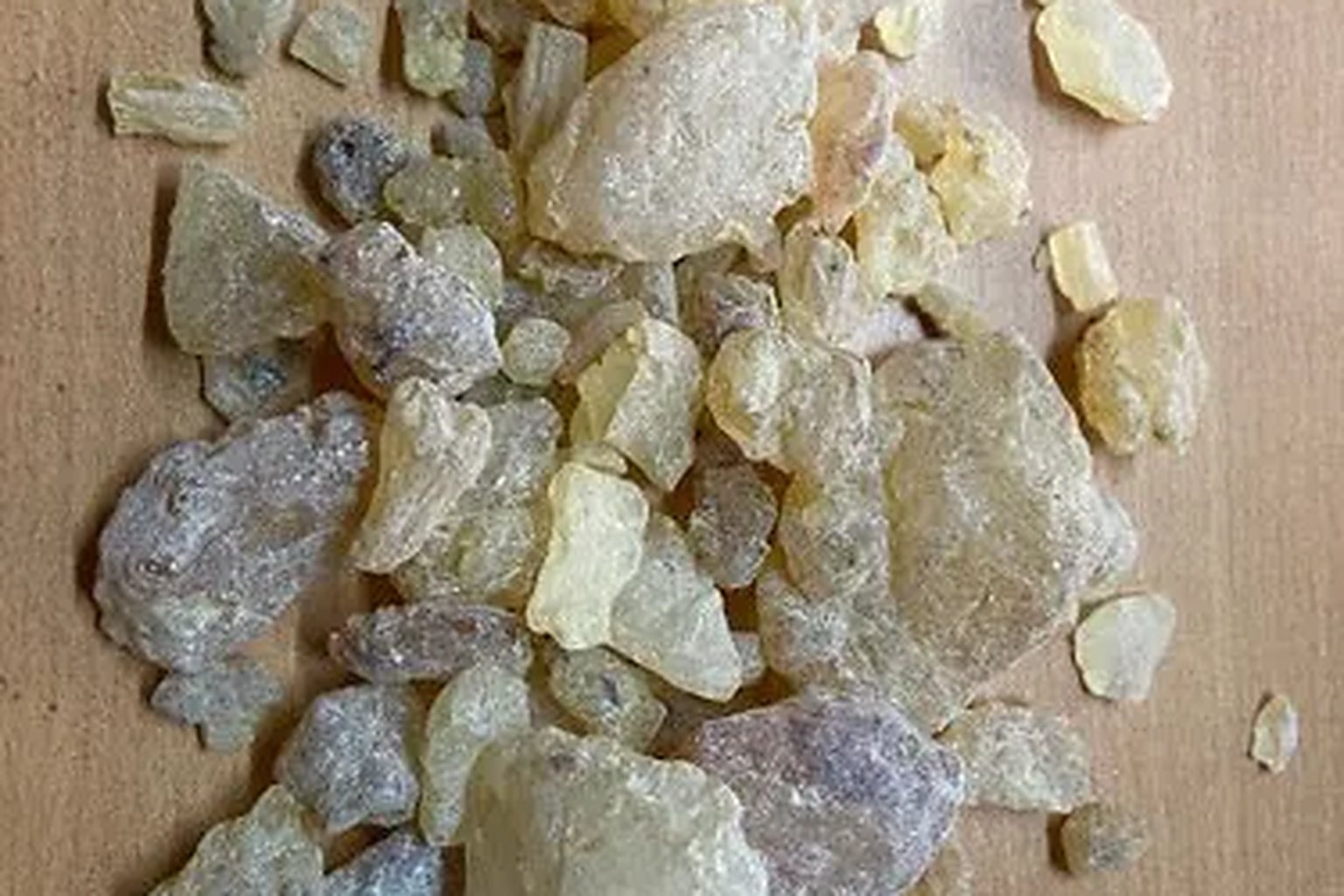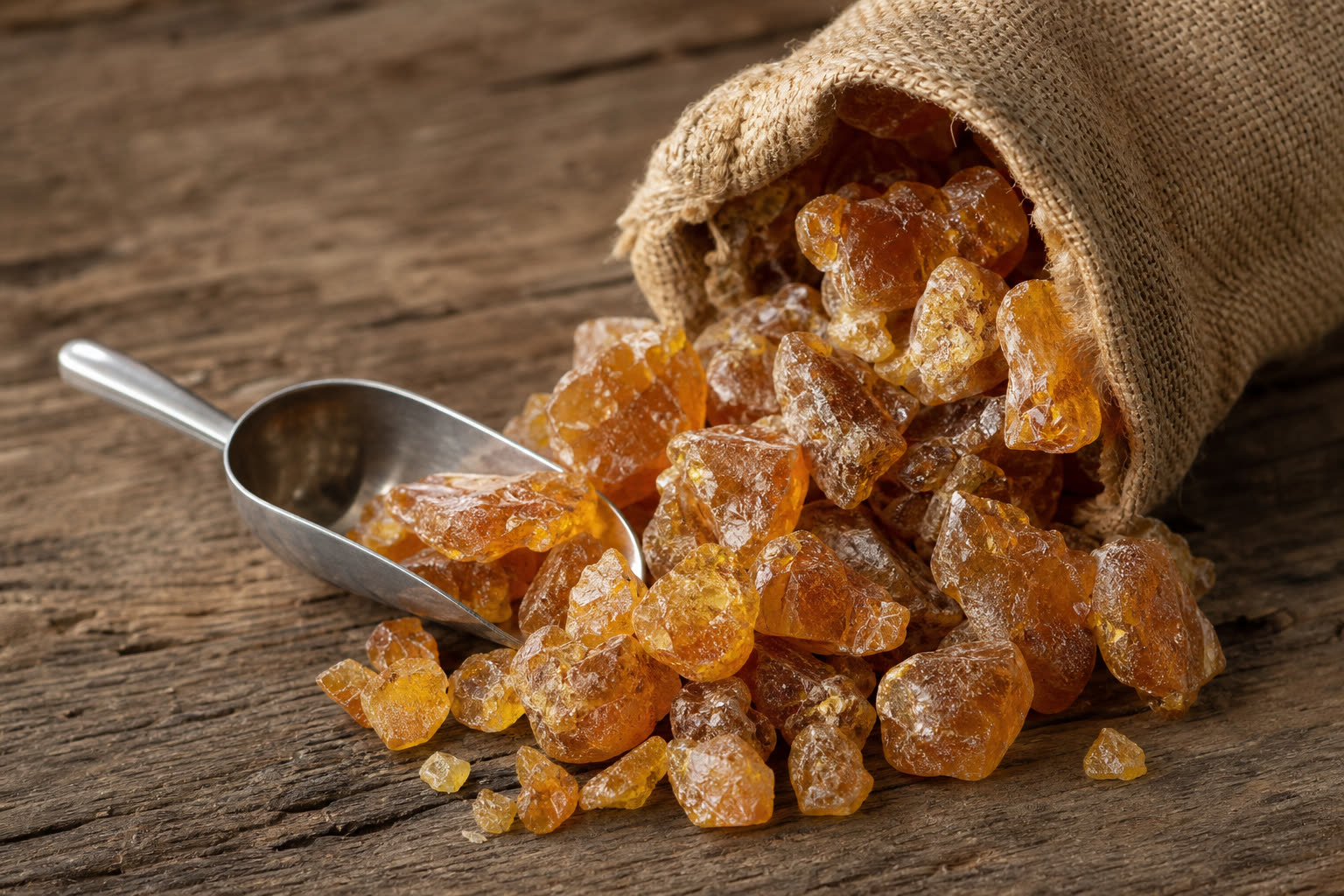
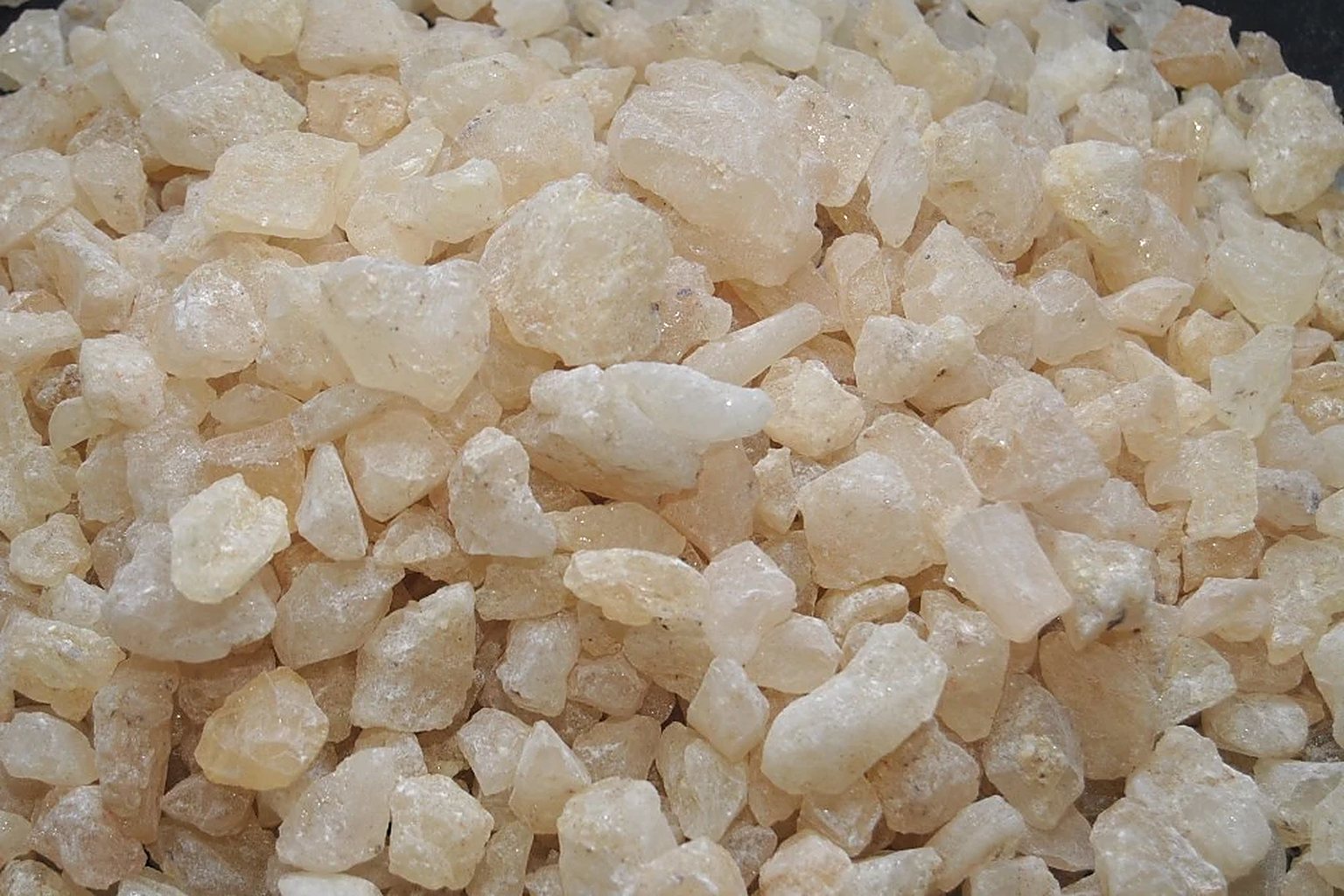
Gum copal is a natural resin that seeps from the bark of Agathis and related tropical trees and then hardens over a long period in or near the ground. The result sits somewhere between fresh tree gum and true amber, which is why it is usually described as semi fossilised. It is hard, brittle at room temperature, resistant to water, and dissolves readily in alcohol. Warmed with oils or turpentine it goes almost clear, and on drying it leaves a hard film with a high gloss.
Why it has lasted as a varnish resin
Most of what copal is used for follows from one property: it forms a hard, glossy, water resistant film without needing synthetic resins. Long before alkyds and acrylics, varnish makers dissolved copal in turpentine and applied it to furniture and joinery. That trade has not disappeared. Small and medium polish makers across India still buy copal because it gives a depth of finish on wood that is difficult to reproduce cheaply with a synthetic binder.
It also has a second life in the incense trade. Copal burns with a clean, light, faintly citrus smoke, which is why it appears in agarbatti and dhoop formulations as well as in loose resin blends.
How gum copal is graded
Copal is not graded by a published chemical scale the way gum rosin is graded on colour. It is sorted by hand, and the grade names describe what the sorter has separated out. The grades a buyer in India will usually be quoted are PWS, DBB, WS and Dust.
PWS is the sorted grade. It is the cleaner, paler material picked out of the collected lot, and it is what buyers take when the finish matters, typically for wood varnish and furniture polish.
DBB is pebble size and runs from whitish through to golden yellow. It is the economical grade, it dissolves quickly, and it is the one most commonly bought for incense and for general varnish work where the last degree of colour is not critical.
WS and Dust sit below these. Dust is the fine material left after sorting and is normally bought where the resin is going to be dissolved and filtered anyway.
What to put on a purchase specification
Because sorting is manual, two lots of the same grade name from two suppliers will not be identical. That makes the specification more important than the grade name alone. The values buyers normally agree on are:
- Softening point, typically in the region of 88 to 92 degrees Celsius
- Acid value, broadly 60 to 100 mg KOH/g depending on grade
- Saponification value, broadly 140 to 170 mg KOH/g
- Moisture, usually specified at a maximum of 2 per cent
- Ash, usually specified at a maximum of 0.5 per cent
- Appearance and piece size, which is what the grade name is really describing
These are typical commercial ranges rather than fixed constants. Copal is a forest product and the figures move with origin and season, so the sensible approach is to agree the specification first and then check each consignment against its own certificate of analysis.
Where it is used
The main outlets are wood varnish and furniture polish, printing inks where it contributes adhesion and film strength, paints and lacquers, incense and agarbatti, and adhesive systems that want a natural binder with some tack. It also turns up in paper coating and in linoleum manufacture.
Buying and handling
Copal is supplied as a solid, normally in 25 kg bags. It should be kept dry and out of direct heat. Because the pieces are brittle, a lot that has travelled badly will carry more fines than the grade suggests, which is worth checking on arrival if you are paying for sorted material.
For anyone dissolving it on site, the practical point is that alcohol does the work quickly and turpentine needs warmth and patience. We cover the ratios and the method in a separate post.
We supply gum copal in the DBB and PWS grades from Kanpur, in 25 kg bags, with a certificate of analysis against the agreed specification for every consignment. Samples go out before bulk.