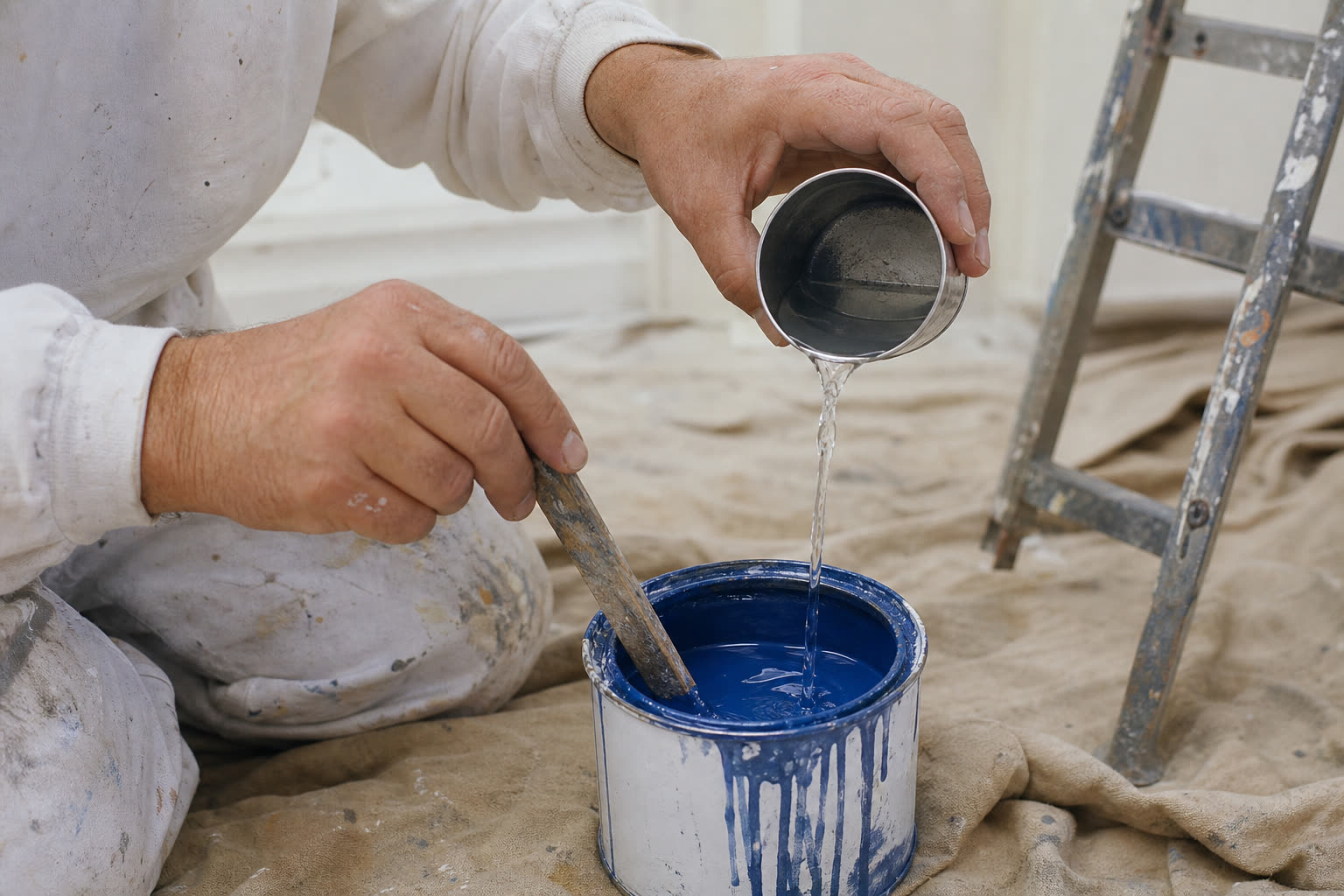
Thinning alkyd enamel paint with mineral turpentine oil is one of the most routine jobs in any Indian paint shop or contractor's workflow. Done correctly, MTO reduces viscosity to the right working consistency without weakening the film or extending dry time excessively. Done wrong, it costs you in runs, slow drying, poor gloss, or a film that chips within weeks. We have been in this trade long enough to have seen every mistake. Here is how to avoid them and get a result you can stand behind.
How Much MTO Do You Add to Enamel Paint?
There is no universal ratio because paint brands vary in their initial viscosity and temperature on the day affects how the paint flows. That said, practical starting points exist for each application method, and these ranges hold across most standard alkyd enamel products sold in the Indian market.
- Brushing: Begin with 5 to 10 percent MTO by volume. That means roughly 50 to 100 ml of MTO added to one litre of paint. Mix thoroughly, let the mixture rest for two minutes, then test a brush stroke on a scrap surface. The paint should flow from the brush without dragging and should level out within 30 to 60 seconds on a flat surface. If it still feels heavy and leaves strong brush marks, add another 2 to 3 percent and test again.
- Rolling: Rollers generally need a little more thinning than brush work because the mechanical action of the roller introduces more air into the film and the nap creates more drag on the surface. Start at 8 to 12 percent MTO. The paint should release from the roller smoothly without stringy tailing on the upstroke.
- Spraying with airless equipment: Airless spray guns typically need 10 to 15 percent MTO. Always do a test spray on card or scrap board and check the atomisation pattern before committing to a full coat on the actual substrate. Poor atomisation shows as orange peel or heavy droplets.
- Conventional air spray: Conventional air-atomised guns may need 15 to 20 percent thinning for good atomisation. The spray pattern should be consistent and fine. Adjust the fluid tip and air pressure together with thinner ratio until you find the balance.
Does Over-Thinning Damage the Paint Film?
Yes. Over-thinning dilutes the resin solids in the paint, which reduces film build per coat and can lower the cured film's hardness, gloss, and durability. A very heavily over-thinned enamel will sag and run on vertical surfaces, dry slowly, and produce a flat or milky finish instead of a proper gloss. If you are thinning aggressively to stretch paint volume, you are defeating the purpose entirely. Add the minimum amount of MTO needed to achieve the correct working viscosity, not more. Two thinner coats at correct dilution will always outperform one coat of heavily over-thinned paint.
Does Temperature Affect How Much Thinner You Need?
Significantly, and this is where painters on sites across North India need to think carefully by season. In a hot summer afternoon in Kanpur or Lucknow, alkyd enamel may already be warm and flowing well from the tin. You may need little or no MTO at all. In a cold December or January morning, the same paint can be as stiff as gel and may need the upper end of the thinning range just to achieve a workable brush consistency. Always assess the paint's current viscosity before adding any thinner. If the paint is cold-stiff, warm the tin in lukewarm water for 15 minutes before opening rather than reaching immediately for extra MTO.
What Are the Most Common Mistakes?
- Adding MTO to a tin without stirring first: Settled pigment at the bottom of the tin plus thinner poured in from the top creates an uneven mix that applies patchy and streaky. Stir the paint thoroughly before adding any MTO, then add thinner in small amounts while continuing to stir.
- Using NC thinner instead of MTO: This is the trade's most persistent error. NC thinner contains fast solvents that disrupt alkyd resin chains, causing poor flow, blushing, and sometimes partial gelling in the pot. Confirm the thinner identity before it goes into the can.
- Thinning to the same ratio for every coat: The primer and undercoat often benefit from more thinning than the topcoat. A thinner primer penetrates and anchors well. The topcoat should be as viscous as you can practically apply, for maximum film build and gloss. Do not use one ratio for all coats.
- Thinning already pre-thinned trade paint: Some ready-mix trade paints arrive pre-thinned at the works for regional temperature conditions. Check the can instructions before adding more MTO.
Can You Use Natural Turpentine Instead of MTO?
Yes, and some painters prefer it for topcoat work because gum turpentine promotes better brush flow in oil-based paints and gives a slightly longer open time for levelling. Double distilled turpentine oil is also suitable for high-quality topcoats where clean evaporation matters. However, natural turpentine costs more per litre and is impractical for large volume jobs where cost control is a priority. For primers and undercoats, MTO is entirely adequate. For a premium topcoat on furniture or quality joinery, the turpentine option is worth considering.
Order MTO for Your Workshop or Site
We supply mineral turpentine oil in Shade Shine 1 litre bottles packed in cartons, well suited for site use where controlled dispensing matters, and in 200 litre drums for shops, painting contractors, and works with regular consumption. Road tanker supply is available for large industrial painting operations. Speak to Yash Agarwal at +91 96965 09933 or reach us at info@shadeshinepine.com for current pricing and delivery lead times.