Every buyer asking about pine chemicals eventually asks two related questions: what is your minimum order quantity, and how long does it take? The answers vary by product and by season, and the reasoning behind them is worth understanding. A buyer who understands why MOQs and lead times are what they are is a buyer who can plan their procurement cycle intelligently and avoid unnecessary urgency at the wrong time of year. We have been answering these questions since the 1970s, and this post gives you the honest picture.
Why do minimum order quantities exist?
MOQs exist because producing and packing a chemical product for export involves fixed costs per shipment that are independent of the quantity. Preparing documentation, allocating a production run, filling and labelling drums, arranging container booking, and completing export clearance all cost roughly the same whether you ship 5 drums or 80. At very small quantities, those fixed costs make the per-unit economics unworkable for the supplier and, in practice, the freight cost per unit becomes disproportionately high for the buyer too.
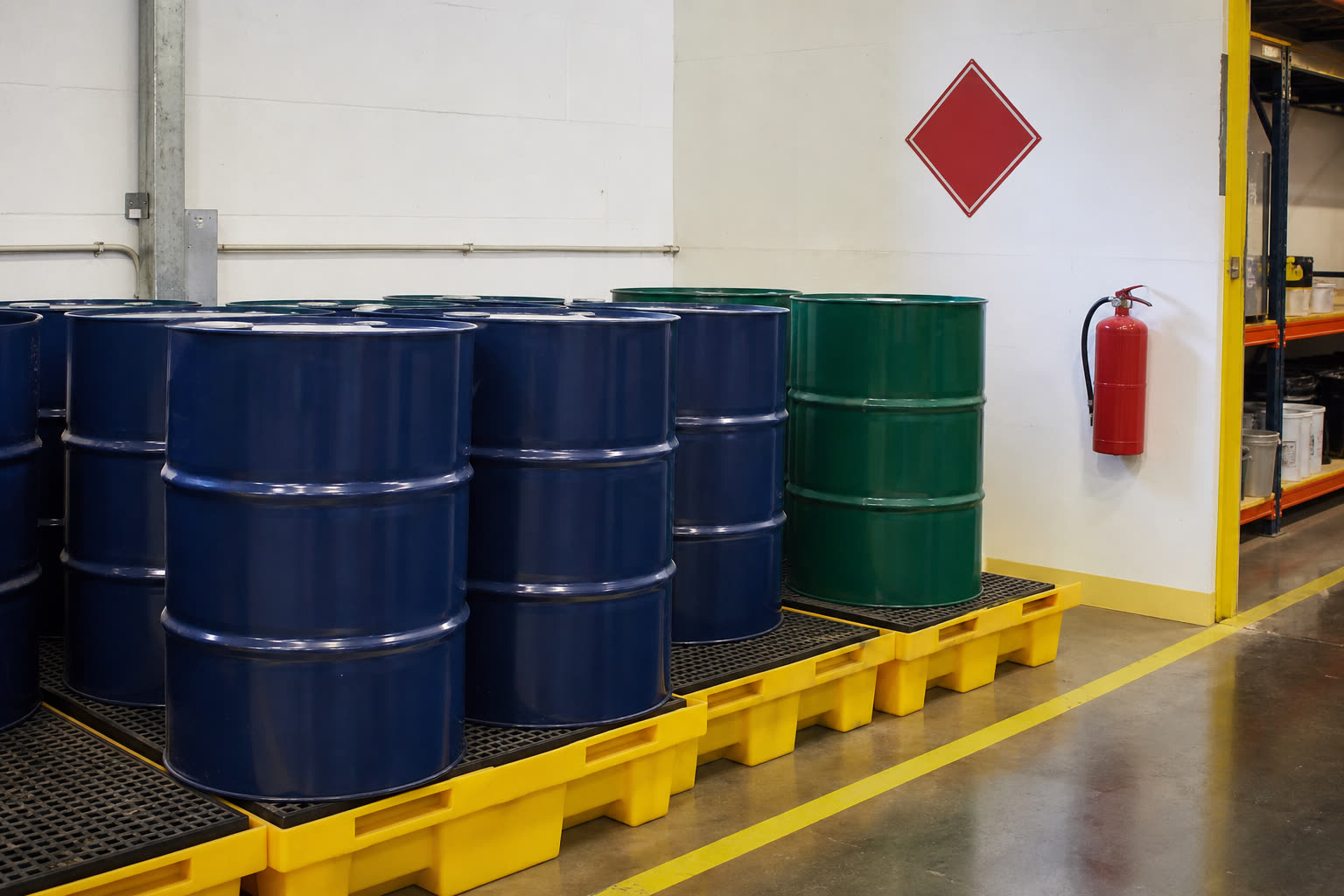
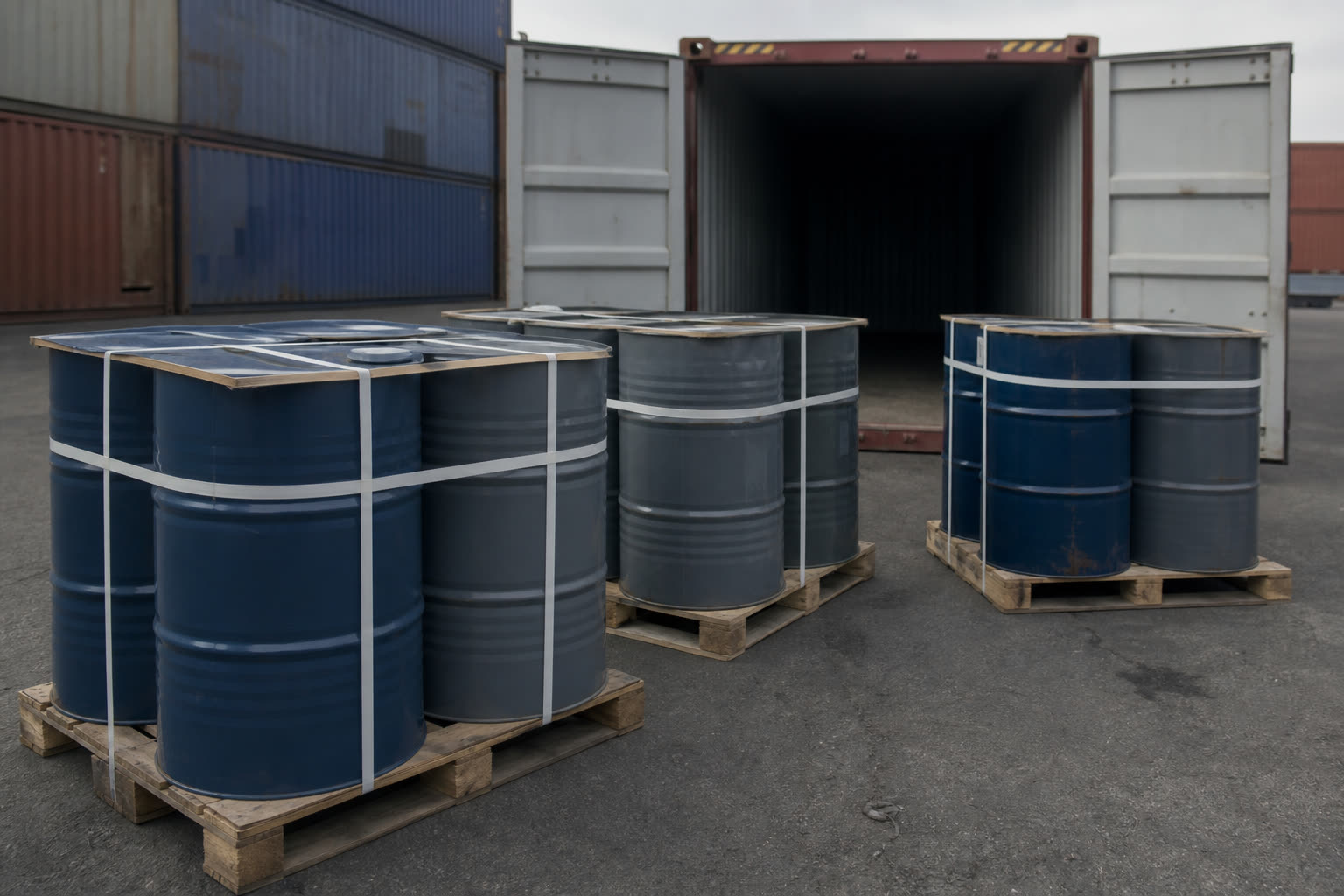
For most of our liquid products, including gum turpentine oil, pine oil, and dipentene, the functional minimum for international export is one 20-foot container, which holds approximately 80 drums of 200 litres. That is about 15,000 to 16,000 litres of product, depending on density. For solid products like gum rosin, the minimum is typically one metric tonne or one pallet of 40 bags of 25 kg each, though for a full export the MOQ is usually higher to make the freight economics sensible.
Can a buyer order a single barrel?
Yes, for domestic Indian buyers, single-barrel orders are a practical reality and we handle them regularly. For a buyer in Kanpur, Delhi, Mumbai or anywhere in India with road access, ordering one or two 200-litre barrels of turpentine or pine oil is straightforward. We supply across India by road tanker (12,000, 15,000 or 18,000-litre capacity for liquids) and by single barrels on LTL truck bookings for smaller quantities.
For international export, a single-barrel order is technically possible but rarely economical for the buyer once you add the cost of LCL (less than container load) freight, dangerous goods handling for Class 3 liquids, and the per-shipment documentation cost. Most international buyers who start with a single-barrel trial order are actually receiving it as part of a sample or evaluation shipment by air courier or air freight, rather than a commercial ocean container shipment. We accommodate this for genuine evaluation purposes.
What is the lead time from order to dispatch?
Lead time in the pine chemical trade has two distinct components: production lead time and dispatch lead time. They are not the same, and conflating them is a common source of buyer frustration.
Production lead time is the time needed to produce the specific batch you have ordered to your specification. For standard grades of gum turpentine oil or pine oil from stock, production lead time may be zero if we have your grade and quantity in finished goods inventory. For specialised grades, including specific purity cuts of double-distilled turpentine oil or particular colour grades of rosin, we may need 7 to 21 working days to produce and QC test a fresh batch. For products like dihydromyrcenol (DHM), which involves a more involved synthesis step, production lead times are longer and should be discussed at inquiry stage.
Dispatch lead time is the time from production completion to actual loading on the vessel. This includes: filling and sealing drums, QC release, documentation preparation (COA, SDS, invoice, packing list, dangerous goods declaration), container booking (which depends on vessel schedule and port cut-off), and inland haulage from Kanpur to port. In normal times, dispatch lead time from production completion to vessel loading is 7 to 14 working days. During periods of high port congestion or at peak season (October to December and March to April are typically busy in Indian chemical exports), allow 14 to 21 working days.
How does the oleoresin tapping season affect supply?
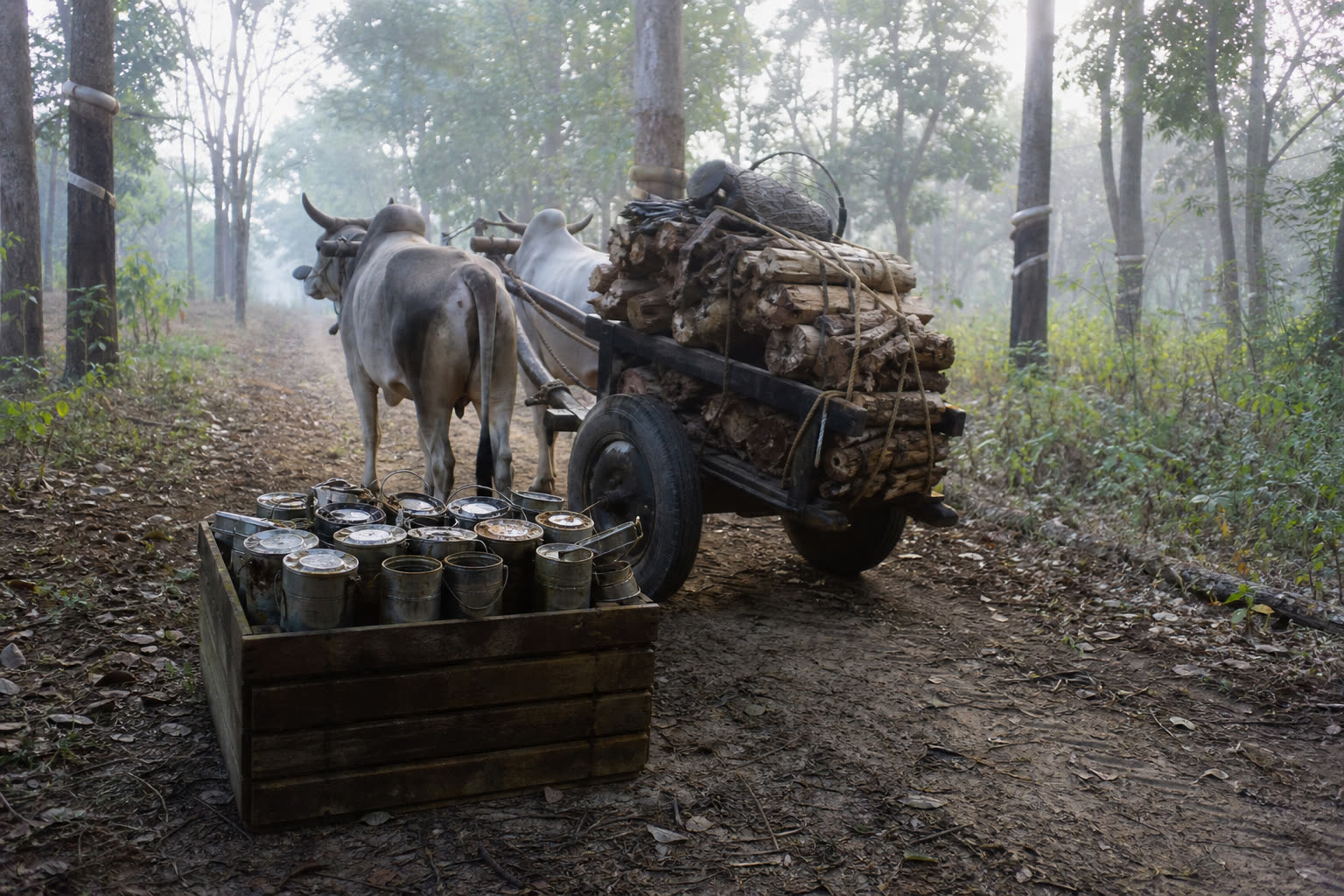
This is the factor most buyers do not know about, and it matters significantly for gum turpentine, gum rosin, and everything derived from them. Pine oleoresin, the raw material from which gum turpentine and gum rosin are distilled, is obtained by tapping living pine trees. Tapping is a seasonal activity in India, governed by the climate and the physiology of the tree.
In the major Indian pine-producing regions, including Himachal Pradesh, Uttarakhand, and parts of Madhya Pradesh and Chhattisgarh, active tapping runs broadly from late March through October, peaking in the summer months when oleoresin flow is highest. During the winter months (November through February), tapping slows sharply or stops in the cold northern regions, and fresh oleoresin supply tightens significantly.
What this means for buyers: Indian gum turpentine and gum rosin prices tend to follow a seasonal pattern. Raw material availability and prices are typically more favourable in the post-monsoon harvest period (October to November) when season's production is being distilled. By February to March, stocks from the previous season are depleting and prices can firm. A buyer who understands this cycle and plans their procurement accordingly, building working stock in the fourth quarter, avoids paying peak prices in the first quarter.
We maintain working stocks of turpentine and rosin across the year, but in lean winter months, lead times for large orders can lengthen if our production batch needs to await incoming oleoresin. We are transparent about this and will always tell you the current stock position when you enquire.
How should buyers plan their procurement cycle?
The practical answer: order three to four weeks ahead of your required delivery date as a baseline, and add buffer in peak freight seasons (October to December) and in the pre-tapping period (February to March). If you use pine chemicals continuously, a quarterly forward-cover arrangement with a reliable supplier is more efficient than hand-to-mouth ordering and protects you against raw material-driven price spikes.
We are happy to discuss forward supply arrangements with regular buyers. It allows us to plan production more efficiently and gives you price visibility. If you would like to discuss MOQs, lead times, or supply planning for your specific requirements, write to info@shadeshinepine.com or call Yash Agarwal on +91 96965 09933.